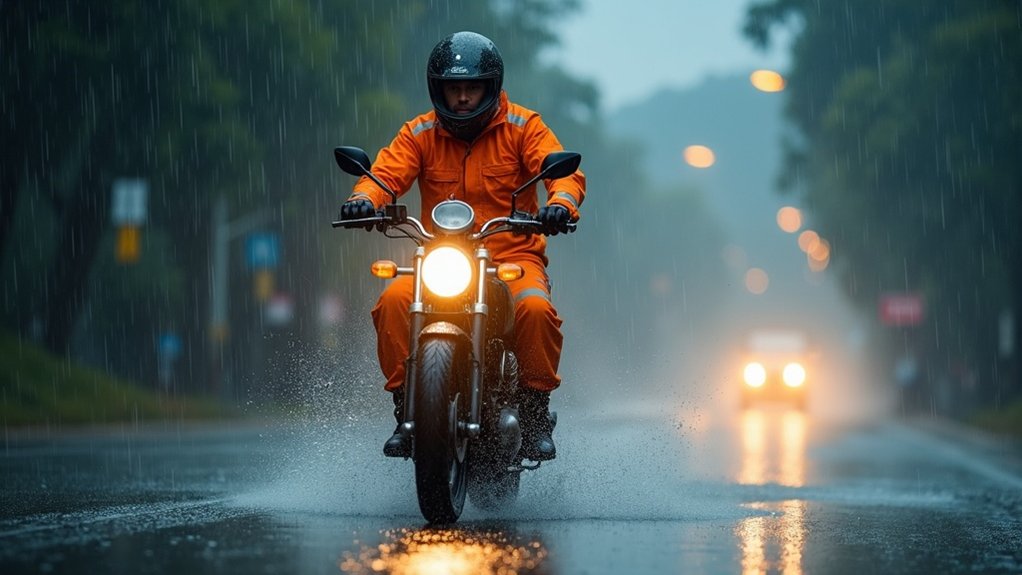
To ride safely in heavy rain, gear up with a high-quality waterproof jacket, pants, and gloves. Inspect your motorcycle before hitting the road, checking tires, brakes, and lights. Adjust your riding technique by increasing your following distance and using smooth throttle inputs. Stay alert for road hazards like puddles and slippery surfaces, and utilize engine braking for better control. If you follow these tips, you’ll navigate the rain with confidence and discover even more techniques for safety.
Key Takeaways
- Wear high-quality waterproof gear, including a jacket, pants, gloves, and overshoes, to stay dry and comfortable.
- Inspect your motorcycle thoroughly before riding, focusing on tire condition, brake fluid levels, and light functionality.
- Increase your following distance to at least four seconds to allow for longer stopping distances on wet roads.
- Stay vigilant for road hazards like puddles, slippery surfaces, and standing water that can cause accidents.
- Utilize engine braking for better control and to reduce reliance on brakes, minimizing the risk of skidding.
Gear Up for Wet Conditions
When you ride in heavy rain, gearing up properly is essential to stay comfortable and safe. Invest in a high-quality waterproof cycling jacket made from Gore-Tex or similar materials to keep rain out while allowing perspiration to escape.
Pair this with waterproof pants and gloves to protect your lower body and hands, maintaining grip and warmth. To keep your feet dry, consider waterproof overshoes that provide a windproof layer.
Don’t forget a breathable waterproof cycling cap to shield your eyes from rain, enhancing visibility. Finally, make certain your glasses have hydrophobic coatings to repel water while riding in the rain.
Inspect Your Motorcycle Before Riding
Before you hit the road in heavy rain, it’s essential to inspect your motorcycle.
Start by checking your tire tread depth for adequate grip, as worn tires can lead to hydroplaning.
Next, verify that your brakes and lights are functioning properly to guarantee safe stopping and visibility.
Check Tire Tread Depth
Ensuring your motorcycle tires are in good condition is essential for safe riding, especially in heavy rain.
To check tire tread depth, use the penny test—make sure you have at least 2/32 of an inch of tread for adequate grip in wet conditions. Look for wear indicators that signal when it’s time to replace worn tires, as they can increase the risk of hydroplaning.
Also, inspect for any damage on the tire sidewalls, like cuts or bulges. Regularly monitor tire tread and maintain proper tire pressure to enhance handling on slick surfaces.
Your safety depends on it!
Inspect Brake Functionality
After checking your tire tread depth, it’s important to inspect your motorcycle’s brake functionality. Here’s what to focus on:
- Brake Fluid Levels: Verify they’re adequate for effective braking.
- Brake Pads: Look for wear; worn pads can lead to dangerous situations.
- Moisture in Brake Lines: Check for signs of moisture, as this may indicate leaks.
Also, confirm that your brake lights are operational, guaranteeing visibility to other drivers in wet conditions.
Regular maintenance based on the manufacturer’s recommendations keeps your brakes performing at their best.
Safe riding starts with properly functioning brakes!
Test Lights and Signals
Testing your motorcycle’s lights and signals is vital for safe riding in heavy rain. Start by checking the headlights, tail lights, and turn signals to guarantee they’re functioning properly. This boosts visibility for you and other road users.
Don’t forget to test the brake lights by applying the brakes; they signal stops to following vehicles, which is essential in wet weather. Make sure turn signals are clean and operational for clear communication of lane changes.
Regularly inspect battery and electrical connections, as moisture can cause malfunctioning lights. Finally, verify that reflective gear elements are intact to enhance your visibility.
Adjust Your Riding Technique
When riding in heavy rain, adjusting your technique is essential for maintaining control and safety.
Here are three key adjustments to make:
- Increase following distance: Aim for at least four seconds to compensate for longer stopping distances on wet roads.
- Use smooth inputs: Gradually throttle and brake to keep traction; abrupt changes can lead to skidding.
- Adjust your lean angle: Tipping too much can cause loss of grip, so stay balanced and controlled during turns.
Watch for Road Hazards
Maneuvering the roads during heavy rain requires heightened vigilance for potential hazards that can compromise your safety.
Always watch for puddles, as they may hide potholes or debris that could lead to accidents. Be cautious of slippery surfaces, including painted lines, fallen leaves, and lawn trimmings, which can cause your motorcycle to skid.
Watch for hidden hazards like puddles and slippery surfaces, as they can lead to dangerous skids and accidents.
Standing water is particularly dangerous, increasing your risk of hydroplaning and reducing your bike’s grip on the road.
Maintain a safe distance from other vehicles to allow for unexpected stops and to avoid water spray from tires.
Staying alert helps you ride safely in challenging conditions.
Use Engine Braking for Control
Though heavy rain can make riding more challenging, utilizing engine braking is a smart way to maintain control. This technique helps you adjust your speed without relying solely on brakes, which is critical on wet surfaces.
Here’s why you should consider engine braking:
- Enhanced Safety: It reduces the risk of brake fade, keeping your stopping power effective.
- Better Traction: Gradually slowing down minimizes abrupt changes that can lead to skidding.
- Improved Control: Shifting to a lower gear allows for smoother deceleration, especially during turns.
Take Breaks and Stay Hydrated
Riding in heavy rain can drain your energy and focus, so it’s crucial to take regular breaks and stay hydrated. Wet conditions increase physical and mental strain, making fatigue a real risk.
Carry water and energy-boosting snacks to maintain hydration and energy levels while riding through standing water. Staying hydrated keeps you alert and can prevent a motorcycle accident due to impaired reaction times.
During breaks, monitor your body temperature to avoid chills or overheating from wet clothing. Plan for your hydration needs ahead of time, ensuring you’re in prime condition to keep you dry and safe on the road.