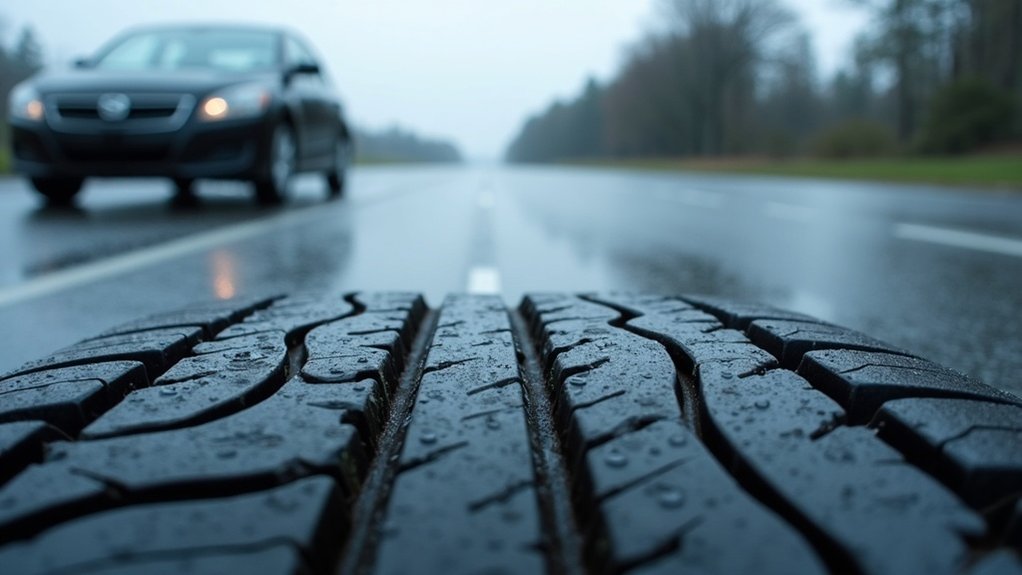
To avoid hydroplaning on smooth tires, regularly check your tire pressure and tread depth. Reduce your speed by 5-10 mph when driving in wet conditions, and steer clear of puddles. Avoid using cruise control, and try to drive in the tire tracks of other vehicles to minimize your risk. If you do hydroplane, gently release the accelerator and steer in your intended direction. There’s plenty more to learn about safe driving in wet conditions.
Key Takeaways
- Regularly check tire tread depth; replace smooth tires to improve traction and reduce hydroplaning risk.
- Maintain proper tire pressure to enhance tire performance on wet surfaces.
- Reduce your speed by 5-10 mph in wet conditions to decrease hydroplaning chances.
- Avoid using cruise control on wet roads to maintain better vehicle control.
- Steer clear of puddles and standing water to minimize the risk of losing traction.
What Is Hydroplaning?
Hydroplaning is a dangerous phenomenon that occurs when your tires lose traction on a wet surface. It happens when water accumulates between the tire and the road, leading to a loss of control.
This risk intensifies during the first 10 minutes of rainfall, as oils mix with water, creating slippery conditions. Worn tires with low tread depth—2/32nd inch or less—are particularly susceptible to hydroplaning, as they struggle to channel water away effectively.
To maintain control, you should reduce your speed, especially in wet conditions, since hydroplaning can occur at speeds as low as 35 mph.
Causes of Hydroplaning
Loss of traction is the primary cause of hydroplaning, occurring when water builds up between the tires and the road surface. Several key factors contribute to this dangerous phenomenon:
| Factor | Impact on Hydroplaning |
|---|---|
| Tire Tread Depth | Worn tires (2/32 inch or less) increase risk |
| Vehicle Speed | Risk rises at speeds as low as 35 mph |
| Standing Water Depth | Deeper water increases hydroplaning likelihood |
| Vehicle Weight | Heavier vehicles resist hydroplaning better |
| Tire Design | Tires with better water channels reduce risk |
Understanding these causes can help you take preventive measures against hydroplaning.
Dangers of Hydroplaning
Hydroplaning poses serious dangers that can lead to a complete loss of vehicle control.
When your tires lose grip on wet roads, the risk of accidents skyrockets, with statistics showing that nearly 70% of weather-related crashes happen in such conditions.
Understanding these hazards is essential for maintaining safety while driving in the rain.
Loss of Vehicle Control
When driving in wet conditions, you’re at risk of losing control of your vehicle due to hydroplaning, a phenomenon that occurs when tires can no longer maintain traction on slick surfaces.
This loss of vehicle control can lead to serious accidents, especially on wet pavement. To reduce risks, consider these factors:
- Keep tires properly inflated and check tire pressure regularly.
- Guarantee adequate tread depth, as worn tires increase hydroplaning chances.
- Practice defensive driving techniques, like reducing speed during the first ten minutes of rain.
Increased Accident Risk
As the rain begins to fall, the risk of accidents increases considerably due to the slick conditions that lead to hydroplaning. Hydroplaning accounts for 70% of weather-related crashes in the U.S., with nearly half occurring during rainfall.
In wet conditions, your tires are in good shape but can still lose traction, making it essential to maintain proper speed and distance. The first ten minutes of rain are especially dangerous, as water mixes with road oils, creating a hazardous surface.
To reduce the risk, stay alert and guarantee your tires maintain contact with the road to enhance safety while driving.
Wet Road Hazards
Although rain may seem light, slick road conditions can quickly escalate into dangerous situations due to hydroplaning.
To stay safe on wet roads, consider these key factors:
- Vehicle Speed: Reduce speed to maintain tire contact with the road.
- Standing Water: Be cautious of deep water pools; they greatly heighten hydroplaning risk.
- Tires Condition: Verify your tires are in good shape to effectively channel water away.
Tips for Handling Hydroplaning
Hydroplaning can be a frightening experience, but knowing how to respond calmly can help you regain control of your vehicle.
First, avoid panic; gently release the accelerator to allow your tires to reconnect with the road. Don’t slam on the brakes. Instead, steer in the direction you want to go, maintaining vehicle stability.
Keep a steady grip on the steering wheel to control your direction and minimize sudden movements that could worsen hydroplaning. If needed, pull over safely once you regain control.
Regularly check that your tires are properly inflated and have adequate tread to reduce the risk of hydroplaning.
Prevention Strategies for Hydroplaning
To effectively prevent hydroplaning, maintaining your tires in peak condition is essential.
Follow these strategies to reduce your risk:
- Regularly check and maintain proper tire pressure; underinflated tires hinder water dispersion.
- Slow down by 5-10 mph in wet conditions; higher speeds reduce tire-road contact and increase hydroplaning chances.
- Avoid using cruise control on wet surfaces; it can lead to sudden acceleration if you lose traction.
Additionally, steer clear of puddles and standing water, driving in the tire tracks of other vehicles whenever possible.
Importance of Tire Maintenance
Proper tire maintenance is essential for your safety on wet roads.
Regularly checking tire pressure and ensuring adequate tread depth not only enhances traction but also greatly reduces the risk of hydroplaning.
Tread Depth Significance
While many drivers overlook tire maintenance, understanding tread depth’s importance is essential for safe driving, especially in wet conditions.
Proper tread depth guarantees effective water displacement, reducing the risk of hydroplaning. Here’s why you should care:
- Tires with at least 2/32nd inch tread greatly enhance traction on wet roads.
- Worn tires increase the likelihood of losing grip, especially during the first rain when oils rise to the surface.
- Regularly checking tread depth with the penny test helps maintain safety and control.
Maintaining inflated tires alongside adequate tread depth maximizes your vehicle’s grip, enhancing overall safety in challenging conditions.
Regular Pressure Checks
Maintaining the correct tire pressure is vital for safe driving, especially in wet conditions. Regular pressure checks help guarantee your tires can maintain ideal contact with the road, reducing the risk of hydroplaning.
When tires are underinflated, they struggle to disperse water effectively, increasing the likelihood of losing traction. Check your tire pressure at least once a month and before long trips to enhance safety and performance.
Properly inflated tires not only improve fuel efficiency but also provide better traction on wet roads, essential for preventing hydroplaning. Keep your tires in check, and you’ll drive with confidence in rainy conditions.