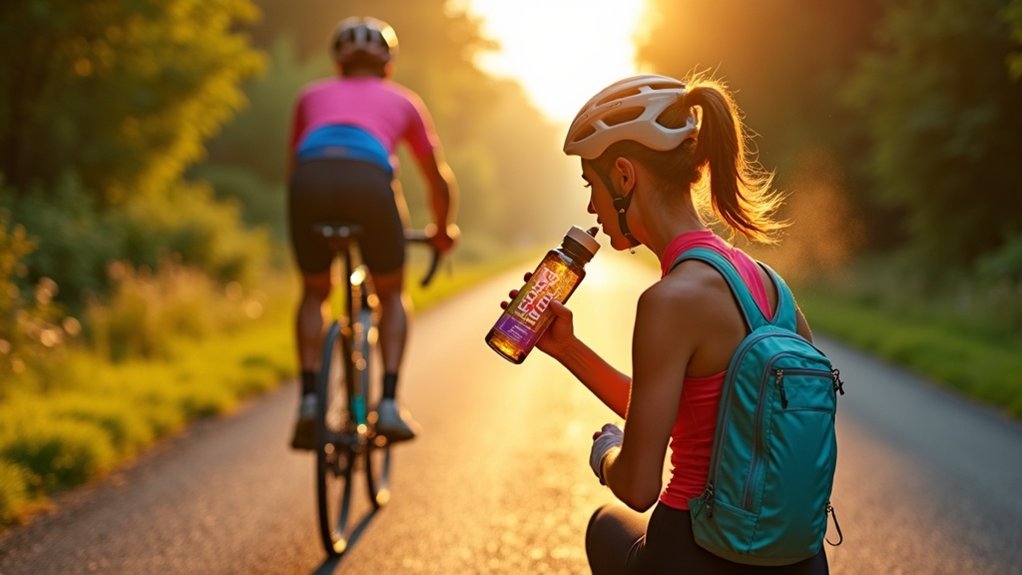
To avoid dehydration on short rides, drink early and often, targeting about 8 ounces of water every 20 minutes. Monitor your thirst and urine color to stay on top of your hydration status. Slowing down can help reduce internal heat and make it easier to manage fluid loss. Make your drinks appealing by rotating flavors and keeping them cool. After your ride, rehydrate effectively to support recovery. For more tips on hydration strategies, continue exploring.
Key Takeaways
- Drink 8 ounces of water every 20 minutes to stay hydrated throughout your ride.
- Start with two cups of fluid 15 minutes before you begin riding.
- Monitor your urine color to assess your hydration status during and after the ride.
- Incorporate nasal breathing to enhance oxygen intake and promote better hydration management.
- Opt for flavored drinks to encourage consistent sipping during your ride.
How Cycling Heats You Up
When you cycle, your body generates a significant amount of heat—about 80% of the energy produced by your muscles turns into thermal energy.
In hot weather, high temperatures and humidity can overwhelm your body’s cooling mechanisms, increasing the risk of dehydration. As your internal heat rises, you sweat more and need extra water to compensate.
Unfortunately, on hot rides, fluid loss often surpasses what you consume, making proper hydration essential.
To manage this heat effectively, consider maintaining a slower pace during summer rides. This approach can help you stay comfortable and reduce the likelihood of overheating and dehydration.
Signs of Cycling Dehydration
When you’re cycling, pay attention to your body’s thirst signals, as intense thirst indicates a need for hydration.
Additionally, the color of your urine can reveal your hydration status; dark, amber urine suggests you need to drink more fluids.
Physical symptoms like dizziness, fatigue, and leg cramps can also warn you of dehydration, so it’s essential to recognize these signs to maintain your performance and health.
Thirst Indicators
Recognizing the signs of dehydration is essential for maintaining ideal cycling performance, as your body’s thirst signals are often the first indicators of fluid loss. Intense thirst is a primary indicator that you need to replenish fluids.
Even mild dehydration can lead to dizziness, headaches, and fatigue, negatively impacting your ride. Keep an eye on additional thirst indicators like a dry mouth, reduced sweating, and a higher heart rate.
If you notice these symptoms, it’s vital to hydrate immediately to prevent dehydration. Staying attuned to these signals will help you sustain your performance and enjoy your cycling experience fully.
Urine Color Signals
How can you tell if you’re properly hydrated during a ride? Monitoring urine color signals is a practical way to assess your hydration status. If your urine is dark amber, it’s time to increase your fluid intake. Light yellow indicates proper hydration, while anything darker than pale yellow suggests dehydration risk.
| Urine Color | Hydration Status |
|---|---|
| Clear to Light Yellow | Properly hydrated |
| Pale Yellow | Mild dehydration risk |
| Dark Amber | Dehydration likely |
Frequent checks during your ride help you adjust fluid intake before severe dehydration symptoms occur.
Physical Symptoms Alert
Dehydration can sneak up on you during a ride, and being aware of physical symptoms is vital for maintaining performance and safety.
Recognizing the signs of dehydration allows you to take action before it affects your ride. Watch for these symptoms:
- Intense thirst
- Dizziness or lightheadedness
- Headaches and fatigue
- Dark, amber-colored urine
- Increased heart rate or dry mouth
If you experience any of these signs, it’s important to stay hydrated by drinking fluids immediately.
How To Prevent Dehydration When Cycling
While cycling, staying hydrated is essential for maintaining performance and overall health. Follow these tips for avoiding dehydration:
| Tip | Description | Timing |
|---|---|---|
| Drink Water | Consume 8 ounces every 20 minutes to maintain fluid levels | Throughout the ride |
| Start Early | Use the “Rule of 90”; hydrate before thirst hits | Before riding |
| Choose Sports Drinks | Opt for 6-8% carbohydrate drinks for rides over an hour | During extended rides |
| Monitor Signs | Watch for dark urine and intense thirst | Regularly while cycling |
Keep your mouth closed and breathe through your nose to retain moisture!
Slow Down
When you slow down during short rides, you not only make the experience more enjoyable but also enhance your hydration management.
By adjusting your pace, you can:
- Reduce muscle exertion and internal heat.
- Experience more comfortable rides with better fluid management.
- Decrease sweating rates, allowing for effective hydration.
- Prioritize safety and comfort over speed.
- Prevent dehydration symptoms, letting you enjoy the ride without strain.
Drink Early and Often
To stay properly hydrated, start drinking before you even hit the road, as it sets the stage for better hydration later on.
Regular fluid intake during your ride is essential, so aim for at least 8 ounces every 20 minutes.
Don’t forget to mix up your beverages; flavor variety can encourage you to drink more consistently.
Hydration Before Riding
Proper hydration before you hit the road is essential for maintaining peak performance during your ride.
To guarantee you’re well-prepared, follow these guidelines:
- Drink two cups of fluid 15 minutes prior to starting.
- Apply the “Rule of 90” by hydrating early; it affects performance 90 minutes later.
- Carry enough fluids or plan refills at strategic points.
- Sip small amounts frequently instead of waiting to feel thirsty.
- Check your urine color; light means good hydration, dark indicates you need to maintain fluid intake.
This proactive approach helps you ride at your best while preventing dehydration.
Regular Fluid Intake
Staying hydrated throughout your ride is essential, as it directly impacts your performance and endurance.
To maintain ideal hydration, aim for regular fluid intake by drinking about 8 ounces of water every 20 minutes. Implement the “Rule of 90” by hydrating before you feel thirsty, as your fluid intake affects hydration levels up to 90 minutes later.
For rides exceeding an hour, opt for a sports drink containing 6-8% carbohydrates, which can enhance rehydration effectiveness.
Always prepare enough fluid or plan for strategic refills to guarantee consistent hydration and replenish lost electrolytes effectively.
Flavor Variety Matters
Many cyclists overlook the importance of flavor variety when it comes to hydration, but mixing up your drinks can greatly enhance your fluid intake.
To keep drinking and avoid dehydration, consider these tips:
- Rotate flavors to maintain interest.
- Choose cold drinks to encourage consumption.
- Dilute fruit juices (1:1) for a tasty, energizing option.
- Opt for sports drinks with diverse flavors for variety.
- Drink fluids early and often, aiming for 8 ounces every 20 minutes.
Make It Appealing and Effective
While you’re out enjoying a short ride, making hydration appealing can greatly enhance your experience and performance.
To stay motivated, prepare your favorite flavors of sports drinks, and make sure to keep them chilled. Rotate flavors at strategic points to maintain interest, encouraging consistent fluid intake.
Follow proper powder-to-water ratios to avoid weak or overly strong mixtures, ensuring a balanced taste that promotes hydration without stomach issues.
Utilizing flavor variety not only makes drinking enjoyable but also helps you remember to hydrate regularly.
Keep Your Mouth Shut
How can a simple adjustment in your breathing technique enhance your hydration on short rides? By keeping your mouth shut and breathing through your nose, you can greatly reduce fluid loss and retain moisture. This is essential, especially in dry or hot conditions.
Consider these benefits:
- Minimizes water loss through respiration
- Helps maintain hydration on brief rides
- Enhances overall comfort while cycling
- Supports better performance through improved oxygen intake
- Encourages a mindful approach to breathing
Incorporating nasal breathing into your routine can boost your hydration management, making each short ride more enjoyable and effective.
Rehydrate Right After the Ride
As soon as you finish your ride, prioritizing hydration is essential for recovery and overall performance.
To effectively rehydrate right after the ride, aim to drink half a liter of water for every pound lost during your ride. Focus on water or electrolyte drinks first, as they maximize fluid absorption and recovery.
Avoid solid foods until you’ve rehydrated adequately. Steering clear of alcoholic beverages is vital since they can hinder your rehydration efforts and impair recovery.
Addressing dehydration promptly, even if you feel only slightly dehydrated, prevents long-term performance issues and enhances your overall recovery.