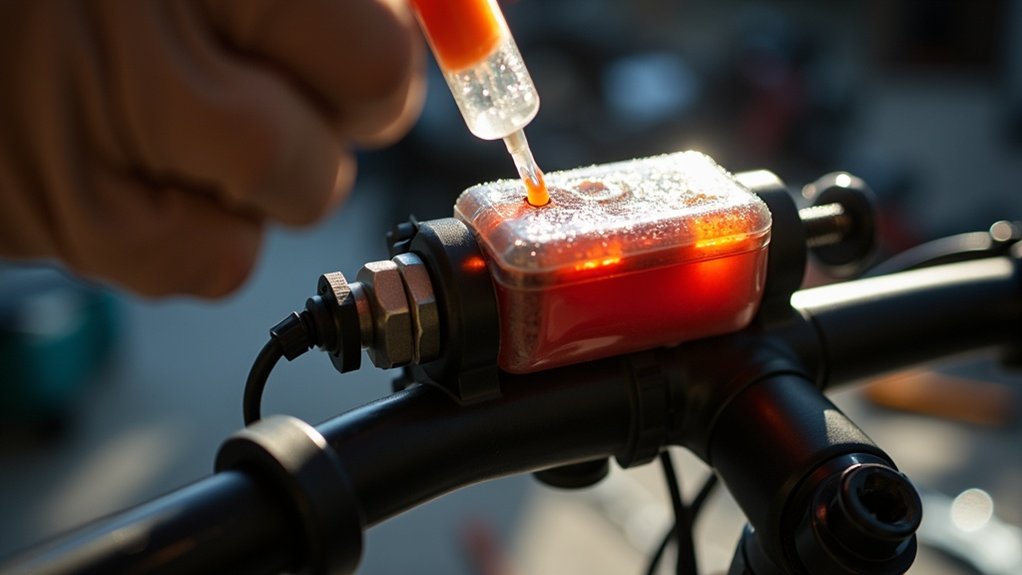
To check your e-bike’s hydraulic brake fluid, locate the reservoir near the brake lever. Inspect the sight glass for fluid levels between the minimum and maximum markers. Look for discoloration or cloudiness, signaling contamination. Regularly check for leaks and damage. If the fluid appears dark or has particles, it’s time for a replacement. After maintenance, verify the fluid level meets specifications and test brake performance. Want to learn more about maintenance tips?
Key Takeaways
- Locate the brake fluid reservoir near the brake lever, often within the lever assembly for easy access.
- Check the fluid level using the sight glass, ensuring it is between the minimum and maximum markings.
- Inspect the fluid color; any discoloration or cloudiness may indicate contamination and the need for replacement.
- Look for leaks or damage around the reservoir and sight glass during your inspection.
- After maintenance, test the brake performance by pulling the lever multiple times for reliable braking.
Understanding Hydraulic Brake Fluid
Hydraulic brake fluid plays an essential role in the braking system of your e-bike, as it transfers force from the brake lever to the brake caliper. Typically made from mineral oil or DOT fluid, each type has specific maintenance and compatibility requirements.
Over time, brake fluid can absorb moisture, leading to decreased braking performance and potential damage to components. Regular checks of fluid levels in the reservoir are vital; low levels may indicate leaks or worn brake pads.
To maintain ideal braking performance and system reliability, it’s recommended to replace hydraulic brake fluid every 1-2 years.
Locating the Brake Fluid Reservoir
To maintain ideal braking performance, locating the brake fluid reservoir is your next step after understanding the role of hydraulic brake fluid.
Typically, the reservoir is positioned near the brake lever, often integrated into the lever assembly itself. Look for a transparent container, which allows you to easily monitor the fluid level.
The brake fluid reservoir is usually near the brake lever, often within the lever assembly for easy monitoring.
Depending on your e-bike model, you may need to remove a cap or cover to access it. Always refer to your owner’s manual for specific instructions.
Regular maintenance includes checking that the reservoir is filled with the correct type of brake fluid, ensuring peak performance and safety.
Checking Fluid Levels
To check fluid levels, first examine the reservoir sight glass for the current brake fluid level, ensuring it falls between the minimum and maximum markings.
Next, inspect the fluid’s color and quality; any discoloration or debris indicates potential contamination.
If you notice these issues, prepare for a complete fluid replacement to maintain ideal braking performance.
Examine Reservoir Sight Glass
When checking the brake fluid levels in your ebike, locate the reservoir sight glass, typically positioned near the brake lever or caliper for easy visibility. Confirm the brake fluid level is within the marked range on the sight glass; low levels can compromise braking performance. Regularly inspect for leaks or damage to the sight glass, as these issues may lead to fluid loss. If the fluid is low, top it off with the recommended type, often mineral oil, avoiding overfilling.
| Action | Details | Frequency |
|---|---|---|
| Inspect Level | Check sight glass visibility | Regularly |
| Look for Leaks | Inspect for signs of damage | Weekly |
| Top Off | Add recommended brake fluid | As needed |
| Monitor Color | Confirm clarity of fluid | Monthly |
Inspect Fluid Color Quality
While inspecting the brake fluid color in your ebike, focus on the clarity and hue of the fluid in the reservoir. Healthy hydraulic fluid typically appears clear or slightly amber.
If you notice dark or cloudy fluid, it indicates contamination, signaling the need for a change. Additionally, check the fluid level; it should sit between the minimum and maximum markings for ideal brake performance.
Discoloration may suggest moisture absorption, compromising braking efficiency. Regularly inspect fluid color quality and watch for air bubbles, as they can affect braking power.
Always use the manufacturer-recommended brake fluid to maintain system integrity.
Assessing Fluid Condition
Evaluating the condition of your ebike’s brake fluid is essential for maintaining ideal braking performance and safety.
Start by inspecting the brake fluid reservoir for a clear view of the fluid level; it should be within the recommended range. Check for discoloration or cloudiness, as these indicate contamination or degradation, requiring a fluid change.
Inspect your brake fluid reservoir regularly to ensure the fluid level is optimal and free from discoloration or cloudiness.
Look for any moisture or bubbles, which can compromise the hydraulic system’s efficiency. If the fluid appears dark or has particles, it certainly needs replacing.
Regularly assess the brake fluid every few months during maintenance checks to guarantee consistent braking reliability.
Cleaning Up Spills
Spills can happen even with careful maintenance, and addressing them promptly is essential for preventing damage to your ebike’s components. Start by immediately blotting the spilled brake fluid with an absorbent cloth. Next, use a soap and water mixture to clean the area, neutralizing the brake fluid’s harmful effects.
| Action | Details |
|---|---|
| Blotting | Use an absorbent cloth to soak up spills. |
| Cleaning | Apply soap and water to the affected area. |
| Disposal | Dispose of contaminated materials properly. |
| Inspection | Check the brake system for leaks post-cleanup. |
Avoid solvents or harsh chemicals.
When to Replace Brake Fluid
Knowing when to replace brake fluid is essential for maintaining your ebike’s braking performance and safety.
You should replace the brake fluid every 1 to 2 years to prevent moisture contamination. During regular inspection, check for dark or cloudy brake fluid, which indicates it needs replacing.
Additionally, low fluid levels may signal a leak or system wear, necessitating a change. If you notice bubbles or foam, air has likely entered the system, requiring both fluid replacement and brake bleeding.
Always use the manufacturer-recommended brake fluid type to guarantee maximum system integrity and performance during replacement.
Final Checks After Maintenance
After completing maintenance, you should first check the brake fluid level in the reservoir to verify it meets the manufacturer’s specifications.
Next, test the brake performance by pulling the lever multiple times to confirm consistent and reliable braking.
This step is vital to guarantee your safety and the proper functioning of your e-bike on the road.
Brake Fluid Level Check
How can you guarantee your ebike’s braking system is functioning at its best? Start with a brake fluid level check.
Locate the reservoir, usually on the handlebar or near the brake caliper, and verify the brake fluid sits between the minimum and maximum markings.
Before opening the cap, wipe it clean with a lint-free cloth to prevent contamination. If the fluid’s low, add the correct type—typically DOT 4 or DOT 5.1.
After topping off, securely close the cap and pull the brake lever to confirm proper pressure.
Regularly inspect the brake fluid for discoloration, signaling the need for a change.
Test Brake Performance
With the brake fluid level confirmed, it’s time to test brake performance to verify everything’s functioning properly. Firmly pull the brake lever and ascertain it feels consistent and strong; sponginess indicates air in the system or low brake fluid.
Inspect the brake pads to validate they engage the rotor evenly without excessive play, which can compromise stopping power. Test brakes at low speed to evaluate responsiveness and stopping distance; they should engage smoothly without grinding sounds.
Finally, document any irregularities or performance issues to maintain your bike’s history and facilitate timely repairs. Safety relies on your attention to these details.