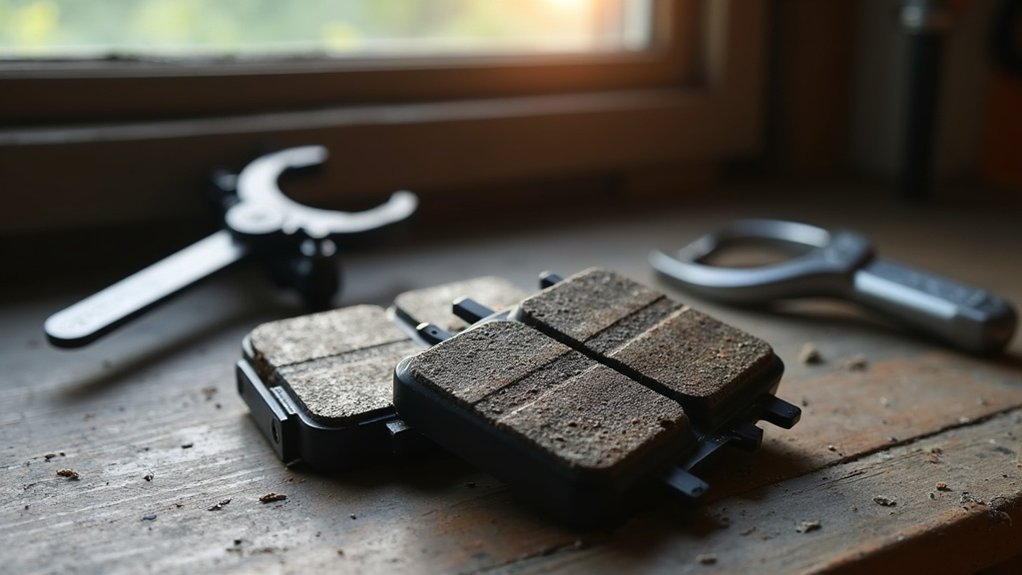
You should replace your e-bike brake pads when their thickness falls below 3mm to maintain peak braking performance and guarantee safety. Look out for signs like unusual noises, longer stopping distances, or a soft lever feel, which indicate your pads may need checking. Regular inspections every 500 miles or monthly can help catch issues early. To find out more about extending the lifespan of your brake pads and conducting proper inspections, keep going.
Key Takeaways
- Replace brake pads when their thickness falls below 3mm for optimal safety and performance.
- Look for unusual noises, longer stopping distances, or softer lever feel as signs for inspection.
- Check brake pads every 500 miles or monthly, especially in challenging riding conditions.
- Inspect for signs of glazing, excessive brake dust, or visible wear indicators like grooves.
- Consider rider weight and terrain; aggressive riding can significantly reduce pad lifespan.
Why Brake Pad Maintenance Is Crucial
When you neglect brake pad maintenance, you risk not only your safety but also the longevity of your e-bike.
Regular checks are essential for consistent braking performance, preventing accidents caused by decreased stopping power.
Regular brake checks are crucial for reliable stopping power and accident prevention.
Pay attention to wear indicators; once your brake pads reach a thickness of less than 3mm, it’s time to replace them.
This proactive maintenance not only enhances braking efficiency but also protects your rotors and rims from costly damage.
By monitoring pad thickness and scheduling timely replacements, you’ll guarantee a smoother ride and boost rider confidence, especially in demanding conditions.
Prioritize brake maintenance for peak safety and performance.
Signs That Your Brake Pads Need Replacement
Maintaining your e-bike’s brake pads is essential, as ignoring wear signs can compromise safety and performance. Here are key indicators that your brake pads need replacement:
| Sign of Wear | Description | Action Needed |
|---|---|---|
| Unusual Noises | Squeaking or squealing sounds | Check for wear |
| Longer Stopping Distances | Reduced braking efficiency | Inspect pads |
| Thickness Below 3mm | Visually inspect for thickness | Need replacements |
| Excessive Brake Dust | Buildup around wheels indicates degradation | Check for wear |
| Signs of Glazing | Cracks or shiny surfaces | Immediate replacement |
Stay vigilant; these signs indicate your organic brake pads need immediate attention.
How to Inspect Your Brake Pads
To inspect your brake pads effectively, start with a visual thickness assessment; verify the pads are above 1 mm for ideal safety.
Pay attention to any unusual noises during braking, as these can signal performance issues.
Regular checks can help you catch problems early and maintain reliable braking.
Visual Thickness Assessment
Though it might seem straightforward, evaluating the thickness of your e-bike’s brake pads requires careful inspection. For disc brakes, remove the wheel to clearly view the pads. They should be at least 3mm thick; anything below indicates it’s time to replace them. Rim brake pads feature wear indicators—if grooves are gone, replace them. Regular maintenance includes checking your brake pads every 250-300 miles.
| Brake Type | Thickness Check | Replacement Indicator |
|---|---|---|
| Disc Brakes | Visual & Caliper | Less than 3mm |
| Rim Brakes | Visual Inspection | No visible grooves |
Noise and Performance Check
One mightn’t realize how essential it’s to listen for noises and assess performance when inspecting brake pads on your e-bike. Unusual sounds can indicate that your pads are wearing down, while reduced braking power suggests a need for replacement.
During your performance check, pay attention to:
- Squeaking or grinding noises
- Increased lever travel for brake engagement
- Excessive brake dust buildup around wheels
- Signs of glazing or cracking on pads
Regularly inspect brake pads to guarantee safety and maintain peak braking performance. Addressing these issues promptly can prevent further complications and enhance your riding experience.
When Should You Replace Brake Pads?
How do you know when it’s time to replace your e-bike brake pads?
You should replace brake pads when their thickness falls below 3mm, indicating considerable wear and diminished braking performance.
If you hear squeaking or grinding noises, experience longer stopping distances, or notice a softer feel when squeezing the brake levers, it’s time to inspect and potentially replace them.
Regular visual inspections are essential, especially for rim brakes where grooves should be visible.
Depending on your riding conditions, replace pads after 500 miles for aggressive riding or up to 1,500 miles for casual rides to guarantee safety and performance.
Factors That Affect Brake Pad Lifespan
Your brake pad lifespan is heavily influenced by the type of brake system you use and the conditions you ride in.
Aggressive riding on hilly terrain can lead to quicker wear, while hydraulic systems typically reduce pad degradation compared to mechanical ones.
Understanding these factors helps you anticipate when it’s time for a replacement.
Brake Type Impact
Although the type of brake system plays a critical role in determining brake pad lifespan, various factors such as riding conditions and rider weight also come into play.
- Hydraulic brakes typically lead to less pad wear due to smoother operation.
- Heavier e-bikes and riders increase stress on brake pads, accelerating wear.
- Aggressive riding on steep hills can reduce pad life to 500 miles.
- The material composition matters; organic pads wear out faster than sintered pads.
Regular maintenance and proper braking techniques are essential for extending the lifespan of your brake pads, regardless of the brake type you use.
Riding Conditions Influence
Riding conditions greatly impact brake pad lifespan, so understanding these factors is crucial for e-bike maintenance.
Aggressive riders tackling steep hills or off-road trails can find brake pad wear accelerating, often requiring replacements after just 500 miles. In contrast, casual riders on flat terrain may enjoy lifespans closer to 1,500 miles.
Additionally, rider and cargo weight increases stress on brakes, further affecting wear. Frequent urban braking leads to quicker degradation, while environmental factors like wet or muddy conditions introduce debris that exacerbates wear.
Regular inspections are essential to monitor brake pad condition and guarantee peak performance.
How to Extend Brake Pad Lifespan
Maintaining brake pad longevity is essential for ideal e-bike performance. To help your brake pads last longer, consider these tips:
Proper maintenance of brake pads is crucial for optimal e-bike performance and longevity.
- Use smooth, gradual braking techniques to reduce strain.
- Regularly check fluid levels, clean rotors, and guarantee caliper alignment.
- Invest in high-quality brake pads, like sintered pads, for better durability.
- Rotate front and rear brake pads periodically to even wear.
Adjust your riding habits based on terrain, avoiding aggressive braking on steep hills.
By implementing these strategies, you’ll extend brake pad life and improve your overall riding experience.
Now’s the time to check and enhance your e-bike’s braking system!
Replacing Brake Pads
When you notice signs of wear or your brake pads fall below the recommended thickness, it’s time to replace them to guarantee your e-bike’s braking system remains reliable. E-bike brake pads last between 500 to 1,500 miles, depending on conditions. If you hear unusual noises or experience reduced stopping power, these are clear signs of worn brake pads. Regularly check your disc brake pads; anything under 3mm needs immediate replacement to prevent rotor damage.
| Signs of Worn Brake Pads | Recommended Thickness | Average Lifespan |
|---|---|---|
| Squeaking or Grinding | Below 3mm | 500-1,500 miles |
| Reduced Braking Power | Less than 1.5mm | 500-2,000 miles |
| Longer Stopping Distances |