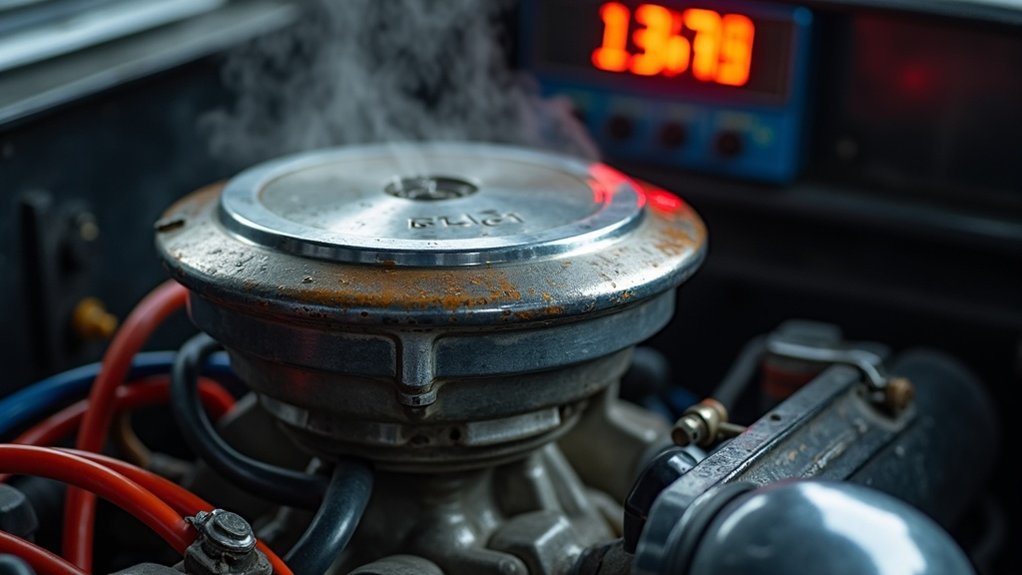
You can recognize signs of engine overheating by monitoring the temperature gauge, which may approach the red zone. Look for steam or smoke escaping from the hood, and pay attention to warning lights or unusual smells like burning coolant. A noticeable drop in performance or unusual engine noises can also indicate an overheating issue. It’s essential to act quickly. Understanding the causes and preventative measures can help you maintain your vehicle’s health effectively.
Key Takeaways
- Monitor the temperature gauge; a needle approaching the red zone indicates potential overheating.
- Look for steam or smoke escaping from under the hood as a warning sign.
- Pay attention to the engine temperature warning light; its activation signals overheating issues.
- Notice any unusual smells, like burning coolant or oil, which may indicate engine trouble.
- Be aware of reduced performance, such as decreased acceleration, which can accompany overheating.
Symptoms of Engine Overheating
How can you tell if your engine is overheating? First, monitor the temperature gauge; if the needle approaches the red zone, it’s a clear warning of an overheating engine.
You might also notice steam or smoke escaping from under the hood, indicating boiling coolant.
Pay attention to the engine temperature warning light, typically a thermometer icon, which signals critical overheating issues.
Unusual smells, like burning coolant or oil, can suggest high temperatures are affecting engine fluids.
Finally, if you experience a noticeable drop in performance, including reduced acceleration and power, your engine is likely overheating and needs immediate attention.
Common Causes of Engine Overheating
Engine overheating can often be traced back to low coolant levels, which hinder the system’s ability to absorb and dissipate heat effectively.
A faulty thermostat may also contribute by failing to regulate coolant flow, potentially leading to elevated temperatures.
Additionally, blocked or damaged radiators can restrict airflow, further exacerbating overheating during engine operation.
Low Coolant Levels
Low coolant levels are a leading cause of engine overheating, often stemming from leaks, evaporation, or insufficient maintenance.
When coolant levels drop, the engine struggles to absorb heat effectively, which can lead to an overheated engine and potential engine damage.
Regularly checking coolant levels against the reservoir’s indicators is crucial to prevent overheating and guarantee peak engine performance.
Additionally, coolant should be flushed and replaced periodically, as old coolant can lose its heat dissipation properties.
If you notice a significant drop in coolant, investigate immediately, as it may indicate a serious leak or malfunction within the cooling system.
Faulty Thermostat Issues
Coolant levels aren’t the only factor that can lead to overheating; a faulty thermostat can also play a significant role.
When your engine is overheating, it’s vital to take into account these symptoms:
- Engine temperature fluctuates unexpectedly.
- Steam or smoke emerges from under the hood.
- Poor fuel efficiency due to incorrect temperature readings.
A faulty thermostat often gets stuck closed, blocking coolant flow and causing rapid temperature increases.
If neglected, this can result in serious damage to your engine. Regular inspections and timely replacements, typically costing $100 to $300, are essential for maintaining vehicle health and avoiding costly repairs.
Radiator Blockages or Damage
Radiator blockages and damage can greatly compromise your vehicle’s cooling system, leading to engine overheating.
Debris, dirt, or corrosion can obstruct coolant flow, while leaks or cracks in the radiator result in coolant loss and inefficient heat dissipation.
Additionally, a malfunctioning radiator fan restricts airflow, further hindering cooling efficiency.
Insufficient or contaminated coolant exacerbates these issues, reducing the radiator’s ability to transfer heat effectively.
To prevent overheating, regular inspection of the radiator for wear, blockages, and leaks is essential.
Addressing these problems promptly guarantees your cooling system maintains peak performance, protecting your engine from potential damage.
Immediate Actions When Your Engine Overheats
When your engine overheats, you need to safely pull over to the side of the road and turn off the ignition immediately.
This action prevents further damage and allows the engine to cool.
Wait at least 30 minutes before inspecting any components to avoid burns from steam or hot surfaces.
Safely Pull Over
As your engine temperature rises or steam starts billowing from under the hood, it’s crucial to pull over safely at the earliest opportunity.
Turning off the engine immediately prevents further damage to critical engine components.
Verify all passengers exit the vehicle and move to a safe distance away from the engine area to avoid potential burns.
- Rapidly rising temperatures can lead to catastrophic engine failure.
- Steam coming from the hood signals imminent danger.
- Your safety and that of your passengers is paramount.
Wait at least 30 minutes for the engine to cool before inspecting coolant levels or seeking professional assistance.
Allow Engine to Cool
After safely pulling over and turning off the engine, the next step is to allow it to cool.
Wait at least 30 minutes before opening the hood; doing so prematurely can result in burns from escaping steam or hot coolant. To expedite cooling, roll down windows and activate the HVAC system, which helps vent heat away from the engine compartment.
Avoid opening the radiator cap until the engine has completely cooled, as this can cause hot steam and coolant to spray out, posing a risk of injury.
If overheating persists, check coolant levels and inspect for leaks or consult a professional mechanic.
Checking for Cooling System Issues
To guarantee your vehicle’s cooling system operates efficiently, you must regularly check for potential issues that could lead to overheating.
Neglecting these checks can cause your engine to overheat, resulting in costly repairs.
Here are three critical areas to inspect:
- Coolant Levels: Confirm they’re between minimum and maximum indicators.
- Radiator Condition: Look for leaks or blockages that impede coolant circulation.
- Thermostat Functionality: Verify it opens correctly to allow coolant flow.
Preventative Measures for Engine Overheating
Preventing engine overheating requires proactive measures that secure your cooling system functions at its best.
Regularly check coolant levels to confirm effective heat dissipation. Schedule routine inspections of the radiator to identify any issues that may lead to blockages or damage.
Regular coolant checks and radiator inspections are vital for preventing overheating and ensuring optimal engine performance.
Don’t forget to replace the thermostat periodically to maintain proper coolant flow, which is essential for regulating the engine’s temperature. Additionally, monitor the serpentine belt’s condition, as a malfunctioning belt can impair the water pump and cause overheating.
Finally, flush the cooling system every 30,000 miles to remove contaminants that hinder cooling efficiency.
Signs That Your Ford Engine May Be Overheating
When your Ford engine is overheating, recognizing the signs early can prevent serious damage and costly repairs.
Watch for these vital indicators:
- The temperature gauge needle climbs into the red zone, signaling overheating.
- Steam or smoke rises from under the hood, indicating coolant escape.
- Unusual burning smells, like burning engine oil or coolant, suggest excessive heat affecting fluids.
Ignoring these signs can lead to significant engine damage.
If you notice any of these symptoms, it’s essential to assess the situation immediately.
Prolonged overheating can signal serious issues within your engine or cooling system that need prompt attention.
Professional Services for Overheating Issues
Professional services for addressing overheating issues are crucial in maintaining your vehicle’s performance and longevity.
A skilled mechanic can perform radiator flushes, removing old coolant and contaminants that hinder your heat exchanger’s efficiency. If you notice leaks or blockages, prompt radiator repairs can prevent further damage to your vehicle engine.
In severe cases, a complete radiator replacement might be necessary to restore ideal cooling. Additionally, regular engine oil changes are essential for lubrication and cooling, greatly lowering overheating risks.
Schedule maintenance checks with professionals to catch potential overheating issues early, saving you from costly repairs and enhancing your vehicle’s lifespan.