For the best grip in winter, you’ll want to choose specialized winter bike tires. Studded tires excel on icy surfaces, providing superior traction, while non-studded options perform better on mixed terrain. Look for wider tires with deeper grooves and lower pressures to enhance contact with slippery roads, ensuring a more stable ride. Regular maintenance and the right tire choice will boost your confidence in harsh conditions. Explore more to find top picks and essential maintenance tips for winter tires.
Key Takeaways
- Studded tires provide superior grip on icy surfaces, making them ideal for extreme winter conditions.
- Non-studded tires offer better performance on wet or slushy roads, suitable for mixed winter weather.
- Wider tires enhance traction and stability, increasing surface contact on slippery terrains.
- Lower tire pressures improve grip by maximizing contact area, reducing the risk of slipping.
- Regular maintenance, including pressure checks and tread inspections, is crucial for optimal tire performance in winter.
Key Features of Winter Bike Tires
When you’re choosing winter bike tires, it’s essential to understand their key features that enhance performance in cold conditions.
Winter tyres utilize specialized rubber compounds that maintain grip and flexibility in freezing temperatures. The tread pattern typically includes deeper grooves for better traction on snow-covered roads.
Winter tires feature specialized rubber compounds for enhanced grip and flexibility, with deeper grooves designed for optimal traction on snow.
Higher TPI ratings can improve ride comfort while ensuring durability. Many options are tubeless compatible, allowing lower pressures that enhance traction and reduce pinch flats.
Studded winter tires provide superior grip on ice, making them ideal for icy conditions, while non-studded variants offer versatility for varying winter weather, balancing grip and rolling resistance effectively.
Studded vs. Non-Studded Tires: Which Option to Choose?
When choosing between studded and non-studded tires, consider the grip on icy surfaces versus versatility in varying conditions.
Studded tires excel in icy environments, providing exceptional traction, while non-studded tires offer a smoother ride and better performance on mixed terrain.
Your decision should align with your typical winter riding conditions to guarantee ideal safety and comfort.
Grip on Ice
Choosing the right tires for icy conditions is essential to guarantee safety and performance while riding.
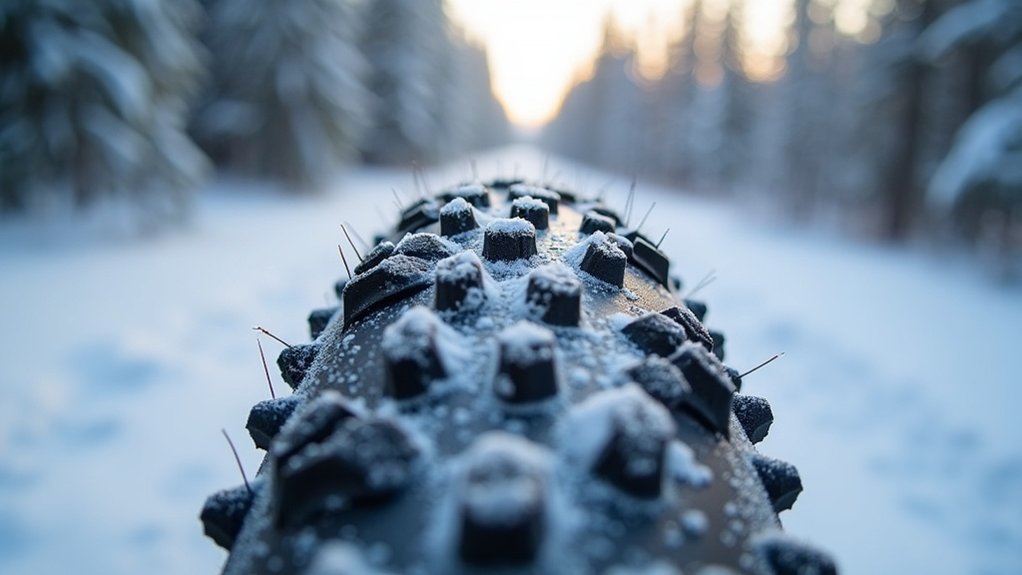
Studded tires provide maximum grip on ice, thanks to metal studs that dig into icy surfaces, ensuring unparalleled traction.
However, if you encounter mixed conditions, non-studded tires might be a better choice. They offer decent grip and durability, especially when equipped with advanced rubber compounds and innovative tread designs, making them effective for winter riding on wet or slushy roads.
Assess your local climate; if icy conditions are frequent, opt for studded tires, but for occasional light snow, non-studded tires can suffice.
Versatility in Conditions
Selecting the right tire type for winter riding is essential for maintaining performance and safety across varying conditions. Studded tires excel on ice, offering maximum grip, while non-studded tires provide a versatile tread pattern suited for mixed conditions like rain and slush. Choosing between them largely depends on your local environment.
| Tire Type | Best For | Limitations |
|---|---|---|
| Studded | Icy surfaces | Noisy on dry roads |
| Non-Studded | Mixed conditions | Less grip on ice |
| Tire Width | Wider = Better grip | Compatibility issues |
| Tread Pattern | Specialized for ice | Versatile for all surfaces |
| Rolling Speed | Slower on studded | Faster on non-studded |
Ride Comfort Comparison
While both studded and non-studded tires have their advantages, ride comfort can greatly influence your winter cycling experience.
- Studded tires grip well on icy surfaces but can compromise comfort on dry roads.
- Non-studded tires provide a smoother ride due to flexible rubber compounds.
- Wider widths (28mm or more) can run at lower pressures, enhancing grip and comfort.
- Non-studded options are generally lighter, improving rolling efficiency for longer rides.
Ultimately, if you prioritize a comfortable ride over maximum grip, non-studded tires are often the better choice for mixed winter conditions.
Top Picks for Winter Bike Tires
When choosing winter bike tires, you’ll want options that excel in grip and durability.
The Schwalbe Durano Plus and Continental Grand Prix 4 Seasons stand out as top all-round choices, while specialized options like the Pirelli Cinturato Velo TLR cater to specific conditions.
Consider your riding style and winter environment to find the best fit for your needs.
Best All-Round Tires
Finding the right winter bike tires can substantially enhance your riding experience, especially as conditions become more challenging.
Here are some of the best all-round options you’ll want to contemplate:
- Schwalbe Durano Plus: Excellent grip and high puncture protection.
- Continental GP5000 AS TR: Impressive all-season performance with low rolling resistance.
- Challenge Elite XP: Offers a comfortable ride with a high TPI for rough roads.
- Vittoria Rubino V: An affordable winter tire that balances performance and durability.
These tires combine durable compounds with good grip, ensuring you stay safe and enjoy an impressive ride feel all winter long.
Specialized Conditions Recommendations
As winter weather sets in, choosing the right bike tires becomes essential for maintaining grip and control on slippery surfaces. Here are some top picks for winter conditions:
| Tire Model | Key Features |
|---|---|
| Specialized Roubaix Pro | Low rolling resistance, good grip on wet roads |
| Specialized S-Works Mondo | Slick center, ideal for icy conditions |
| Specialized Turbo Cotton Hell | Lightweight, offers good grip, watch for cuts |
| Specialized Ground Control | Versatile, Gripton compound enhances traction |
These tires provide excellent puncture protection and guarantee reliable performance, allowing you to navigate winter roads safely and confidently.
Maintenance Tips for Winter Tires
To guarantee your winter bike tires perform at their best, it’s essential to prioritize regular maintenance.
Prioritizing regular maintenance is key to ensuring optimal performance of your winter bike tires.
Follow these maintenance tips for ideal grip performance and safety:
- Regularly check tire pressure, as winter temperatures can cause fluctuations.
- Clean tires with warm soapy water to remove debris, enhancing traction.
- Conduct wear inspections, focusing on deep treads; replace worn tires promptly.
- Consider using tire sealant for tubeless setups to protect against small punctures.
Understanding Tire Compatibility and Sizing
Understanding tire compatibility and sizing is essential for enhancing your winter biking experience. You must verify tire width aligns with your bike frame clearance, typically maxing out around 28mm for road bikes. Tubeless tires may be beneficial but confirm rim type compatibility, especially with hookless designs. Threads Per Inch (TPI) matters too; higher TPI enhances ride quality but may compromise durability. Always check manufacturer specifications for tire models tailored to your rim type. Prioritize grip performance by selecting tires suited for winter riding conditions, often requiring broader or specialized tread patterns.
| Aspect | Considerations |
|---|---|
| Tire Compatibility | Frame clearance, rim types |
| Tire Width | Max 28mm for road bikes |
| Tubeless Tires | Compatibility with rims |
| TPI | Balance between ride and durability |
| Riding Conditions | Select for best grip performance |
Performance Characteristics in Winter Conditions
When maneuvering winter conditions, the performance characteristics of your bike tires become essential for safety and efficiency. The right combination of attributes guarantees ideal grip and traction on slippery surfaces.
Consider the following factors:
- Rubber compounds: Softer mixtures enhance traction, while harder compounds improve puncture resistance.
- Tread pattern: Aggressive designs channel water and slush, boosting grip.
- Studs: Essential for icy surfaces, providing maximum traction.
- Wide tires: These allow for lower pressures, improving overall performance and comfort.