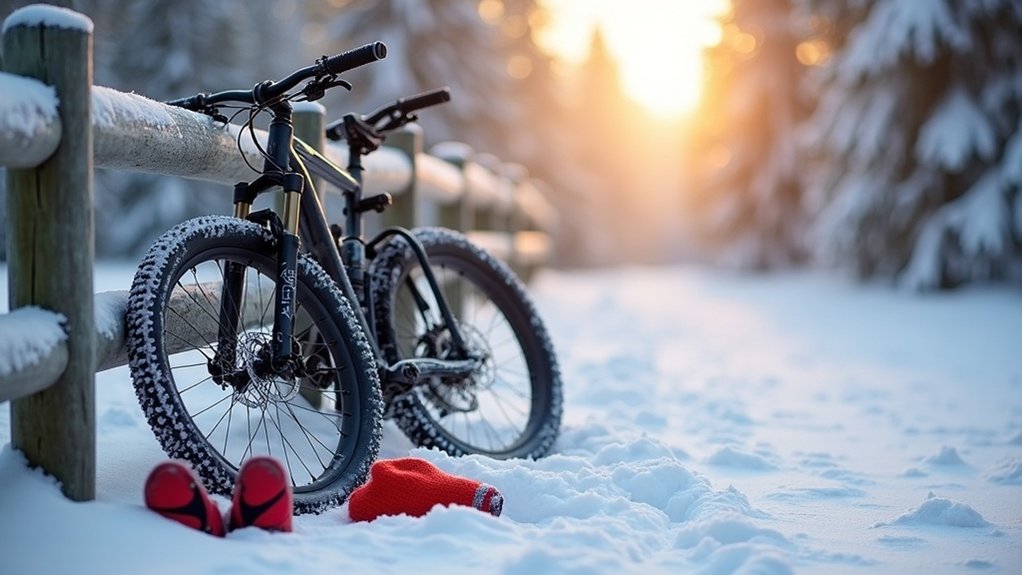
To prep for your first snowfall bike ride, start by equipping your bike with winter-specific tires for better grip on icy roads. Perform essential maintenance by cleaning your bike and ensuring your brakes work effectively. Dress in moisture-wicking layers topped with a waterproof jacket, and don insulated gloves and boots for warmth. To stay visible, use bright lights and reflective gear. Finally, practice safe riding techniques, learning to anticipate road conditions for a smooth ride. Discover more tips to make your ride safe and enjoyable!
Key Takeaways
- Equip your bike with studded tires for optimal grip on icy surfaces and consider wider tires for enhanced stability.
- Perform essential bike maintenance by cleaning off dirt and salt, lubricating the chain, and ensuring brakes function effectively.
- Dress in layers starting with moisture-wicking base layers, followed by insulating materials, and finish with a waterproof cycling jacket.
- Enhance visibility with bright lights and reflective clothing, ensuring your bike has multiple light sources charged and ready.
- Practice safe riding techniques, such as maintaining a relaxed posture, anticipating longer braking distances, and adjusting speed for slippery conditions.
Gear up With the Right Tires
When you’re gearing up for a snowy bike ride, choosing the right tires can make all the difference in your comfort and safety.
Opt for studded tires, which provide excellent grip on icy surfaces, ensuring you stay upright. Wider tires with a lugged design enhance stability, distributing your weight evenly across the snow.
Don’t forget to adjust your tire pressure, ideally between 5-10 PSI, to increase surface contact and prevent sinking. Regularly check the pressure before rides, as colder temperatures can reduce it.
For mixed conditions, consider all-weather tires, but dedicated winter tires excel in severe snow and ice.
Perform Essential Bike Maintenance
Before you hit the snowy trails, performing essential bike maintenance is crucial to guarantee a safe and enjoyable ride.
Start by inspecting and cleaning your bike thoroughly to remove dirt and salt that could cause corrosion during winter riding.
Switch to winter-specific tires for better grip, and regularly check your tire pressure, as cold temperatures can lower it. Aim for the lower end of the recommended range for best traction.
Don’t forget to lubricate the chain with a winter-specific wet lube, and verify your brakes are functioning properly for effective stopping power on slippery surfaces.
Dress Appropriately for Cold Weather
As the temperatures drop and snow begins to blanket the ground, dressing appropriately for cold weather cycling becomes essential for your comfort and safety.
Start with a moisture-wicking base layer to keep sweat at bay, then add insulating layers like Merino wool.
Begin with a moisture-wicking base layer to manage sweat, then layer up with warm Merino wool for insulation.
Top it off with a waterproof cycling jacket to shield against wind and snow.
Don’t forget insulated gloves—opt for waterproof ones that allow you to easily control your brakes and shifters.
For your feet, wear insulated, waterproof boots or thicker cycling shoes paired with shoe covers.
Complete your outfit with a helmet cover to keep your head warm and cozy.
Enhance Visibility for Safety
Riding in snowy conditions not only challenges your ability to stay warm but also demands heightened visibility to guarantee your safety.
Equip your bike with a bright front light of at least 500 lumens and a rear light of 100 lumens for maximum visibility. Choose bright, reflective clothing and accessories, especially during low-light rides.
Enhance your bike’s visibility with reflective elements, like vests or stickers, ensuring you’re seen from all angles. Always charge your lights before heading out and carry spare batteries for emergencies.
Consider adding multiple light sources, like a headlamp, to boost your visibility on the road.
Practice Safe Riding Techniques
When you hit the snowy trails, mastering safe riding techniques becomes essential for maneuvering the unpredictable terrain.
Keep a relaxed posture to enhance stability and control, especially on slippery conditions. Anticipate longer braking distances; primarily use your rear brake to avoid skidding.
Always scan your surroundings to spot icy patches or obstacles ahead, as quick reactions are crucial. Adjust your speed according to road conditions, slowing considerably when making turns.
Finally, maintain consistent pedal revolutions rather than sudden bursts of power to prevent losing traction while riding on ice.
With these techniques, you’ll navigate the winter landscape with confidence.