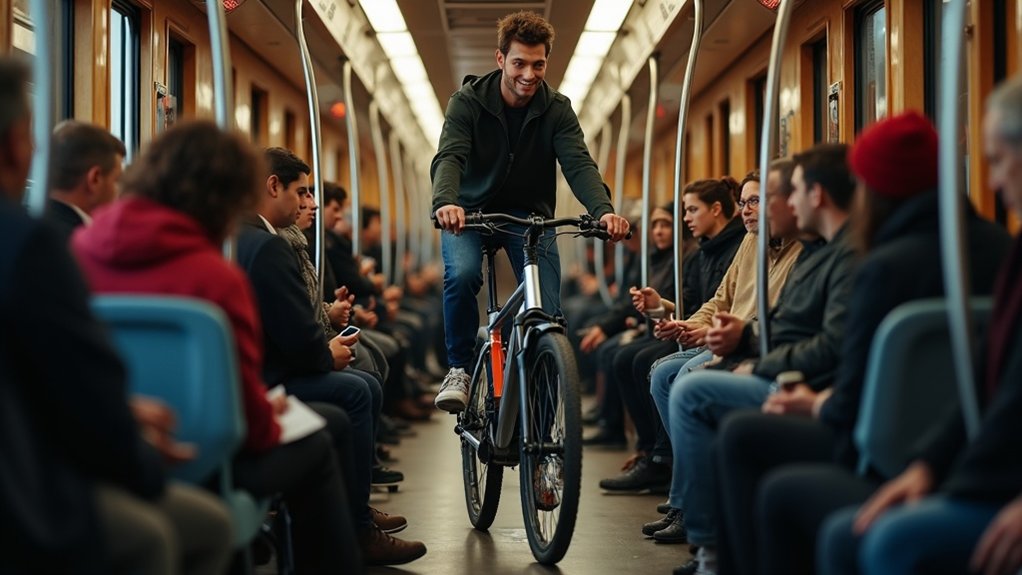
To transport e-bikes on public transit, start by reviewing your local transit rules. Make sure to remove the battery to comply with weight limits and avoid peak hours to reduce overcrowding. Use designated bike racks for secure loading and unloading. Keep in mind that folding e-bikes are generally welcome anytime, while standard e-bikes may face restrictions. For more insights on making your transit experience smoother, there’s plenty more to discover.
Key Takeaways
- Check local transit regulations for e-bike weight limits and peak hour restrictions before traveling.
- Remove the battery from your e-bike to comply with safety and weight requirements.
- Use designated bike racks on buses, and load/unload only when the bus has stopped.
- Consider using a folding e-bike for easier access on public transport systems.
- Travel during off-peak hours to avoid overcrowding and ensure smoother boarding.
Understanding E-Bike Transport Regulations
When you’re planning to transport your e-bike on public transit, it’s crucial to understand that each system has its own set of regulations.
Local transit authorities often have specific policies regarding e-bikes on public transportation, including weight restrictions and designated areas for bikes.
Local transit systems have unique rules for e-bikes, including weight limits and specific bike zones.
Many systems allow folding e-bikes during all hours since they’re treated like luggage. However, you might face restrictions during peak hours for standard e-bikes.
Always check if you need to remove your battery for safety.
Best Practices for Boarding Public Transit With E-Bikes
Although maneuvering public transit with your e-bike can seem intimidating, following a few best practices can make the process smoother.
To guarantee a hassle-free journey:
- Check your local transit agency’s rules and regulations for e-bikes.
- Remove the battery before boarding to meet weight limitations.
- Load and unload your e-bike only after the bus has stopped, securing it in bike racks.
- Travel during off-peak hours to avoid overcrowding and improve your chances of boarding.
Navigating Different Types of Transit Systems
As you navigate different types of transit systems with your e-bike, understanding each mode’s specific regulations can make all the difference in your travel experience.
Many public transit options, like commuter rail lines, allow e-bikes during off-peak hours, while folding bikes are typically welcome anytime.
Commuter rail lines often permit e-bikes during off-peak hours, while folding bikes enjoy all-day access.
Subway systems often restrict e-bike access and require folding within specific dimensions.
Buses usually accept only folding e-bikes, and ferries may have battery removal and weight limits.
Always check your local transit authority’s website for unique policies, including secure bicycle parking options and designated bike lanes, to guarantee a smooth journey.
Benefits of Combining E-Bikes With Public Transportation
Combining e-bikes with public transportation offers a host of benefits that can enhance your commuting experience.
By integrating e-bikes into public transit systems, you can enjoy:
- Reduced carbon footprint—e-bikes emit up to 10 times less CO2 than cars.
- Efficient last mile solution—e-bikes cover short distances that buses or trains might miss.
- Lower commuting expenses—charging an e-bike is considerably cheaper than fueling a car.
- A more active lifestyle—cycling promotes physical fitness and well-being.
This sustainable urban mobility approach not only alleviates traffic congestion but also contributes to improved air quality and public health.
Tips for a Smooth E-Bike Transit Experience
When planning to take your e-bike on public transit, knowing the rules and best practices can make all the difference in your experience.
Check your local transit agency’s e-bike regulations, as they can vary, especially regarding size and weight limits. Consider using a folding e-bike for easier transport; they’re often allowed anytime. Remember to remove the battery to reduce weight and comply with regulations.
Be mindful of peak hour restrictions, as many systems limit e-bike access during busy times. Familiarize yourself with bicycle racks and their loading procedures to guarantee a smooth journey.
Don’t hesitate to contact customer service for assistance.