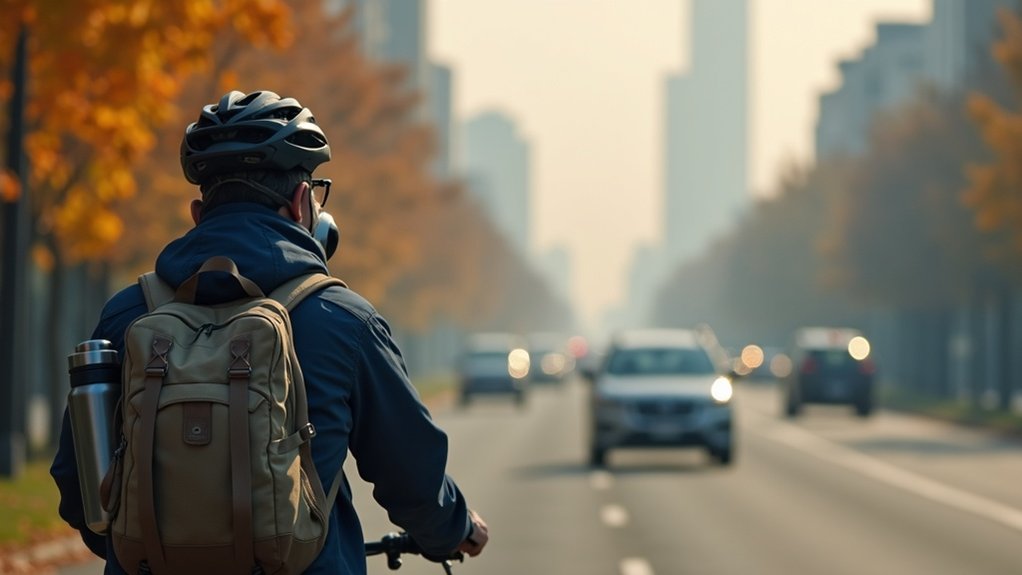
To commute safely in poor air quality, close your windows and use the recirculation setting in your vehicle. Monitor the Air Quality Index to avoid peak pollution times and consider alternative routes to minimize exposure. Wearing an N95 mask can also help protect you on high pollution days. If you’re cycling or walking, aim to travel when air quality is better. There’s more to explore about how to protect your health while commuting.
Key Takeaways
- Close windows and use the recirculation setting in vehicles to minimize exposure to outside air pollution during commutes.
- Choose walking routes or times with lower pollution levels to reduce inhalation of harmful particles.
- Wear an N95 mask on high pollution days to protect against inhaling harmful air pollutants.
- Regularly check air quality levels to avoid commuting during peak pollution times, especially for vulnerable groups.
- Utilize air purifiers indoors to improve air quality and maintain a healthy commuting environment.
Understanding Poor Air Quality and Its Effects
When air quality declines, understanding its effects becomes essential for your health and well-being.
Poor air quality, measured by the Air Quality Index (AQI), indicates increased pollution levels that can lead to immediate symptoms like coughing and headaches. Long-term exposure raises the risk of serious health issues, including asthma and cardiovascular disease, particularly for vulnerable populations such as children and the elderly.
Poor air quality, indicated by the AQI, can cause immediate discomfort and long-term health risks, especially for vulnerable groups.
Active commuters, like cyclists, may inhale more pollutants, especially during peak hours.
To mitigate risks, guarantee proper ventilation in your environment and stay informed about the AQI to adjust your activities and protect your health effectively.
Protective Measures for Commuting
Protecting yourself during commutes in poor air quality is essential for maintaining your health. To minimize air pollution exposure, close your windows and use the recirculation setting on your vehicle’s ventilation system. Consider planning your commute during lower pollution times, avoiding rush hour to reduce time spent near school buses and heavy traffic emissions. Using portable air quality monitors can help identify pollution hotspots. Regularly change your cabin air filter for better air quality inside your vehicle. If you’re at risk, consult your healthcare provider about wearing an N95 mask on high pollution days.
| Protective Measure | Purpose |
|---|---|
| Close windows | Reduce external pollution |
| Use recirculation setting | Limit air pollution exposure |
| Monitor air quality | Identify pollution hotspots |
| Change air filter | Guarantee effective filtration |
| Wear N95 mask | Protect health in high pollution |
Strategies for Active Transportation
While traversing urban environments, choosing active transportation methods like walking or cycling can considerably reduce your exposure to air pollution compared to driving.
Active commuters enjoy health benefits, with pedestrians facing 30% less PM2.5 exposure than cyclists and 40% less than car users.
To maximize cleaner air, focus on route selection; avoid high-traffic areas, as this can cut exposure by up to seven times.
Utilize an air quality monitor to access real-time air quality data, allowing you to plan your journey around peak pollution times.
Indoor Air Quality Considerations
Active transportation methods can help reduce your exposure to outdoor air pollution, but indoor air quality also plays a significant role in your overall health.
Here are three considerations to improve your indoor environment:
- Guarantee proper ventilation to diminish airborne particles and enhance indoor air quality.
- Use air purifiers equipped with HEPA filters to capture up to 99.97% of dust and pollutants, especially essential for people with asthma.
- Maintain humidity levels between 30% and 50% to prevent mold growth and further reduce dust.
Being proactive about these factors can greatly mitigate the impact of air quality on your health.
Community Efforts for Cleaner Air
Community efforts for cleaner air can greatly enhance the quality of the environment you live in. By advocating for policies that support public transportation and electric vehicles, you help reduce outdoor pollution and particle pollution in your community.
Engaging in local initiatives like tree planting acts as a natural filter, absorbing carbon dioxide. Educational campaigns raise awareness about the health impacts of poor air quality, encouraging practices such as walking, cycling, and carpooling.
Implementing no idling policies around schools protects vulnerable populations. Together, these community efforts empower you to protect yourself from air pollution and contribute to a healthier atmosphere.