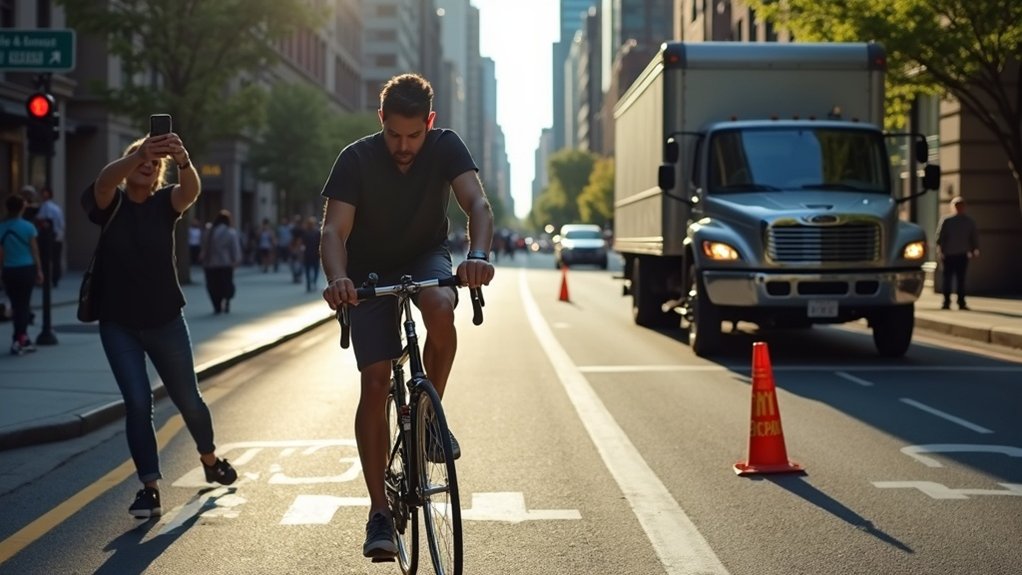
To report blocked bike lanes effectively, you should gather clear information like the exact location, date, and time of the obstruction. Take photographs that show the blockage and surrounding landmarks. Use reporting apps such as NOLA311 or Austin’s 311 for efficiency and track your reports. Engage with your community by attending city meetings and collaborating on advocacy efforts. This approach not only addresses immediate issues but also paves the way for long-term improvements in bike lane infrastructure. You’ll discover additional strategies to enhance your impact.
Key Takeaways
- Document the exact address or intersection, take clear photos, and note the date and time of the blockage for accurate reporting.
- Utilize reporting apps like NOLA311.org or local 311 systems to efficiently submit your report with detailed information.
- Include identifiable landmarks in your photos to help city officials locate the obstruction more easily.
- Engage with community members to collectively report issues and strengthen advocacy for bike lane improvements.
- Attend city council meetings or public forums to voice concerns and foster relationships with local government representatives.
Understanding the Importance of Reporting Blocked Bike Lanes
When you report blocked bike lanes, you’re not just sharing an inconvenience; you’re actively contributing to a safer cycling environment.
Each report you submit documents hazards that threaten cyclists and prompts city officials to take corrective action. Your individual report becomes part of a larger dataset, highlighting recurring issues that can influence city planning and infrastructure improvements.
How to Gather Necessary Information for Reporting
Gathering precise information is essential for effectively reporting blocked bike lanes. Start by noting the exact address or intersection where the obstruction occurs; this guarantees accurate reporting and follow-up.
Take clear photographs of the obstruction, especially any vehicles blocking the lane, to provide visual evidence. Don’t forget to record the date and time of the incident, as this helps authorities understand the frequency of violations.
Identify nearby landmarks or notable features to help pinpoint the location. Finally, check for recurring patterns in the same area, as this information can strengthen your report and highlight systemic issues.
Utilizing Online Platforms for Reporting Issues
When you encounter a blocked bike lane, using reporting apps like NOLA311.org or Austin’s 311 app can streamline your response.
These platforms not only allow you to document the issue immediately but also provide an easy way to share precise details and photos, enhancing the clarity of your report.
Reporting Apps Overview
As cities increasingly prioritize cyclist safety and mobility, dedicated reporting apps have emerged as essential tools for addressing bike lane violations.
These apps streamline the reporting process, making it easier for you to take action. Here’s what you can expect:
- Submit photos, location, and vehicle descriptions for violations.
- Track your service requests via mobile devices.
- Access multimedia options to enhance your reports.
- Engage with your community to improve bike lane management.
Importance of Documentation
Documenting blocked bike lanes through online platforms is essential for fostering effective city responses and improving cyclist safety. By providing critical details like exact locations and descriptions, you expedite enforcement actions.
Platforms such as NOLA311.org allow you to track reports and obtain case numbers, creating a thorough record of ongoing issues. Including photos in your documentation can highlight the obstruction’s severity, though be mindful of potential upload failures.
Collective reporting emphasizes recurring problems, prompting officials to prioritize infrastructure improvements. Overall, utilizing these online tools raises awareness of broader safety and maintenance issues in urban bike lane environments.
The Role of Local Government in Addressing Complaints
Local governments play a crucial role in addressing complaints about blocked bike lanes, as they depend on accurate and timely reports from citizens to identify and resolve these issues effectively.
To guarantee your concerns lead to action, consider the following steps:
- Use dedicated reporting systems like 311 to submit details.
- Provide the exact location and nature of the obstruction.
- Encourage others to report similar issues to amplify the concern.
- Engage with local initiatives aimed at improving protected bike lanes.
Tips for Documenting Violations With Photos
When documenting violations of blocked bike lanes, you’ll want to capture clear images that highlight the obstruction and any relevant location details.
Make sure to use your smartphone’s timestamp feature to add credibility to your report.
Capture Clear Images
Capturing clear images of blocked bike lanes is essential for effectively reporting violations, as well-documented evidence can greatly aid authorities in taking action.
To guarantee clarity in your photos, make sure to:
- Use good lighting and focus on the obstructing vehicle.
- Capture multiple angles of the blockage for a thorough view.
- Include identifiable landmarks or street signs to help pinpoint the location.
- Note the time and date of each photo for accurate reporting.
If possible, include a cyclist in the frame to illustrate the blockage’s impact on bike lane accessibility.
Your documentation can make a significant difference.
Include Location Details
Documenting location details is a key step in reporting blocked bike lanes effectively. Always note the exact street name, nearest intersection, and any recognizable landmarks to help authorities identify the site quickly.
Clear photographs are essential; capture the obstruction from different angles to provide a thorough view of the violation. If possible, document additional details like the vehicle’s make, model, color, and license plate number. This information can facilitate enforcement action.
Finally, use an official reporting platform, such as the 311 app or local city websites, to guarantee your report is logged and tracked efficiently with a case number.
Document Time Stamps
A crucial aspect of effectively reporting blocked bike lanes is ensuring your photos include accurate time stamps. This helps establish the exact moment the violation occurred.
Here are some tips to make your documentation more effective:
- Use smartphone features or apps that automatically add time and date to photos.
- Capture multiple angles of the obstruction to show its impact on the bike lane.
- Note the location with GPS coordinates or identifiable landmarks.
- Include a brief description of the obstruction’s nature and its effect on cyclist safety and mobility.
Engaging With Your Community for Collective Action
While it may seem intimidating to tackle the issue of blocked bike lanes alone, engaging with your community can create a powerful force for change.
Connect with local cycling groups and organizations to collectively report these obstructions, amplifying your voices. Use social media to share photos and experiences, raising awareness among neighbors and local authorities.
Organize community meetings to discuss safety and brainstorm solutions. A shared document can help track incidents, presenting a consolidated case to officials.
Partner with local businesses to advocate for clearer signage, highlighting the economic benefits of accessible bike lanes, a strategy that’s successful around the world.
Following Up on Your Reports and Tracking Progress
To guarantee your report about blocked bike lanes leads to meaningful action, tracking its progress is essential. Here’s how you can effectively follow up:
Tracking your report on blocked bike lanes is crucial for ensuring it leads to real action.
- Note the service request number to monitor your report.
- Follow up within a week to confirm it’s acknowledged.
- Use online tracking systems, like NOLA311.org, for updates.
- If no action’s taken, contact your City Council Member to escalate the issue, emphasizing how a bump can cause safety hazards for cyclists.
Documenting the situation with photos also builds a stronger case for local authorities’ further action.
Stay proactive to make sure your voice is heard.
Advocating for Improved Bike Lane Infrastructure
Following up on blocked bike lanes is just the beginning of advocating for lasting improvements in bike lane infrastructure. You need to make your voice heard by engaging with local officials and documenting issues through platforms like NOLA311.org. Community organizations, like Bike Easy, promote clean lanes through volunteer events. Participating in public forums allows you to influence policy changes effectively. Collectively submitting reports on blocked lanes amplifies your community’s concerns, driving city officials to prioritize infrastructure improvements.
| Action | Purpose | Example |
|---|---|---|
| Engage Officials | Highlight maintenance needs | Meet with city planners |
| Document Issues | Track problems | Use NOLA311.org |
| Join Forums | Influence policy | Attend city council meetings |
| Volunteer Events | Improve conditions | Participate in clean-ups |