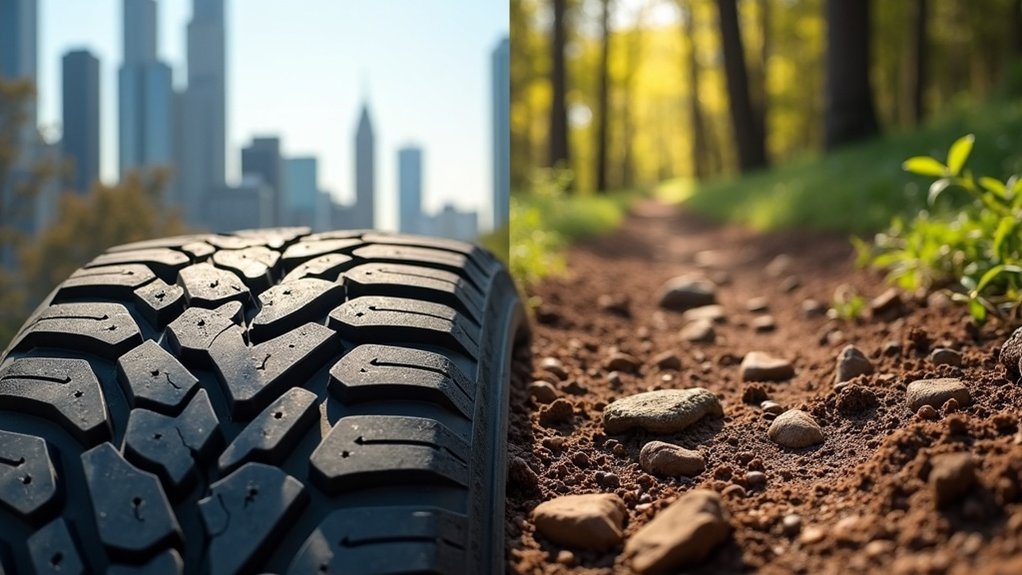
To pick the right tire tread for city versus trail riding, consider the terrain you’ll face. For city riding, go with slick or semi-slick tires for lower rolling resistance and efficient speed on pavement. If you’re hitting trails, opt for knobby treads that provide excellent grip on loose or uneven surfaces. Don’t forget to think about weather conditions, too. Each choice impacts your bike’s performance and safety, so there’s more to explore on how to make the best selection!
Key Takeaways
- For city riding, choose slick tires to minimize rolling resistance and enhance speed on smooth pavement.
- Opt for semi-slick tires if you encounter mixed conditions, balancing city commuting and light off-road use.
- In trail riding, select knobby tires with deep treads for superior traction on loose and muddy surfaces.
- Consider tire width; wider tires (2.0” and above) provide better comfort and stability on urban terrains.
- Adjust tire pressure according to terrain; higher for city roads and lower for improved grip on trails.
Understanding Tire Tread and Its Importance
When you hit the road or the trail, the type of tire tread you choose can make a significant difference in your cycling experience.
Slick tires excel on city streets, minimizing rolling resistance for speed on smooth surfaces. However, if you venture into off-road conditions, knobby treads are essential. They provide superior grip and traction on uneven terrain like mud and rocks.
The tread pattern also influences water dispersion, enhancing safety in wet conditions. Understanding your riding conditions helps you select the right tire tread, optimizing performance and ensuring a safer, more enjoyable ride no matter where you’re cycling.
Key Factors Influencing Tire Performance
Understanding the key factors influencing tire performance is essential for optimizing your ride, whether you’re maneuvering city streets or tackling rugged trails.
Traction plays a crucial role; slick tires excel on smooth city roads, while knobby tires grip loose trails. Rolling resistance affects your speed—slick tires have lower resistance on pavement than knobby ones.
In wet conditions, tires with grooves are safer, preventing hydroplaning. Terrain type matters too; city riding requires hard-surface tires, whereas trail riding demands aggressive tread patterns.
Finally, tire pressure impacts performance—higher pressures reduce rolling resistance for city tires, while lower pressures enhance traction for trail riding.
Types of Bicycle Tire Treads
Choosing the appropriate tire tread can greatly improve your riding experience, whether you’re maneuvering through city streets or exploring rugged trails.
For urban environments, slick treads minimize rolling resistance for speed, though they struggle on wet surfaces.
Slick treads optimize speed in urban riding but may compromise traction on wet roads.
Semi-slick treads offer a versatile option, balancing city commuting and light off-road conditions.
When tackling loose surfaces, knobby treads provide excellent traction but can feel sluggish on pavement.
Directional treads enhance grip based on your riding style, while specialized variants like fat bike and studded tires cater to extreme environments.
Proper tire tread selection guarantees you’re ready for any adventure!
Terrain Considerations for City Riding
City riding presents unique terrain challenges that can greatly impact your biking experience. Consider these key factors:
- Tire Width: Wider tires (2.0” and above) offer better comfort and traction on rough patches without sacrificing speed.
- Tread Type: Slick tires excel on smooth pavement, while semi-slick tires provide a balance for mixed urban conditions.
- Grip in Wet Conditions: Tires with light grooves enhance grip and stability, channeling water away during rainy weather.
- Rolling Resistance: Ideal tire pressure minimizes flats and improves handling on various surfaces, essential for effective city riding.
Terrain Considerations for Trail Riding
When you hit the trails, the terrain can vary dramatically, calling for tires that adapt to diverse conditions.
For wet and muddy trails, look for tire tread with deep, spaced knobs to shed mud and enhance traction.
For wet and muddy trails, opt for tires with deep, spaced knobs to maximize traction and mud-shedding capabilities.
In rocky terrain, choose tires with an aggressive tread pattern and reinforced sidewalls to handle sharp edges.
For dry, hardpack conditions, wider tires (2.4”+) with a balanced tread pattern provide excellent traction without sacrificing rolling speed.
If you’re into XC or marathon racing, lightweight options like the WTB Peacekeeper or Ranger guarantee predictable handling on fast, mixed trails.
Choose wisely for a smooth ride!
Weather Conditions and Their Impact on Tread Selection
Weather plays a significant role in determining the right tire tread for your rides. Choosing the correct tire according to the weather conditions can enhance your safety and performance.
Here are key considerations:
- Dry Conditions: Opt for slick or semi-slick tires to reduce rolling resistance and boost speed during city riding.
- Wet Conditions: Select tires with light grooves or siping to improve grip and stability, minimizing hydroplaning risks.
- Muddy Trails: Use knobby tires for exceptional traction in slippery environments.
- Cold Weather: Employ aggressive tread knobby tires designed for winter, ensuring better grip on icy surfaces.
Understanding these factors is essential!
Making the Right Choice for Your Riding Style
How do you decide which tire tread best suits your riding style?
For city riding, slick or semi-slick tires are your go-to for low rolling resistance and speed on smooth pavement. They enhance efficiency with minimal tread.
In contrast, trail riding demands knobby tires that provide exceptional grip on loose terrain but may slow you down on roads.
Consider the terrain; tight tread patterns work well in wet city conditions, while deeper grooves excel in mud.
If you often switch between city and trail, wide tires (2.4”+) or semi-slick tires offer a balanced solution for both speed and versatility.