To clean disc brake rotors safely, start by removing the wheel with a wrench and jack. Use Isopropyl alcohol on a lint-free cloth to wipe the rotor surface, avoiding direct contact. For deeper cleaning, gently scrub with a soft-bristle brush. Inspect the rotor for damage before reinstalling the wheel. Remember to bed in the brakes according to manufacturer guidelines for peak performance. There’s more to learn about maintaining brake components effectively.
Key Takeaways
- Remove the wheel to access the brake rotor, ensuring safety by using a jack and wrench properly.
- Clean the rotor surface with Isopropyl alcohol and a lint-free cloth to eliminate oils and contaminants.
- Use a soft-bristle brush to remove any stubborn debris from the rotor’s surface.
- Inspect the rotor for any damage or scoring before reinstalling the wheel for safety.
- Always wear latex gloves to avoid contaminating the rotor surfaces with oils from your hands.
Importance of Cleaning Brake Rotors
Cleaning brake rotors is vital for maintaining ideal braking performance, especially after exposure to elements like mud or dust.
Regularly cleaning the rotors prevents contamination that reduces stopping power and increases wear on brake pads. When you clean the rotors, you remove debris that can compromise braking efficiency, leading to glazing or contamination of the pads.
Using Isopropyl alcohol guarantees a residue-free surface, which is essential for proper pad bedding. Neglecting this maintenance can result in shuddering during braking and decreased safety.
Ultimately, a clean rotor surface enhances the entire braking system’s performance and longevity, boosting your confidence on the road.
Recommended Cleaning Supplies
To maintain ideal braking performance, having the right cleaning supplies for disc brake rotors is key. You’ll want to use Isopropyl alcohol (IPA), as it effectively removes oils and contaminants without harming o-rings and seals.
Using Isopropyl alcohol is essential for cleaning disc brake rotors, ensuring optimal performance without damaging components.
Avoid traditional brake cleaners, as they can leave residues that impair performance. For best results, gather these essential tools:
- Lint-free cloth or paper towel for wiping the rotors
- Soft-bristle toothbrush or dedicated brake brush for removing debris
- Latex gloves to prevent contamination from your hands
These supplies will help guarantee your brake pads and rotors are clean, enhancing overall braking efficiency.
Step-by-Step Cleaning Process
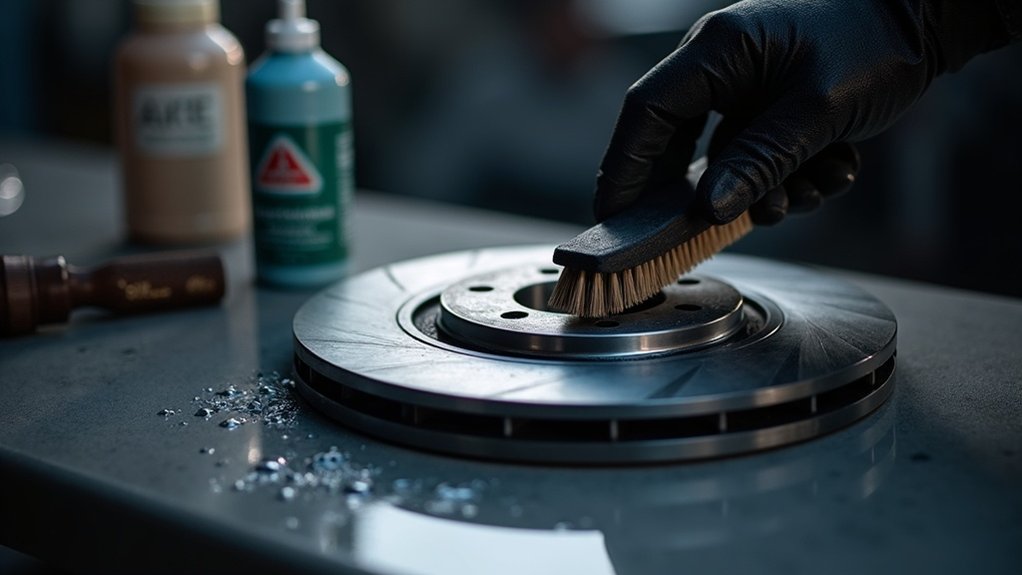
Before diving into the cleaning process, make sure you’ve got everything in place for a smooth operation. Start by removing the wheel to access the brake rotor. Wipe the rotor surface with Isopropyl alcohol (IPA) and a lint-free cloth, avoiding finger contact. For deeper cleaning, use a soft-bristle brush or dedicated brake cleaner to eliminate dirt. Inspect the rotor for scoring or damage, ensuring it’s contaminant-free before reinstalling the wheel. Finally, bed in the brakes per the manufacturer’s specifications to guarantee peak performance.
| Task | Tools Needed |
|---|---|
| Remove the wheel | Wrench, jack |
| Clean rotor surface | IPA, lint-free cloth |
| Inspect & bed brakes | Manufacturer guide |
Tips for Maintaining Brake Components
While maintaining brake components may seem intimidating, regular attention can greatly enhance their performance and longevity.
To guarantee your disc brakes function at their best, follow these tips:
- Clean rotors with Isopropyl alcohol and a lint-free cloth to remove contaminants impacting the braking surface.
- Avoid direct contact with rotor surfaces to prevent oil and dirt contamination.
- Sand brake pads with drywall sandpaper in circular motions to eliminate glazing that hampers performance.
Common Mistakes to Avoid
Properly maintaining disc brake rotors is essential, yet many enthusiasts make common mistakes that can compromise performance.
First, make certain you avoid touching the rotor surface with bare hands, as oils can contaminate it. It’s also a bad idea to use lubricants like WD-40 or any oil-based cleaners; they can severely impact your brake system.
Instead, use isopropyl alcohol for a residue-free clean. Always work with clean tools and surfaces to prevent introducing contaminants.
Finally, don’t neglect regular cleaning, especially after rides in muddy or wet conditions, to guarantee peak braking efficiency and safety.
When to Seek Professional Help
If you encounter complex brake issues like fluid boiling or hydraulic problems, it’s essential to seek professional help.
Additionally, if you’re unsure about torque specifications for caliper and rotor bolts, a qualified mechanic can guarantee everything is installed correctly.
Don’t hesitate to consult an expert when you lack the experience to handle these vital components safely.
Complex Brake Issues
When you notice persistent brake shuddering or vibrations during braking, it’s crucial to recognize that these symptoms often signal deeper issues within your braking system.
Don’t ignore these signs; seeking a professional inspection can prevent further damage.
Key indicators include:
- Contaminated brake pads or rotors that resist improvement after cleaning
- A spongy brake lever feel or a shifting bite point, which may indicate boiled brake fluid
- Complex diagnostics, like hydraulic issues or caliper misalignment
Addressing these problems promptly guarantees your braking system remains safe and efficient, making professional help necessary when needed.
Lack of Experience
Recognizing complex brake issues is essential, especially if you lack experience in bike maintenance. If you’re unsure about the cleaning procedure or dealing with contaminated pads, consult a professional bike mechanic. Advanced tasks like bleeding brakes require specialized knowledge to avoid safety hazards. Here’s when to seek help:
| Situation | Action Needed | Professional Help |
|---|---|---|
| Contaminated pads | Replace and clean | Yes |
| Scorched rotors | Inspection and replacement | Yes |
| Hydraulic system issues | Bleed and repair | Yes |
Don’t risk damaging components; expert assistance guarantees safe and effective repairs.