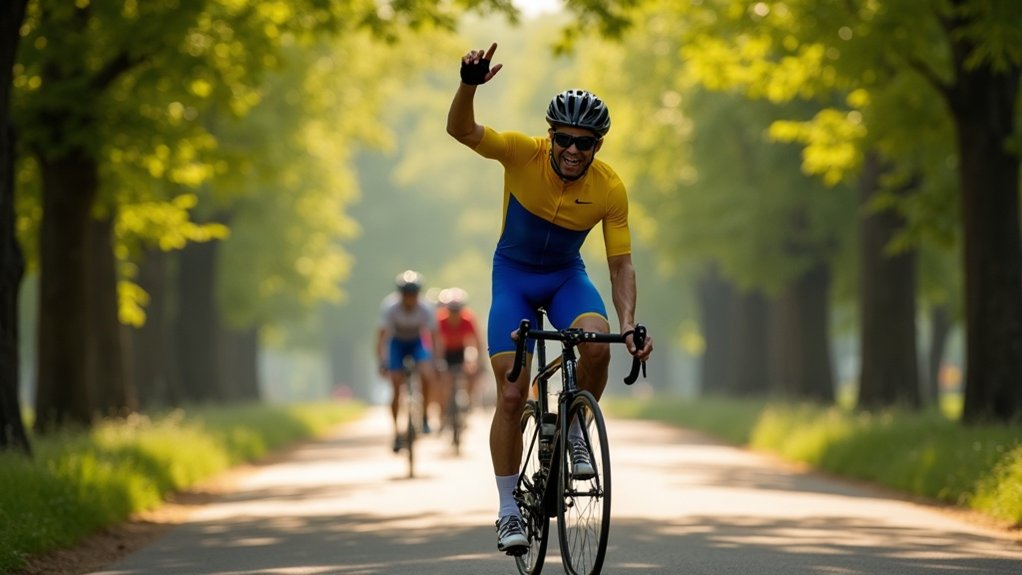
Yes, you can ride with one hand to signal, and it’s essential for road communication. To do this effectively, maintain an upright position, shift your weight back into the seat, and keep a light grip on the handlebars. Practice in safe areas, like parking lots, to build your confidence. Always signal in advance to guarantee your intentions are clear to other road users. With consistent practice, you’ll enhance your riding skills and safety. There’s more to mastering this technique.
Key Takeaways
- Yes, you can ride with one hand to signal, enhancing communication with other road users.
- It’s essential to practice in safe environments, like parking lots, to develop balance and confidence.
- Maintain an upright position and shift weight back to minimize strain on the handlebars while signaling.
- Use counter-steering techniques to maintain stability and control while signaling your intentions.
- Always signal well in advance and check your surroundings to ensure safety before removing a hand from the handlebars.
Understanding One-Handed Riding
Understanding one-handed riding is vital for any cyclist looking to enhance their communication on the road. Riding with one hand allows you to signal your intentions, but it demands practice to maintain balance and control.
Start by adopting an upright position and minimizing weight on the handlebars, which enhances stability. Safe environments, like parking lots, are ideal for developing your skills.
Confirm you fully extend your arm when signaling and always check surrounding traffic for safety. Mastering techniques such as counter-steering and proper weight distribution is essential for effectively signaling while maintaining control of your bike.
Importance of Hand Signals
While riding, hand signals play an essential role in ensuring cyclists communicate their intentions clearly to others on the road.
Using hand signals to indicate turns not only enhances safety but also fosters predictability in traffic. It’s common sense to signal well before reaching a junction, especially in busy areas, allowing others to anticipate your actions.
Extending your arm fully for turns or using downward movements to signal slowing down can prevent accidents. Additionally, pointing out obstacles with hand signals aids group safety, but always prioritize clear communication to avoid distractions.
Practice Techniques for One-Handed Riding
To master one-handed riding, start your practice in a quiet parking lot where you can focus without distractions.
Gradually shift your weight back into the seat while lightly gripping the handlebars with your fingers to improve balance. Engage in counter-steering by gently pushing on the remaining handlebar, maintaining a straight path as you signal.
Experiment with different hand positions and riding postures to find what feels comfortable and stable. Consistently practice extending your arm to signal, keeping a slight bend in your elbows to reduce tension and enhance control.
This focused practice will boost your confidence in one-handed riding.
Maintaining Control While Signaling
Mastering one-handed riding doesn’t just involve confidence; it’s also about maintaining control when signaling. To keep balance and stability, focus on these techniques:
- Practice with minimal weight on the handlebars.
- Use counter-steering by shifting your weight toward the side with the hand on the bars.
- Maintain an upright body position while slightly leaning back.
- Gradually increase your speed as you gain comfort with one-handed riding.
- Apply a relaxed grip on the handlebars for improved handling.
Safety Tips for Riding One-Handed
Riding one-handed can enhance your experience, but it also introduces safety challenges that require careful attention.
To maintain control, keep a relaxed grip on the bar; excessive tension can lead to instability. Practice signaling in safe environments, like parking lots, to build confidence without losing control.
Maintain a relaxed grip on the handlebars to ensure stability; practice signaling in safe areas to boost your confidence.
Engage in counter-steering techniques by shifting your weight appropriately to balance while your hand is off the handlebars. Always signal well in advance, checking your surroundings before removing a hand for maximum safety.
Additionally, consider using a bike horn operable with your thumb, allowing communication without compromising your grip on the bar.
Common Challenges and Solutions
When riding with one hand, you may face challenges like maintaining balance and control while signaling.
To tackle these issues, you can practice effective signaling techniques in a safe environment, ensuring you’re prepared for real-world scenarios.
Balance and Control Issues
While many cyclists enjoy the freedom of riding with one hand, they often face significant balance and control challenges.
To overcome these issues, consider the following strategies:
- Maintain a relaxed grip on the handlebars to enhance stability.
- Shift your weight back into the seat when signaling for better control.
- Practice counter-steering with your remaining hand to guide the bike.
- Engage your core to distribute weight evenly for improved balance.
- Regularly practice in a quiet area to build confidence and skill.
Effective Signaling Techniques
Effective signaling is essential for maintaining safety and communication on the road, especially when riding with one hand. Here are some common challenges and solutions for effective signaling:
| Signaling Type | Description | Key Tips |
|---|---|---|
| Turn Signal | Extend arm fully to indicate direction | Maintain relaxed grip for balance |
| Slow Down Signal | Extend arm sideways, move up and down | Keep control with the other hand |
| Stop Signal | Raise arm clearly to signal stop | Guarantee stability while signaling |
| Obstacle Warning | Point to obstacles with one hand | Prioritize balance and awareness |
Practicing these techniques improves your confidence and control.