
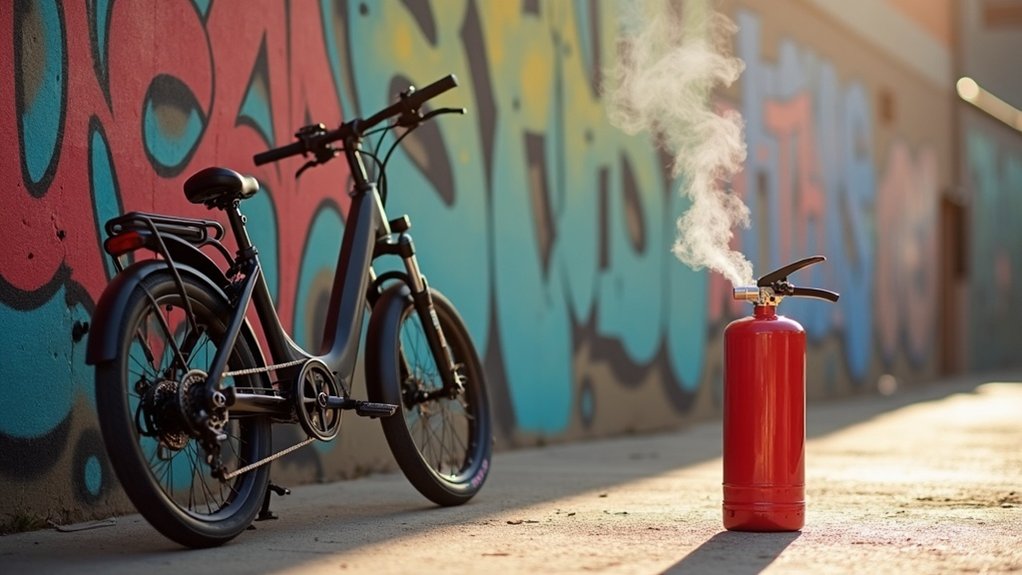
E-bike battery fire safety is crucial for micromobility because lithium-ion batteries can ignite unexpectedly due to overheating or damage. Improper charging and using low-quality batteries increase these risks considerably. With the surge in e-bike usage, fire incidents have also risen sharply, leading to injuries and fatalities. By following essential safety tips, like using certified batteries and proper charging practices, you can mitigate these dangers. Discover more about maintaining safety standards and best practices for e-bike use.
Key Takeaways
- E-bike battery fires pose significant safety risks, leading to injuries or fatalities, making fire safety crucial for public health.
- The increase in e-bike usage correlates with rising battery-related incidents, necessitating stringent fire safety measures.
- Quality control in battery manufacturing ensures compliance with safety standards, reducing the likelihood of dangerous incidents.
- Proper charging and storage practices can prevent overheating and thermal runaway, mitigating fire hazards associated with lithium-ion batteries.
- Awareness of fire safety can protect personal property and reduce the strain on emergency services responding to battery-related fires.
Understanding the Risks of Lithium-Ion Batteries
While lithium-ion batteries power many e-bikes efficiently, they come with considerable risks that users must understand.
Improper charging practices and damaged batteries can lead to dangerous lithium-ion battery fires. Thermal runaway, triggered by cell failure or defects, poses severe fire hazards.
To guarantee safety, always use high-quality batteries equipped with a Battery Management System (BMS) that mitigates risks. Additionally, never leave batteries unattended while charging, and store them away from flammable materials.
Fire Incident Statistics and Trends
As e-bike and e-scooter usage increases, so do the alarming statistics surrounding fire incidents linked to these devices.
The FDNY reported over 250 fires from 2022 to 2023, resulting in five fatalities and numerous injuries, marking a significant rise from just 13 e-bike fires in 2019.
FDNY reported over 250 e-bike fires from 2022 to 2023, highlighting a drastic increase from just 13 fires in 2019.
Between January 2021 and November 2022, the CPSC documented 208 fire or overheating incidents, leading to at least 19 deaths.
The doubling of lithium-ion battery fires in New York City from 2021 to 2022 underscores the escalating risks.
Low-quality batteries often fail to meet safety standards, heightening the potential for severe incidents.
Essential Safety Tips for E-Bike Users
To guarantee your safety while using e-bikes, it’s crucial to follow essential precautions that can greatly reduce the risk of fire incidents.
| Safety Tip | Description |
|---|---|
| Choose Certified Batteries | Purchase batteries certified by recognized labs. |
| Avoid Overcharging | Unplug once fully charged; never charge overnight. |
| Use Correct Charging Equipment | Only use the charger provided with your e-bike. |
| Regular Inspections | Check for damage; discontinue use if abnormalities occur. |
Compliance With Safety Standards and Regulations
Following safety tips greatly reduces fire risks, but compliance with safety standards and regulations is equally essential for e-bike users.
Safety tips significantly lower fire risks, but adhering to safety standards is crucial for every e-bike user.
Adhering to established guidelines helps prevent battery-related fires and guarantees your safety.
Consider these key points for compliance:
- Confirm your e-bike meets ANSI/CAN/UL 2849 standards for battery safety.
- Verify that manufacturers have conducted rigorous testing for mechanical stability.
- Follow NFPA guidelines for safe storage and charging of micromobility devices.
- Stay informed about CPSC reports on micromobility incidents to understand potential hazards.
Safe Storage and Charging Practices
To guarantee the safety of your e-bike battery, you need to follow proper charging techniques and store it under ideal conditions.
Regularly inspecting the battery for wear or damage is essential to prevent potential hazards.
Adhering to these practices greatly reduces the risk of fire and extends battery life.
Proper Charging Techniques
When charging your e-bike battery, using the manufacturer-authorized charger is crucial for preventing overheating and potential fire hazards.
Follow these proper charging techniques to enhance fire safety:
- Avoid overcharging: Disconnect the battery once it’s fully charged to prevent thermal runaway.
- Inspect regularly: Check for damage like swelling or discoloration; discontinue use if abnormalities appear.
- Charge in a ventilated area: Keep the charging battery away from flammable objects.
- Never leave unattended: Always monitor your battery while it’s charging to guarantee safety.
Ideal Storage Conditions
Storing your e-bike battery in ideal conditions is essential for minimizing fire risks and ensuring longevity.
Keep your battery in a cool, dry place, away from direct sunlight and combustible materials.
When charging, use charging devices as specified by the manufacturer, and do so away from flammable objects to prevent thermal runaway incidents.
If you won’t be using the battery for over 12 hours, remove it from the device to allow cooling and reduce fire risks.
Practicing these safe storage practices will help you maintain your battery’s health and safety while preventing potential hazards.
Battery Inspection Routine
Ensuring your e-bike battery is in ideal condition requires a routine inspection to identify any wear, damage, or corrosion that could elevate fire risks during use or charging.
Follow this battery inspection routine to enhance fire safety:
- Check for physical damage or swelling on e-bike batteries.
- Inspect connectors and terminals for corrosion.
- Use only manufacturer-approved chargers to avoid overcharging.
- Store batteries in a cool, dry place, away from flammable materials.
The Role of Consumer Education in Fire Prevention
Understanding safety standards is essential for you as an e-bike owner to minimize fire risks.
By following proper charging practices and maintaining your battery, you can markedly reduce the likelihood of hazardous incidents.
Consumer education empowers you to recognize potential issues early, ensuring safer usage and handling of lithium-ion batteries.
Importance of Safety Standards
While many e-bike users enjoy the convenience of their devices, it’s crucial to acknowledge that adherence to safety standards plays a pivotal role in mitigating fire risks.
Compliance with standards like ANSI/CAN/UL 2849 guarantees rigorous testing in accredited laboratories, enhancing mechanical stability and electrical safety.
Here are key points to take into account:
- Always use manufacturer-approved chargers to prevent overheating.
- Store batteries away from flammable materials and provide proper ventilation.
- Be alert for warning signs, such as battery damage or unusual odors.
- Dispose of lithium-ion batteries through municipal hazardous waste programs to prevent environmental hazards.
Proper Charging Practices
Proper charging practices are essential in preventing overheating and potential fires, as improper methods can lead to dangerous situations with lithium-ion batteries used in e-bikes.
To mitigate fire hazards, always use manufacturer-authorized chargers and avoid leaving the battery unattended while charging. It’s important to stop charging once the battery is full, as overcharging is a primary cause of overheating incidents.
Following safe charging guidelines, such as maintaining adequate ventilation and keeping batteries away from flammable materials, markedly reduces the risk of battery-related fires.
Educating yourself on these practices is crucial for ensuring your safety and prolonging battery life.
Battery Maintenance Awareness
Consumer education plays a pivotal role in enhancing battery maintenance awareness and preventing fire hazards associated with e-bikes.
To guarantee safety, you should:
- Purchase e-bikes with lithium-ion batteries that meet safety certifications like UL 2849 and UL 2272.
- Regularly inspect your battery for signs of damage, odor, or discoloration.
- Store batteries away from flammable materials and avoid overnight charging.
- Follow proper charging practices by never leaving batteries unattended.