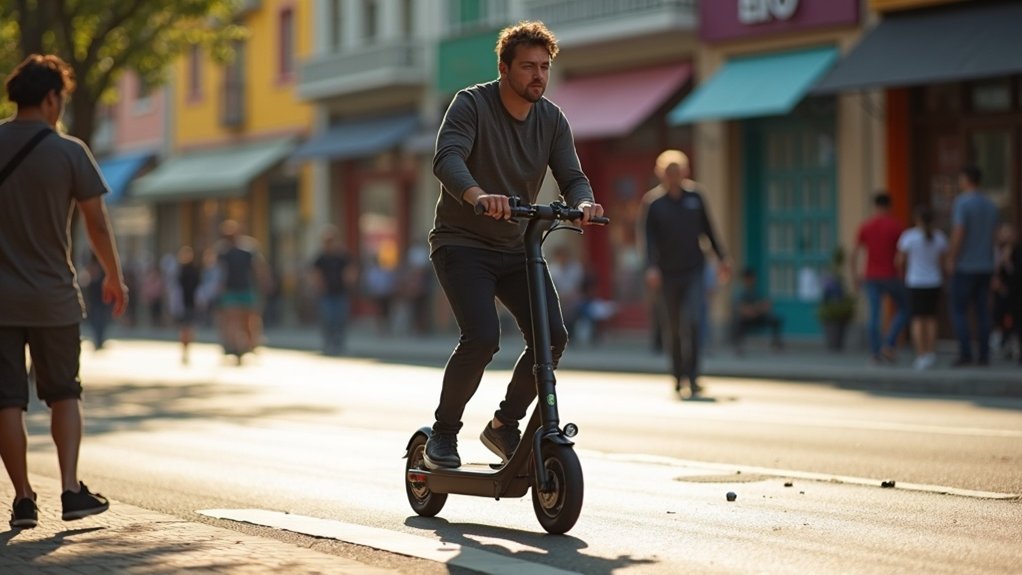
Rider weight impacts electric scooter performance by influencing acceleration, speed, and stability. Heavier riders experience slower acceleration and reduced top speeds due to increased rolling resistance and motor strain. You’ll likely notice diminished battery efficiency and range as added weight drains the battery faster. Exceeding weight limits can compromise balance and braking distance, creating safety risks. Understanding these factors is essential for maximizing your riding experience and scooter longevity. There’s more to uncover about optimizing your ride.
Key Takeaways
- Rider weight affects acceleration; heavier riders experience slower speeds and longer braking distances due to increased rolling resistance.
- Exceeding weight capacity drains the battery faster, significantly reducing range and efficiency.
- Heavier loads compromise stability and balance, increasing the risk of falls and accidents.
- Performance on inclines suffers with excessive weight, leading to difficulty climbing and slower overall speeds.
- Overloading results in accelerated wear on critical components, potentially causing mechanical failures and voiding warranties.
Understanding Weight Capacities in Electric Scooters
When choosing an electric scooter, understanding its weight capacity is vital for ensuring optimal performance and safety.
Electric scooter weight limits typically range from 100 kg to 150 kg, with heavy-duty models exceeding 200 kg.
Exceeding the maximum weight capacity impacts performance considerably; heavier riders may face slower acceleration, reduced climbing ability, and longer braking distances.
Factors like frame material, motor power, and battery capacity influence these limits.
If you push the scooter beyond its specifications, you risk it struggling under the load, compromising safety, range, and potentially voiding the manufacturer’s warranty.
Adhering to weight limits is essential for ideal operation.
The Importance of Staying Within Weight Limits
Staying within the specified weight limits of your e-scooter is essential for ensuring safety and stability during rides.
Exceeding these limits can compromise performance, leading to slower speeds and reduced range, while also increasing wear on critical components.
Adhering to weight capacities not only enhances your riding experience but also prolongs the scooter’s lifespan and maintains warranty coverage.
Weight Capacity Significance
Exceeding an e-scooter’s weight capacity can greatly impact your riding experience, as it compromises safety, stability, and overall performance.
Each model has a maximum load, typically ranging from 220 to 440 lbs, and staying within this limit is crucial. Overloading increases rider weight, forcing the motor to work harder, which leads to battery drain and reduced range.
Additionally, it accelerates wear on components, risking costly repairs and potentially voiding warranties. Ignoring these limits not only diminishes performance but also increases the risk of accidents due to compromised stability and longer braking distances, undermining your ride comfort and safety.
Safety and Stability
Maintaining weight limits is vital for ensuring the safety and stability of your e-scooter ride. Rider weight affects the overall performance, and exceeding the maximum payload can lead to compromised balance, heightening the risk of accidents.
When overloaded, the e-scooter’s motor strains, reducing speed and range, which can exacerbate braking distances. Heavier riders often face decreased ride comfort, impairing quick reactions in emergencies.
Most electric scooters have weight capacities ranging from 220 lbs to 330 lbs, and ignoring these limits can also void warranties. Adhering to these specifications is important for maintaining ideal safety and longevity for both rider and e-scooter.
Performance and Longevity
While it might be tempting to push the limits of your e-scooter’s weight capacity, doing so can greatly impact both performance and longevity.
Exceeding weight limits compromises stability, leading to reduced acceleration and longer braking distances, which directly affects safety. When you overload the scooter, the motor works harder, causing faster battery drain and diminished range; for example, a 300 lbs rider might only achieve 15-17 miles on a scooter rated for 25 miles.
To guarantee peak performance and extend the lifespan of your e-scooter, maintain your rider weight within 10-15% of its capacity, protecting both the motor and battery.
How Rider Weight Affects Acceleration and Speed
Your weight greatly influences how quickly your e-scooter accelerates and reaches its top speed. Heavier riders face greater rolling resistance and require more power from the motor, often resulting in slower acceleration and reduced speed, particularly on inclines.
To maintain ideal performance, selecting a scooter that supports higher weight capacities is essential for maneuvering these challenges effectively.
Acceleration Dynamics Explained
Understanding how rider weight impacts acceleration and speed is essential for enhancing e-scooter performance. Heavier riders experience slower acceleration due to increased inertia and rolling resistance, which demands more power consumption from the motor. This results in a significant reduction in top speed, especially on inclines. Selecting a scooter designed for your weight category can mitigate these dynamics.
| Rider Weight | Acceleration Impact | Top Speed Reduction |
|---|---|---|
| Light | Minimal | 0-1 mph |
| Moderate | Moderate | 1-2 mph |
| Heavy | Significant | 2-4 mph |
| Very Heavy | Major | 4+ mph |
| Max Capacity | Ideal | Advertised speed |
Speed Limitations for Heavier Riders
Rider weight greatly influences e-scooter speed limitations, particularly for heavier individuals. The increased power demand on the motor requires it to work harder, affecting acceleration and top speed.
- Heavier riders may experience a speed reduction of 2-4 mph, especially on entry-level models.
- Battery range diminishes considerably; a 300 lbs rider might only achieve 15-17 miles on a scooter rated for 25 miles.
- Performance struggles often occur on inclines, necessitating higher wattage or dual motors to maintain speed.
Understanding these factors can help you make informed decisions about e-scooter performance based on your weight.
Climbing Ability Challenges
While traversing hilly terrains, heavier riders face notable challenges due to their weight, which directly impacts acceleration and speed. Increased rider weights require the motor to exert more power, leading to slower acceleration and diminished performance on steep climbs.
As rolling resistance rises, maintaining momentum becomes more difficult, especially for e-scooters with lower wattage motors. For riders over the weight limit, top speeds decrease by 2-4 mph, considerably affecting climbing ability.
To navigate these inclines effectively, heavier riders may need scooters with higher motor power or dual motor systems to cope with the additional strain and guarantee a safer ride.
The Impact of Weight on Battery Life and Range
The weight you carry greatly influences your e-scooter’s battery life and overall range. Heavier riders put additional strain on the motor, causing it to draw more battery power, leading to fast battery drain.
Increased rolling resistance compounds these effects, reducing your effective range considerably.
- A rider weighing 300 lbs may only achieve 15-17 miles on a scooter rated for 25 miles.
- Full-throttle acceleration demands further deplete battery life, especially in stop-and-go situations.
- Opting for a scooter with a larger battery (1000Wh or more) can help accommodate your weight and improve performance.
Safety Risks Associated With Exceeding Weight Limits
Exceeding the weight limit of an e-scooter poses significant safety risks that can compromise your riding experience.
Overloading affects balance and stability, increasing the likelihood of falls or collisions. You may notice reduced performance, with slower speeds and diminished acceleration creating hazardous conditions.
Additionally, exceeding the weight limit results in longer braking distances, complicating emergency stops. This overloading accelerates wear and tear on critical components like the motor and tires, leading to potential mechanical failures.
Moreover, ignoring weight limits might void your warranty, leaving you financially responsible for repairs due to damages caused by exceeding specified weight limits.
Factors Influencing Weight Capacity in Electric Scooters
Overloading an e-scooter not only impacts safety but also highlights the importance of understanding the factors influencing weight capacity.
Overloading an e-scooter compromises safety and underscores the need to grasp weight capacity factors.
Key elements include:
- Frame Material: Lightweight aluminum offers strength, while steel provides durability but increases weight.
- Motor Power: High wattage motors can better support heavy loads without sacrificing performance.
- Tire Type: Pneumatic tires enhance stability and shock absorption, essential for heavier riders.
Additionally, battery capacity determines how well the scooter performs under load, and the design and size of the deck affect weight distribution, ensuring a comfortable riding experience and preventing potential accidents.
Best Practices for Heavier Riders
When selecting an electric scooter, it’s essential to choose one that accommodates your weight without compromising performance or safety.
Opt for models with a weight capacity of 330-400 lbs, guaranteeing stability. Maintain proper tire pressure to prevent flats and enhance ride comfort.
Utilize smart riding modes—eco mode for efficiency and turbo mode for steep inclines. Regularly monitor your battery health, keeping it charged between 50-80% to extend battery life.
Prioritize scooters with a robust design, powerful motors, and enhanced suspension systems to promote safer, more comfortable rides, particularly at high speeds, aligning with your riding style.
Choosing the Right Electric Scooter for Your Weight
Selecting the right electric scooter for your weight is essential to guarantee both performance and safety. For ideal results, consider the following factors:
- Weight Capacity: Choose models that exceed your total weight by 10-15% for stability.
- Robust Frames: Look for scooters with higher wattage motors and durable builds to handle heavier loads effectively.
- Fat Tire Scooters: These improve weight distribution and shock absorption, enhancing comfort and maintaining speed.