
Hill grade matters when choosing an e-bike motor because it directly impacts the power output and torque needed for effective climbing. Steep inclines require motors with at least 750W and a torque rating of 60Nm or more for peak performance. Mid-drive motors excel in these situations, delivering superior torque and efficiency. You’ll also need to take into account battery capacity and gearing for maximum performance on hills. Learn about how these factors play into your e-bike selection.
Key Takeaways
- Hill grade impacts the motor’s power output, especially on inclines over 10%, affecting overall climbing performance.
- Mid-drive motors are recommended for steep hills due to their superior torque delivery compared to hub motors.
- A minimum torque of 60Nm is essential for effective hill climbing, ensuring the motor can handle steep grades.
- Higher wattage, ideally 750W, improves speed and stability when navigating challenging terrains and steep inclines.
- Battery capacity and voltage are crucial; at least 500Wh and 48V systems enhance motor efficiency during uphill climbs.
The Importance of Hill Grade in E-Bike Performance
When traversing steep inclines, understanding hill grade is essential for optimizing e-bike performance. The hill grade directly influences the e-bike motor’s power output, particularly during steep climbs exceeding 10%.
For efficient climbing, mid-drive motors excel by utilizing gear ratios to enhance torque, with a minimum torque rating of 60Nm recommended. Higher wattage, ideally 750W, assures sufficient power to maintain speed and stability on challenging terrain.
Additionally, battery capacity and voltage are critical; systems with 48V or more improve efficiency and extend range, enabling you to conquer those steep grades with confidence and control.
Motor Power and Torque Requirements for Steep Hills
To effectively tackle steep hills on your e-bike, understanding the interplay between motor power and torque is essential.
Higher wattage, like 750W, markedly enhances your climbing performance compared to 500W options. Torque, measured in Newton-meters, is equally vital; a minimum of 60Nm is recommended for steep inclines.
Higher wattage, such as 750W, significantly boosts climbing ability, while at least 60Nm of torque is crucial for steep hills.
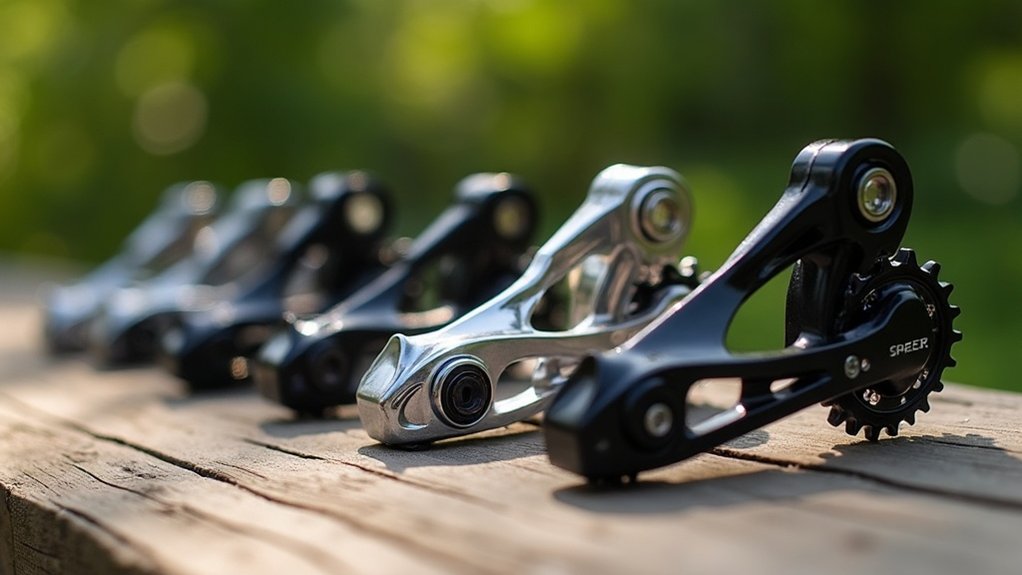
Mid-drive motors excel here, delivering 80-120Nm, while hub motors average only 40-60Nm. The efficiency of torque delivery matters too—mid-drives maintain torque at lower RPMs, making them better suited for steep climbs.
When choosing your e-bike, always consider both motor power and torque ratings to guarantee peak performance on hilly terrains.
Battery Capacity and Its Role in Uphill Climbing
Understanding battery capacity is essential for maintaining the power needed during uphill climbs, as a higher watt-hour (Wh) rating directly influences your e-bike’s performance on steep inclines.
For effective uphill climbing, a minimum of 500Wh is recommended, particularly when tackling significant elevation changes. Opting for higher voltage systems, such as 48V or 52V, enhances motor efficiency under load, improving power output.
Climbing hills can drastically reduce your battery range, often by half, so a 13.5 Ah battery capacity is ideal for consistent performance.
Prioritizing battery health and charging infrastructure guarantees you can reliably conquer hilly routes without losing power.
Gear Ratios and Their Impact on Climbing Efficiency
Choosing the right gear ratios markedly influences your e-bike’s climbing efficiency, especially on steep inclines.
Lower gear ratios provide a mechanical advantage, making it easier to pedal up steep hills while preserving motor performance and battery power. By opting for low-end gears, you can maintain an ideal pedaling cadence of 70-90 RPM, essential for efficient climbing.
This well-chosen gearing system helps prevent motor overload, distributing the workload effectively between you and the motor.
Mastering climbing techniques with the right gear ratios not only reduces strain on your knees but enhances overall climbing efficiency, allowing for a more enjoyable ride.
Choosing the Right E-Bike for Your Terrain Needs
How do you determine the best e-bike for tackling your specific terrain needs?
For hilly landscapes, opt for a mid-drive motor, delivering higher torque (80-120 Nm) for superior hill climbing. Choose a motor wattage of at least 750 watts to guarantee adequate power on steep grades.
Look for e-bikes with a minimum battery capacity of 500Wh, as elevation can drastically reduce range.
Select gearing systems with a broad range of low-end gears to enhance efficient pedaling.
Finally, consider rider and bike weight; a lighter setup paired with a robust motor will optimize e-bike performance on challenging inclines.