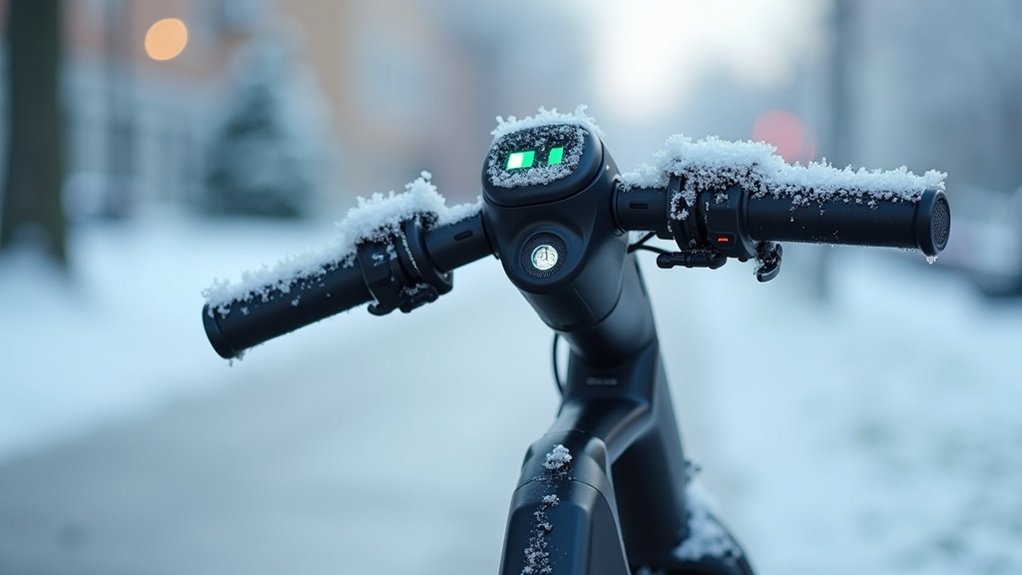
Electric scooters lose range in cold weather primarily due to reduced lithium-ion battery efficiency and motor performance. Cold temperatures slow down chemical reactions in the battery, leading to a 20-50% decrease in capacity and power output. Additionally, increased resistance affects motor efficiency, resulting in slower acceleration and greater battery drain. Combined, these factors greatly impact your scooter’s range. Discover more about ideal winter riding practices and maintenance to enhance your scooter’s performance in cold conditions.
Key Takeaways
- Cold weather slows chemical reactions in lithium-ion batteries, leading to a 20-50% reduction in capacity and range.
- Increased internal resistance in cold conditions reduces motor efficiency, resulting in slower acceleration and quicker battery drain.
- Charging times are longer in low temperatures as batteries struggle to accept charge efficiently, impacting ride planning.
- Reduced traction on icy surfaces increases the risk of accidents, affecting rider confidence and range management.
- Routine maintenance and winter modifications, such as upgrading tires, help maintain performance and safety in cold weather.
The Science Behind Battery Performance in Cold Weather
When temperatures drop, the performance of lithium-ion batteries in electric scooters declines markedly due to slower chemical reactions.
Cold temperatures reduce battery capacity and power output, leading to a significant decrease in overall battery performance. In these conditions, charging times lengthen, as the electric scooter battery struggles to accept and retain charge efficiently.
In addition, the motors may exhibit reduced responsiveness, hindering ideal performance. Riders should understand that while cold weather negatively impacts battery efficiency, performance typically returns to normal as temperatures rise, restoring range and acceleration in milder conditions.
Awareness of these effects enables better management of scooter usage in cold weather.
Impact of Low Temperatures on Scooter Range
As temperatures plunge, the impact on electric scooter range becomes increasingly pronounced, with riders often facing a reduction of 20-50% in distance traveled on a single charge.
Cold weather greatly affects battery efficiency; lithium-ion batteries lose capacity and power as chemical reactions slow down. Consequently, you might notice slower acceleration and decreased responsiveness when starting your ride.
Additionally, charging times extend in the cold, further diminishing effective range during winter months. With top speeds reduced, maneuvering through chilly conditions limits the distance you can achieve on a single charge, making it essential to evaluate temperature’s impact on your scooter’s performance.
Effects of Cold on Motor Efficiency
In cold weather, your electric scooter’s motor faces increased resistance, which directly impacts efficiency and performance.
As battery capacity decreases, you’ll notice slower acceleration and reduced top speed, making rides less enjoyable.
These factors combined lead to a quicker drain on battery life, limiting your scooter’s overall range.
Battery Performance Decrease
Cold weather considerably impacts battery performance, causing a decrease in electric scooter range due to reduced lithium-ion battery capacity.
In cold temperatures, these batteries can lose 20–50% of their capacity, resulting in inefficient energy transfer. The chemical reactions within the battery slow down, diminishing overall performance.
You may notice longer charging times, as colder batteries charge more slowly and might need warming up beforehand. This sluggish response is a clear indication of how cold affects your battery performance, leading to reduced power when accelerating from a stop and ultimately limiting your scooter’s range during winter months.
Increased Resistance in Motors
When temperatures drop, the efficiency of your electric scooter’s motor can markedly decline due to increased resistance.
Cold weather raises the viscosity of lubricants, leading to higher internal resistance and decreased motor performance. Additionally, electrical resistance in the motor coils increases, reducing power output and affecting torque and responsiveness.
This overall decline in efficiency means your scooter draws more power to maintain speed, negatively impacting range.
Moreover, the battery management system (BMS) may limit current to the motor in cold conditions to prevent damage, which additionally contributes to reduced performance.
Consequently, cold weather greatly hampers motor efficiency.
Slower Acceleration and Speed
As temperatures drop, electric scooter users often experience slower acceleration and reduced top speeds due to increased motor resistance.
In cold temperatures, the internal resistance of the motor rises, leading to diminished efficiency. Consequently, you may notice performance metrics declining by 20-50%, making it harder for your scooter to reach maximum speed.
The throttle response suffers, resulting in delayed acceleration when starting. Additionally, icy surfaces and cold air force the motor to work harder, further impeding your ride quality.
Challenges of Riding on Slippery Surfaces
Riding electric scooters on slippery surfaces presents significant challenges that can compromise safety and control. Cold weather reduces traction, increasing the risk of skidding and falls.
You’ll notice longer stopping distances on icy or snowy roads, making it essential to adjust your speed and braking habits. E-scooters with solid tires may struggle more than those with pneumatic or self-healing tires, which offer better grip.
Be particularly cautious of black ice, as it can be nearly invisible. To maintain stability while riding safely, avoid sudden turns or hard braking on slippery surfaces, ensuring you navigate winter roads with care.
Importance of Proper Maintenance in Winter
Proper maintenance during winter is essential for guaranteeing your electric scooter operates safely and efficiently. Neglecting routine care can lead to performance issues, particularly in cold conditions.
| Maintenance Task | Importance |
|---|---|
| Clean Road Salt | Prevents corrosion and extends lifespan |
| Check Tire Pressure | Guarantees traction and reduces accident risk |
| Use Water-Resistant Lube | Prevents rust and guarantees smooth operation |
| Store Indoors | Preserves battery performance in cold |
Modifications for Enhanced Winter Performance
Maintaining your electric scooter during winter is only the first step; modifications can greatly enhance its performance in cold weather.
Upgrading to winter tires, like studded options, improves traction on icy surfaces, boosting control and safety.
Installing larger fenders minimizes grime splashes, reducing corrosion risks from road salt.
Enhance visibility by adding brighter lights and reflective gear, especially in shorter daylight hours.
Protect electrical components with a waterproof cover to prevent moisture damage.
Finally, regularly lubricating moving parts with water-resistant lubricant guarantees smooth operation and prevents rust, keeping your scooter performing at its best in cold, damp conditions.
Strategies for Safe and Efficient Winter Riding
To ride safely and efficiently in winter, you need to optimize your scooter’s battery performance and dress appropriately for cold conditions.
Focus on selecting routes that minimize exposure to ice and snow, ensuring a safer journey.
Optimize Battery Performance
While cold weather can considerably impact your electric scooter’s battery performance, implementing specific strategies can help optimize its efficiency during winter rides.
Store your scooter indoors to protect the battery management system (BMS) and prevent capacity loss from freezing temperatures.
Charge the battery indoors and let it warm up before charging post-ride, as cold batteries charge slower and can incur damage if charged immediately.
Maintain proper tire pressure, as cold air affects inflation, enhancing grip and efficiency.
Additionally, consider using thermal covers to keep the battery warm and plan shorter trips, knowing that cold temperatures can reduce range by 20–50%.
Dress for Cold Conditions
Dressing appropriately for cold conditions is vital for safe and efficient winter riding on your electric scooter.
Start with thermal base layers, followed by insulated jackets and windproof outer layers to maintain body temperature.
Insulated gloves are essential for protecting your hands from cold, enhancing grip on the handlebars.
Waterproof and breathable footwear guarantees your feet stay warm and dry.
Additionally, wear reflective clothing to increase visibility in low-light winter conditions, promoting safety during rides.
Investing in a quality helmet with a visor protects against cold wind and precipitation, improving comfort and focus while steering through winter roads.
Choose Safe Routes
Choosing safe routes is essential for maintaining both your safety and the efficiency of your electric scooter during winter rides. To maximize traction, select paths that are well-cleared of snow and ice, minimizing the risk of slipping.
Windbreaks like buildings or trees reduce wind resistance, helping you maintain control. Opt for gentle inclines instead of steep hills to prevent battery strain and conserve battery life.
Additionally, avoid busy roads where frequent stopping disrupts your pace. Familiarizing yourself with the terrain and its hazards enhances your awareness, enabling quick responses to changing conditions and ensuring a safer riding experience.