E-bike batteries degrade over time primarily due to chemical aging, improper charging habits, and environmental factors. Overcharging can create excessive heat, while deep discharges can lead to irreversible damage, reducing efficiency. Extreme temperatures and physical impacts can further compromise battery performance. Additionally, manufacturing defects can also play a role in a battery’s lifespan. Understanding these issues and implementing good practices can help extend battery life. There’s more to explore about maximizing battery health and performance.
Key Takeaways
- Battery degradation is a natural process resulting from chemical reactions within lithium-ion batteries over time.
- Factors like improper charging, full discharges, and extreme temperatures can significantly accelerate degradation.
- High temperatures break down electrode materials, while cold conditions can temporarily reduce capacity.
- Regular use and maintenance practices, such as avoiding overcharging, can help maximize battery lifespan.
- Physical damage or manufacturing defects can compromise battery performance and lead to premature degradation.
Understanding Battery Degradation
Understanding battery degradation is essential for maximizing the lifespan of your e-bike battery.
Battery degradation occurs naturally over time, especially in lithium-ion batteries, leading to diminished energy storage capacity. The rate of degradation hinges on several factors, including charging methods, usage patterns, and storage conditions.
For instance, lithium batteries typically endure 500 to 1,000 charge cycles before their capacity noticeably declines. Improper charging practices, full discharge cycles, and exposure to extreme temperatures exacerbate this decline.
Factors Lowering Battery Efficiency
Several factors contribute to the decline in battery efficiency, greatly impacting the performance and lifespan of your e-bike battery.
Lithium-ion batteries typically endure 500 to 1,000 charge cycles before significant efficiency loss occurs.
Lithium-ion batteries generally last for 500 to 1,000 charge cycles before experiencing notable efficiency decline.
Improper charging, such as overcharging or using incompatible chargers, leads to uneven cell replenishment and hastens degradation.
Additionally, operating or storing your battery outside the recommended temperatures of 32°F to 68°F can cause material degradation, diminishing efficiency.
Frequent deep discharges also threaten capacity, as completely draining the battery can result in permanent damage, thereby lowering overall performance and charge duration over time.
The Impact of Charging Habits
Your charging habits greatly influence your e-bike battery’s lifespan and performance.
Overcharging can stress battery cells, while maintaining a charge between 20% and 80% is ideal for health.
Overcharging Consequences
While many riders may not realize it, overcharging an e-bike battery greatly affects its longevity and performance. This practice leads to premature wear, as excessive heat generation accelerates the degradation of battery cells.
Leaving the battery connected post-charge results in trickle charging, which can cause swelling and considerably reduce lifespan. Regularly charging overnight or exceeding a full charge exacerbates wear, diminishing the number of effective charge cycles.
Adhering to ideal charging practices—like recharging when the battery drops to 20%—is essential to mitigate overcharging effects and enhance battery health, ensuring you get the most out of your e-bike investment.
Optimal Charging Practices
To maintain the health of your e-bike battery, it’s crucial to adopt ideal charging practices that directly influence its longevity and performance.
Charge your battery between 20% and 80% to avoid irreversible damage from deep discharges. Overcharging can wear your battery prematurely, so unplug the charger once it reaches a full charge cycle.
Using smart chargers helps mitigate this risk by stopping automatically. Regular maintenance involves charging before it drops below 20%.
Additionally, make sure your charging environment is dry and well-ventilated, as high temperatures can cause significant performance issues.
Prioritize these practices for the best battery health.
The Consequences of Deep Discharges
Deep discharges can severely compromise the health of lithium-ion batteries, leading to irreversible damage that diminishes their capacity and performance.
Here are some key consequences you should be aware of:
- Frequent deep discharges accelerate degradation, shortening the lifespan of your battery.
- Allowing the charge level to drop below 20% can cause voltage issues within battery cells.
- Ideal charging at a 30-50% charge level helps maintain the capacity of the battery and protects internal components.
- Each deep discharge consumes a portion of your battery’s full charge cycles, resulting in reduced efficiency over time.
Environmental Effects on Battery Life
Battery health isn’t just affected by how you charge them; environmental factors play a significant role in determining their lifespan and performance. High temperatures can accelerate degradation by breaking down electrode materials, while cold conditions can reduce capacity. Moisture and dirt lead to corrosion, especially if cracks allow penetration. Prolonged exposure to direct sunlight can cause overheating, risking thermal runaway. Additionally, extreme heat and fluctuating temperatures exacerbate degradation. To protect your battery, it’s essential to store it in stable conditions.
| Environmental Factor | Effect on Battery Life |
|---|---|
| High Temperatures | Accelerates degradation |
| Cold Conditions | Reduces capacity temporarily |
| Direct Sunlight | Increases risk of thermal runaway |
Importance of Proper Storage Conditions
While you might focus on charging and usage habits, proper storage conditions are equally essential for maintaining the health and longevity of e-bike batteries.
To guarantee peak performance, consider these guidelines:
To ensure optimal performance, adhere to these essential storage guidelines for your e-bike battery.
- Store batteries in a temperature range of 32°F to 68°F (0-20°C).
- Avoid high humidity and extreme heat to prevent bloating and overheating.
- Maintain a 50% charge during storage to mitigate self-discharging.
- Keep batteries indoors, away from direct sunlight, and charge them for two hours monthly.
Following these practices will greatly extend your battery’s lifespan and efficiency, safeguarding your investment in your e-bike.
Physical Damage and Manufacturing Defects
Physical damage to your e-bike battery can stem from external impacts, which may compromise its housing and lead to internal failures.
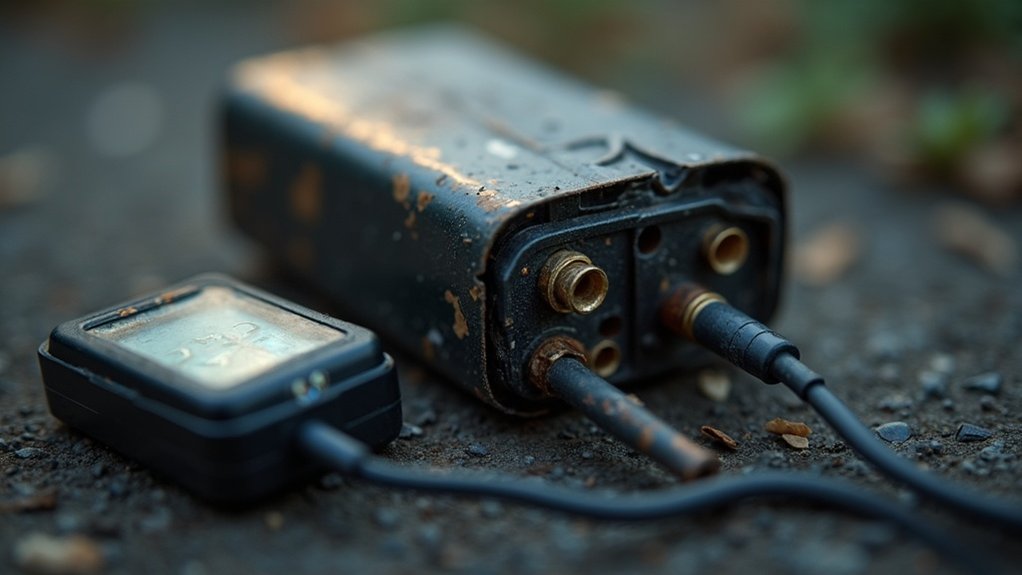
Even small cracks can allow moisture and dirt to infiltrate, greatly increasing the risk of corrosion.
If you suspect manufacturing defects, addressing these issues with your manufacturer promptly can prevent further degradation and guarantee your battery’s longevity.
External Impact Risks
When external impacts occur, e-bike batteries can suffer significant physical damage, compromising their housing and internal components. This damage can lead to performance degradation and reduced lifespan.
To mitigate risks, consider these vital factors:
- Inspect Regularly: Conduct inspections for physical damage to catch issues early.
- Check Battery Housing: Look for cracks or dents that could allow moisture infiltration.
- Choose Reputable Brands: Avoid manufacturing defects by purchasing from trusted manufacturers.
- Address Issues Promptly: Report any concerns to the manufacturer to prevent further degradation.
Moisture Penetration Issues
External impacts can compromise battery integrity, but moisture penetration poses a separate yet significant risk to e-bike batteries. Small cracks in the battery housing or manufacturing defects can allow moisture to infiltrate, leading to internal corrosion. This moisture can trigger electrolysis, further degrading essential components and impacting battery longevity. Regular inspections for physical damage are vital to identify vulnerabilities before they escalate. If you suspect moisture penetration, contact the manufacturer for potential warranty claims.
| Causes of Moisture Penetration | Effects on Battery |
|---|---|
| Cracks in Battery Housing | Internal Corrosion |
| Manufacturing Defects | Decreased Performance |
| Physical Damage | Reduced Battery Longevity |
Warranty and Defects
How can you guarantee your e-bike battery remains in ideal condition despite the risks of physical damage and manufacturing defects? Here are four essential steps:
- Conduct Regular Inspections: Check for physical damage, cracks, or signs of wear.
- Understand Your Warranty: Know what’s covered, particularly regarding manufacturing defects.
- Handle with Care: Protect your battery from impacts that may compromise its housing.
- Monitor for Corrosion: Inspect for moisture ingress that can degrade battery performance.
Tips for Maintaining Battery Health
To guarantee your e-bike battery remains in prime condition, it’s essential to adopt a few key maintenance practices.
Charge the battery when it drops to around 20%, ideally keeping it between 20-80% to enhance lifespan. Always use the correct charger designed for your specific model to avoid overcharging.
Store the battery in a cool, dry environment, between 32°F and 68°F, to prevent damage from extreme temperatures. If you’re not using your e-bike regularly, monitor and maintain monthly charging to combat self-discharging.
Finally, regularly check and clean the battery terminals to ensure peak power delivery and performance.