Some electric bicycles are restricted in speed due to legal regulations that classify them into different classes. These speed limits, often capping assistance at 15 mph, help guarantee compliance and rider safety. Additionally, battery and motor limitations mean higher speeds can lead to quicker depletion and overheating. By limiting speed, manufacturers enhance performance and longevity. Understanding these factors offers deeper insight into how regulations shape e-bike design and usage.
Key Takeaways
- Electric bicycles are classified into classes with speed limits to ensure compliance with legal regulations and safety standards.
- Speed restrictions help maintain battery life and motor performance, preventing overheating and component damage.
- Limiting speeds enhances rider safety, reducing accident risks in urban environments.
- Manufacturers prioritize efficiency and safety, designing e-bikes to perform optimally within regulated speed limits.
- Encouraging moderate speeds promotes healthier lifestyles and smoother interactions with traditional bicycles, easing urban congestion.
Legal and Regulatory Factors
When you ride an electric bicycle, understanding the legal and regulatory factors is essential to guarantee compliance and safety.
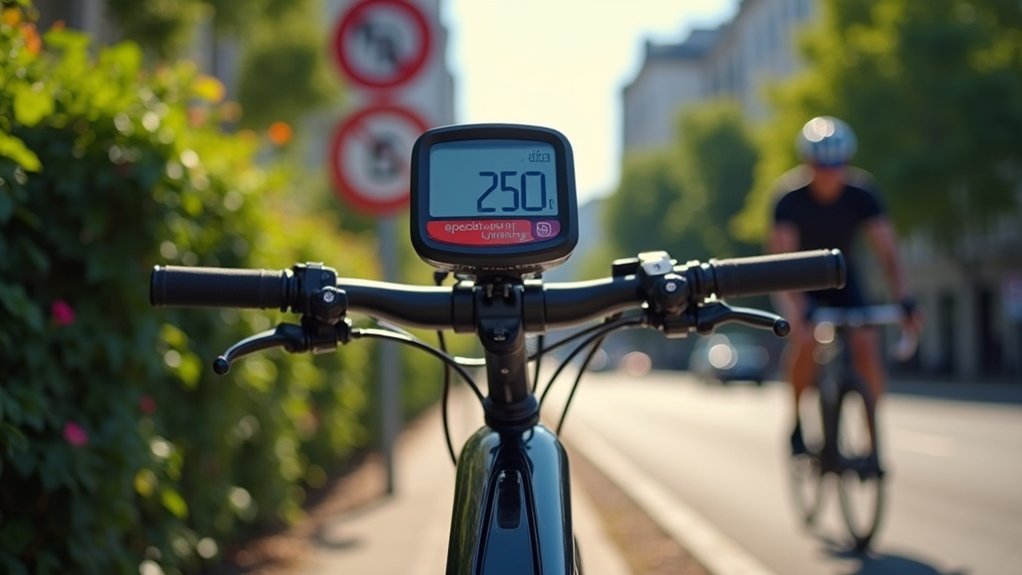
In the U.S., electric bicycles fall into three classes, with Class 1 and Class 2 limited to 20 mph and Class 3 reaching up to 28 mph. Many states enforce speed limits, often capping electric bike assistance at 15 mph to align with safety considerations.
Exceeding these limits can reclassify your bike, requiring registration and insurance. Local laws may allow sharing bike lanes with traditional bikes, but adhering to established speed limits guarantees you stay within legal regulations while enjoying your ride.
Battery and Motor Limitations
While electric bicycles offer an exhilarating ride, their performance is inherently linked to the limitations of their battery and motor systems.
Most electric bikes are designed to provide ideal pedal assistance up to around 15 mph, where motor systems maintain efficiency. Beyond this speed, you may notice quicker battery depletion and reduced ride distances.
Higher speeds can also lead to overheating, risking damage to both the motor and battery systems. By implementing speed limitations, manufacturers guarantee you enjoy a reliable riding experience while prolonging battery life and enhancing motor performance, keeping your electric bike in peak condition for longer.
Manufacturers’ Considerations
Manufacturers carefully consider several factors when setting speed limitations for electric bicycles. They typically impose speed restrictions to guarantee peak motor performance and enhance battery longevity.
Manufacturers set speed limits for electric bicycles to ensure optimal motor performance and extend battery life.
Key considerations include:
- Efficiency: Motors struggle to maintain efficiency above 15 mph.
- Cost: Higher speeds require more powerful components, increasing production costs.
- Compliance: Limiting speeds helps meet safety regulations, allowing e-bikes to share lanes with traditional bicycles.
Benefits of Limiting Speed
Limiting your electric bicycle’s speed to 15 mph greatly enhances rider safety by reducing the risk of accidents in busy urban areas.
This speed cap not only encourages you to engage in moderate physical activity but also helps ease urban congestion by allowing smoother interactions with traditional bicycles.
Additionally, maintaining this speed supports battery efficiency, extending the life of your e-bike’s components.
Enhanced Rider Safety
As urban areas become increasingly crowded, enhancing rider safety through speed restrictions on electric bicycles becomes vital.
Limiting the maximum speed to 15 mph greatly reduces accident risk by:
- Lowering injury risk, as studies show that injuries increase exponentially above 20 mph.
- Allowing safer braking distances, providing you more time to react to obstacles.
- Improving stability and control, which is essential for less experienced riders.
These speed restrictions foster a safer environment while promoting responsible riding habits, ultimately ensuring enhanced rider safety for everyone on the road.
Encouragement of Physical Activity
While many riders appreciate the convenience of electric bicycles, capping their speeds at 15 mph encourages a healthier lifestyle by promoting physical activity.
This speed limit guarantees that, even with motor assistance, you still pedal, enhancing your exercise routine. Electric bikes offer a chance to engage in moderate cycling, which benefits your cardiovascular health and builds muscle strength.
Reduction of Urban Congestion
Capping electric bicycle speeds at 15 mph not only fosters physical activity but also plays a significant role in reducing urban congestion.
By limiting e-bike speeds, you’ll see benefits such as:
- Increased e-bike usage, encouraging a shift from cars to sustainable transport.
- Enhanced safety as riders navigate crowded areas, promoting shared spaces without competing with faster vehicles.
- Improved bike lane efficiency, decreasing traffic bottlenecks in congested areas.
These factors collectively contribute to decreased carbon emissions and support urban planning initiatives, making cities more bike-friendly and accessible.
Embracing these speed limits is essential for a sustainable urban future.
Safety Considerations
Understanding the safety considerations of electric bicycles is essential for all riders, especially in crowded urban environments.
Speed limits are critical for enhancing safety and reducing the risk of accidents. Keeping speeds around 15 mph allows for better control and stability, which is important in unpredictable traffic. Higher speeds increase braking distances and heighten injury risks for both cyclists and pedestrians.
Speed limits around 15 mph enhance control and stability, crucial for safe riding in unpredictable urban traffic.
Studies also show that injury risk rises exponentially beyond 20 mph. Regulatory speed limits help guarantee electric bicycles remain classified as bikes, promoting safe riding practices without the need for additional licensing or insurance.
Stay safe and ride responsibly.
Technical Factors
As you explore the technical factors of electric bicycles, it’s important to recognize that their design balances performance and safety through specific speed limits.
These limits help optimize the system and guarantee rider enjoyment. Here are three key considerations:
- Motor Power: E-bikes typically feature motors between 250W to 750W, maintaining speeds of 20-28 mph efficiently.
- Speed Limit: Exceeding this limit strains the motor and battery, risking overheating.
- Battery Efficiency: Adhering to speed limits prolongs battery life, preventing rapid depletion during rides.
Manufacturers carefully set these parameters to guarantee a reliable, safe, and enjoyable experience for you.
Future of E-Bike Regulations
While the landscape of electric bicycle regulations is poised for change, advancements in technology and increasing usage are driving discussions on speed limits and safety standards. As e-bike speed regulations evolve, various factors will influence these changes, including advocacy efforts and urban infrastructure.
| Factor | Impact on Regulations |
|---|---|
| Technology Advancements | Higher speed allowances |
| Local Infrastructure | Tailored speed limits |
| Advocacy Groups | Equitable treatment |
| Market Expansion | Updated safety standards |
These elements will shape how e-bike regulations adapt, ensuring safety while accommodating the growing popularity of electric bicycles.