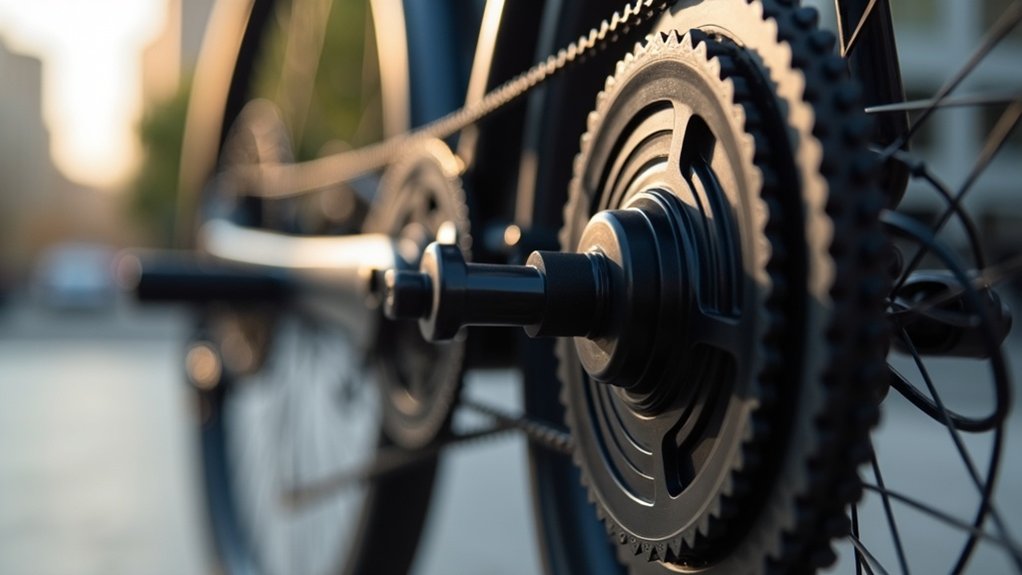
Belt drives are favored on some e-bikes for their low maintenance and cleaner operation. Unlike traditional chains, they don’t require lubrication, saving you time and hassle. Their impressive lifespan of up to 20,000 miles means fewer replacements, while their quieter performance enhances your ride experience. They’re particularly appealing for urban commuters and casual riders. If you’re curious about the details of their advantages and potential drawbacks, you’ll find the information insightful.
Key Takeaways
- Belt drives are low maintenance, requiring no lubrication, making them ideal for e-bike users who prefer hassle-free riding.
- They offer a quieter operation compared to traditional chain systems, enhancing the riding experience for urban commuters.
- With a lifespan of 10,000 to 20,000 miles, belt drives provide impressive durability, reducing long-term replacement costs.
- The clean operation of belt drives prevents grease transfer, appealing to riders who prioritize cleanliness and a tidy bike.
- Their lightweight design contributes to an overall reduction in bike weight, improving performance and efficiency in e-bikes.
What Is a Belt Drive?
A belt drive is an innovative bicycle drivetrain system that substitutes the traditional metal chain with a durable, toothed belt made from polyurethane and reinforced with carbon fiber.
This system connects the crankset directly to the rear sprocket, offering smoother and quieter operation. One of the primary advantages of a belt is its greatly reduced maintenance needs; unlike chains, belts don’t require lubrication.
With a lifespan of 10,000 to 20,000 miles, belt drives outlast traditional chains. However, they’re compatible only with internally geared hubs and gearboxes, making them ideal for casual riding, such as on a belt drive ebike.
Advantages of Belt Drives
While exploring drivetrain options for your e-bike, you’ll find that belt drives offer several distinct advantages over traditional chain systems.
First, they require low maintenance since they don’t need lubrication, cutting down on upkeep time. This leads to a cleaner riding experience without grease transfer, making them ideal for urban commuting.
Additionally, belt drives boast impressive durability, lasting between 10,000 to 20,000 miles, far outpacing chains. Their quieter ride enhances your overall experience, allowing for peaceful journeys in various environments.
Finally, belt drives are lighter than chains, contributing to an overall lighter bike, although hub gearing may slightly offset this advantage.
Disadvantages of Belt Drives
When considering belt drives for your e-bike, be aware of the higher replacement costs that can strain your budget.
Additionally, the limited gear options restrict your versatility on varied terrains, which might impact your riding experience.
These factors warrant careful consideration before making your decision.
Higher Replacement Costs
Belt drives on e-bikes come with higher replacement costs that can impact your long-term ownership experience. Replacement belts typically run around £120, considerably more than chain replacements, making maintenance costs higher.
Additionally, sprocket replacements can add about £100. You may face challenges finding these components in local bike shops, leading to longer downtimes if your belt snaps.
The complexity of repairs and the need for specialized parts can further escalate costs and inconvenience. Misalignment issues demand precise installation and maintenance, increasing the potential for additional expenses, ultimately affecting your overall e-bike experience.
Limited Gear Options
Though many riders appreciate the low maintenance and durability of belt drives, they often face a significant drawback in limited gear options.
These systems typically rely on internally geared hubs or gearboxes, which restrict the number of available gears. This limitation can hinder performance, especially on hilly terrains where a broader gear range is essential.
The rigidity of a belt drive may also lead to less efficient power transfer on steep inclines, making it less suitable for aggressive riders.
Ultimately, for those seeking versatility across diverse landscapes, the disadvantages of a belt’s limited gear options become a considerable concern.
Who Should Consider Belt Drive E-Bikes?
Are you searching for an e-bike that combines convenience with performance? Belt drive e-bikes are perfect for casual riders, urban commuters, and those who value low-maintenance options. With minimal upkeep, they offer durability and a cleaner cycling experience, free from grease. If you ride primarily on flat terrains and appreciate hassle-free maintenance, these e-bikes are ideal.
| Ideal For | Benefits |
|---|---|
| Casual Riders | Low-maintenance option |
| Urban Commuters | Quieter operation |
| Riders on Flat Terrains | Simplicity and durability |
| Cleanliness Seekers | No grease transfer |
| Ease of Use | Long-term savings on repairs |
Popular Belt Drive E-Bike Models
For those considering a belt drive e-bike, a variety of popular models cater to different needs and budgets.
These belt drive bikes offer low maintenance options compared to traditional chain drives, making them ideal for many riders.
- Tenways CGO600 (£1,299) — budget-friendly choice
- Estarli e28.X (£1,895) — stylish and affordable
- MiRiDER 16 GB3 (£2,995) — compact urban commuter
- Orbea Diem 10 (£5,299) — high-performance features
- Tern GSD S00 (£5,700) — robust and versatile
These electric bikes combine durability with advanced technology, enhancing your riding experience markedly.
Maintenance Considerations for Belt Drives
While many cyclists appreciate the advantages of belt drives, understanding their maintenance requirements can greatly enhance your riding experience.
Belt drives demand considerably less maintenance than traditional chain systems. You’ll find that belt tension adjustments are minimal, making it easier for you to manage your bike, especially if you’re older.
Unlike chains, belt drives eliminate the need for regular lubrication, reducing mess and maintenance frequency. However, it’s still wise to regularly inspect the alignment and tension to guarantee peak performance.
With belts lasting between 10,000 to 20,000 miles, you can enjoy long-term cost savings and a trouble-free ride.
Comparing Belt Drives to Chain Drives
When you compare belt drives to chain drives, maintenance requirements stand out considerably; belt drives require far less upkeep.
Performance-wise, belt drives offer smoother operation and consistent efficiency, while chains may need adjustments due to wear.
Although the initial investment in a belt drive is higher, consider the long-term savings on maintenance and replacements against the versatility of chain drives in various gearing systems.
Maintenance Requirements Comparison
Although belt drives on e-bikes offer a quieter and cleaner riding experience, their maintenance requirements differ markedly from those of chain drives.
Here’s a quick comparison:
- Belt drives need less maintenance, requiring no lubrication.
- Lifespan of Gates Carbon Belt Drive can reach 20,000 miles, compared to 2,500 miles for chain drives.
- Belt drives operate without grease and oil, keeping your bike clean.
- Replacement costs may be similar, but belts last longer.
- Proper alignment is essential for belt drives, while chain drives are more forgiving.
Choosing a belt drive means less hassle and more riding.
Performance and Efficiency Differences
Belt drives offer a unique set of performance and efficiency characteristics that differ from traditional chain drives.
While they excel in longevity—lasting between 10,000 to 20,000 miles without lubrication—their rigidity impacts performance on varied terrains, making them less efficient in unassisted bikes.
Additionally, the quieter operation enhances your riding experience, reducing noise compared to chain systems.
However, belt drives are sensitive to alignment, which can affect performance if misaligned.
In contrast, chain drives require regular maintenance, including oiling and cleaning, to maintain efficiency, making belt drives a more convenient option overall.
Cost and Availability Factors
While considering the cost and availability of belt drives compared to chain drives, you’ll notice that the initial investment for a belt system is typically higher.
Here are some key cost and availability factors:
- Replacement belts cost around £120; rear sprockets about £100.
- Chains are cheaper, usually around £130, with easier replacement.
- Availability of belt replacement parts may be limited at bike shops.
- Specialized components can increase repair complexity and costs.
- Long-term maintenance may be lower for belts, but upfront costs can deter some riders.
Evaluating these pros and cons helps you make an informed decision for your e-bike needs.