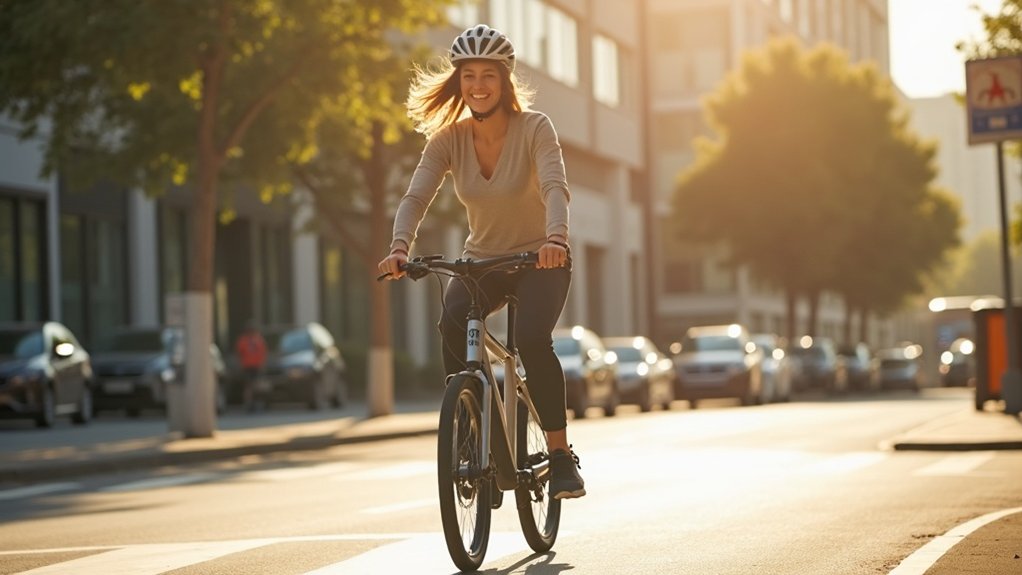
Class 2 e-bikes are the only category that allows throttle use, meaning you can accelerate without pedaling. This feature makes them ideal for urban commuters and those with physical limitations. Class 1 and Class 3 e-bikes, on the other hand, rely solely on pedal-assist. Understanding these classifications is key, especially when considering local laws, which can vary greatly. Want to know how these classifications affect your riding experience? There’s more to explore!
Key Takeaways
- Class 2 e-bikes allow throttle use, enabling acceleration without pedaling.
- Class 1 e-bikes do not have throttle; they assist only when pedaling.
- Class 3 e-bikes also do not allow throttle; they focus on high-speed pedal-assist.
- Class 2 e-bikes have a motor limit of 750 watts for legal throttle use.
- Local laws may impose additional restrictions on throttle usage for e-bikes.
E-Bike Classifications and Throttle Regulations
When it comes to understanding e-bike classifications and throttle regulations, knowing the differences can greatly impact your riding experience.
E-bike classifications are essential for identifying what’s allowed. Only the Class 2 ebike permits throttle use, enabling you to accelerate without pedaling up to 20 mph.
In contrast, Class 1 and Class 3 e-bikes require you to pedal, as they don’t allow throttles. Understanding these throttle regulations helps guarantee you choose the right bike for your needs and stay compliant with local laws.
Class 1 E-Bikes: Pedal-Assist Only
Class 1 e-bikes stand out for their pedal-assist functionality, offering a unique riding experience that emphasizes physical activity.
You’ll enjoy the benefits of using these electric bikes, which include:
- Pedal-Assist Only: The motor engages only when you pedal, promoting exercise.
- Speed Limit: You’ll receive assistance up to 20 mph, but can exceed that by pedaling harder.
- No License Required: Anyone 16 or older can ride without needing a driver’s license.
These e-bikes are perfect for leisurely rides on bike paths and trails, making them a great choice for fitness enthusiasts and casual riders alike.
Class 2 E-Bikes: Throttle-Assisted Convenience
Class 2 e-bikes offer a unique throttle functionality that lets you accelerate without pedaling, making your rides more effortless.
This feature is especially handy for urban commuters or those with physical limitations, as it allows for easy starts and smoother navigation through traffic.
Plus, since you don’t need a driver’s license to operate one, you can enjoy the freedom of these bikes starting at just 16 years old.
Throttle Functionality Explained
While many e-bikes require pedaling to engage the motor, Class 2 e-bikes stand out by offering throttle functionality that allows you to control the bike without pedaling at all.
This feature provides several benefits:
- Quick Acceleration: You can reach speeds up to 20 mph effortlessly.
- Accessibility: It’s ideal for riders with physical limitations, allowing for easier navigation.
- Powerful Performance: With a 750-watt motor limit, you’ll enjoy sufficient electric assist across various terrains.
Class 2 e-bikes truly enhance your riding experience, combining convenience with the freedom of throttle operation.
Ideal Use Cases
When you think about the ideal use cases for Class 2 e-bikes, the throttle-assisted feature shines in various scenarios.
These bikes offer convenience for urban commuting, allowing you to navigate traffic effortlessly at speeds up to 20 mph. If you have physical limitations or need an easier start, the throttle use becomes a game-changer.
It’s especially beneficial when managing loads or tackling challenging terrain, making hill climbs less intimidating. Unlike other classes, Class 2 e-bikes combine pedal-assist with throttle control, offering flexibility and safety, particularly for older adults or those recovering from injuries.
Legal Considerations
Understanding the legal landscape surrounding Class 2 e-bikes is essential for any rider looking to enjoy the throttle-assisted convenience they offer. Here are a few key points:
- Class 2 e-bikes are the only electric bicycles allowed to use throttles without pedaling.
- They can reach speeds of up to 20 mph and don’t require a driver’s license, although riders must be at least 16 years old.
- Local laws dictate where Class 2 e-bikes can operate, often permitting them on roadways and bike lanes alongside traditional bicycles.
Always check your local laws to verify compliance and safe riding!
Class 3 E-Bikes: High-Speed Pedal-Assist
Class 3 e-bikes offer an exhilarating solution for commuters looking to travel at high speeds, as they provide pedal-assist that can propel you up to 28 mph without relying on a throttle.
Designed for those over 17, these e-bikes enhance your ride by focusing solely on pedal-assist, unlike Class 1 and Class 2 models.
While they don’t require a driver’s license or registration, you must wear a helmet.
Keep in mind that local regulations may restrict Class 3 e-bikes from certain bike paths due to their speed capabilities, so check your area’s rules before hitting the road.
Legal Considerations for E-Bike Throttle Use
As you navigate the world of e-bikes, it’s crucial to grasp the legal landscape surrounding throttle use. Understanding these key classifications can help you stay compliant:
- Class 1 & Class 3 E-Bikes: No throttle allowed; pedal-assist only.
- Class 2 E-Bikes: Throttle permitted, max power 750 watts, speeds up to 20 mph.
- Higher Power/Speed: E-bikes exceeding 28 mph or 750 watts may be classified as scooters, requiring registration and insurance.
Always check local laws for enforcement, as legal considerations can vary considerably across states and municipalities.
Stay informed to ride safely and legally!
State-by-State Variations in E-Bike Laws
When it comes to e-bike laws, you’ll find significant differences from state to state.
For instance, while Class 2 e-bikes can use throttles in places like California, other states, such as Oregon, impose stricter regulations.
It’s essential to check your local laws to guarantee you’re riding within the guidelines.
E-Bike Laws Overview
Maneuvering the landscape of e-bike laws can be tricky, especially since regulations vary considerably from state to state.
Understanding the nuances of electric bike classes is essential for safe riding. Here are three key points:
- Throttle Use: Only Class 2 e-bikes allow throttle use, letting you accelerate without pedaling up to 20 mph.
- Pedaling Requirement: Class 1 and Class 3 e-bikes need you to pedal for motor assistance.
- Motor Limits: Most states enforce a 750-watt limit for e-bikes, particularly affecting Class 2 models.
Stay informed about local laws to avoid penalties and complications.
Throttle Regulations by State
Understanding the regulations surrounding throttle use on e-bikes can vary widely depending on where you live. Most states follow a three-class system, allowing throttle use on Class 2 e-bikes, which can hit 20 mph without pedaling.
However, states like California permit Class 2 e-bikes on bike paths, while Class 1 and Class 3 face more restrictions.
In contrast, Oregon prohibits throttle use on Class 3 e-bikes, emphasizing pedal-assist functionality.
It’s crucial to comply with local regulations, as some states impose specific limits on motor wattage and speed, affecting how you can enjoy throttle use on your e-bike.