When it comes to wet conditions, disc brakes outperform drum brakes. They maintain consistent stopping power thanks to superior heat dissipation and effective moisture management. The design of disc brakes minimizes brake fade and enhances modulation, reducing the risk of skidding. In contrast, drum brakes can trap water and lose effectiveness. For peak performance, consider brake system compatibility with your driving style. There’s much more to explore about brake systems and their dynamics in challenging environments.
Key Takeaways
- Disc brakes provide superior stopping power and modulation in wet conditions compared to drum brakes.
- They effectively dissipate heat, minimizing brake fade during wet weather.
- Disc brakes maintain consistent performance and reduce skidding risks in wet environments.
- The higher positioning of disc components protects them from moisture accumulation.
- Durability and lower maintenance needs of disc brakes make them ideal for wet conditions.
Understanding Disc Brakes
When you consider braking systems, understanding disc brakes is essential, especially for their performance in wet conditions.
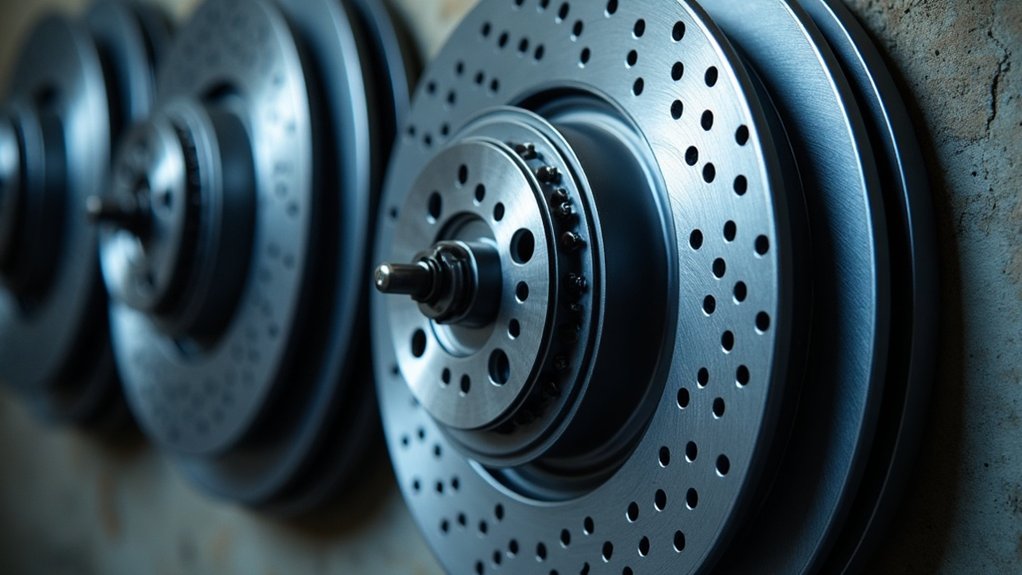
Disc brakes deliver consistent braking performance, outperforming rim brakes by maintaining effectiveness regardless of rim material. Their superior design allows for better modulation, enhancing control and reducing the risk of skidding on slippery surfaces.
Additionally, disc brakes dissipate heat more effectively, minimizing brake fade during prolonged use in wet environments. With a higher clamping force and reduced susceptibility to water pressure, they provide efficient, aggressive braking.
Their durability and lower maintenance needs further establish disc brakes as the superior choice for wet conditions.
The Mechanics of Drum Brakes
Drum brakes operate through a combination of mechanical components that work together to create friction and slow down a vehicle. This system includes:
- Brake drum, which houses the components
- Wheel cylinders with pistons for hydraulic force
- Brake shoes that press against the drum
- A self-locking mechanism for parking
- An enclosed design to keep debris out
However, drum brakes can be less effective in wet conditions. Water can collect inside the drum, reducing performance and increasing stopping distances.
Drum brakes may struggle in wet conditions, as water accumulation can hinder performance and extend stopping distances.
While they’re cost-effective, their ability to maintain stopping power diminishes when faced with moisture, leading to potential brake fade.
Performance of Disc Brakes in Wet Conditions
Although wet conditions can pose challenges for braking systems, disc brakes excel in maintaining performance and safety. Their design allows for superior stopping power, ensuring consistent braking even when water accumulates.
Unlike drum brakes, disc brakes provide enhanced modulation, which reduces the risk of skidding on slippery surfaces. The higher positioning and enclosed components protect them from moisture, further enhancing reliability.
Additionally, the materials used in disc brake pads resist wear and corrosion, leading to less frequent replacements. Studies reveal that disc brakes perform better than rim brakes in wet scenarios, thereby bolstering rider safety during adverse weather conditions.
Comparison of Heat Dissipation in Brake Systems
While both disc and drum brake systems serve the same fundamental purpose, their heat dissipation capabilities differ markedly.
Disc brakes excel in managing heat, particularly in wet conditions, due to their larger surface area and design. This results in enhanced braking performance, reducing brake fade and maintaining consistent stopping power.
Disc brakes outperform in heat management, especially in wet conditions, ensuring reliable braking performance and minimizing fade.
In contrast, drum brakes can trap moisture, impairing their effectiveness.
- Disc brakes evaporate water on the rotor surface.
- Superior clamping force in disc brakes.
- Heat resistance enhances performance in disc brakes.
- Drum brakes experience more heat-related degradation.
- Consistent braking force is more likely with disc brakes.
Modulation and Control: Disc vs. Drum Brakes
When maneuvering wet conditions, the modulation and control offered by brake systems become essential for safety and performance.
Disc brakes excel in this area, delivering superior modulation and braking authority, allowing you to fine-tune braking force effectively. In contrast, drum brakes can lead to abrupt stops due to less precise control, especially when water accumulates.
Disc brakes are less susceptible to moisture and maintain consistent performance, while drum brakes struggle with water interference. Their design also offers better resistance to corrosion and wear, enhancing reliability and reducing maintenance needs, making them the preferred choice for wet conditions.
Durability and Maintenance in Rainy Weather
The performance of brake systems in wet conditions directly impacts their durability and maintenance requirements. Understanding these factors will help you choose the right system.
- Disc brakes resist wear better than rim brakes in wet environments.
- Replacement intervals for disc brake pads are generally longer.
- Disc brake rotors experience less wear compared to rim brake rims.
- Maintenance of disc brakes is simpler, as fewer components face moisture.
- Effective heat dissipation in disc brakes prevents brake fade.
In rainy weather, prioritizing durability and maintenance can greatly enhance your overall braking experience. Choose wisely to guarantee reliable performance.
Environmental Factors Affecting Brake Performance
Environmental factors like humidity and precipitation play an essential role in brake performance, greatly influencing the effectiveness of different braking systems.
In wet conditions, rim brakes struggle due to water accumulation, resulting in longer stopping distances and reduced efficiency. Conversely, disc brakes excel in these environments, designed to minimize exposure to moisture. Their enclosed design and heat generation help evaporate water on the rotor, ensuring reliable braking force.
Additionally, disc brakes resist corrosion and wear better than rim brakes, enhancing their longevity and performance in adverse weather. Understanding these factors is vital for optimizing your braking system’s effectiveness in wet conditions.
Choosing the Right Brake System for Wet Conditions
How do you guarantee ideal braking performance in wet conditions? Choosing the right brake system is essential.
Disc brakes outperform other types, especially drum brakes, due to their superior stopping power and modulation.
When evaluating your options, consider:
- Water resistance and corrosion protection of components
- Heat dissipation to prevent brake fade
- Clamping force effectiveness in wet conditions
- Elevated positioning to minimize water exposure
- Compatibility with your driving style