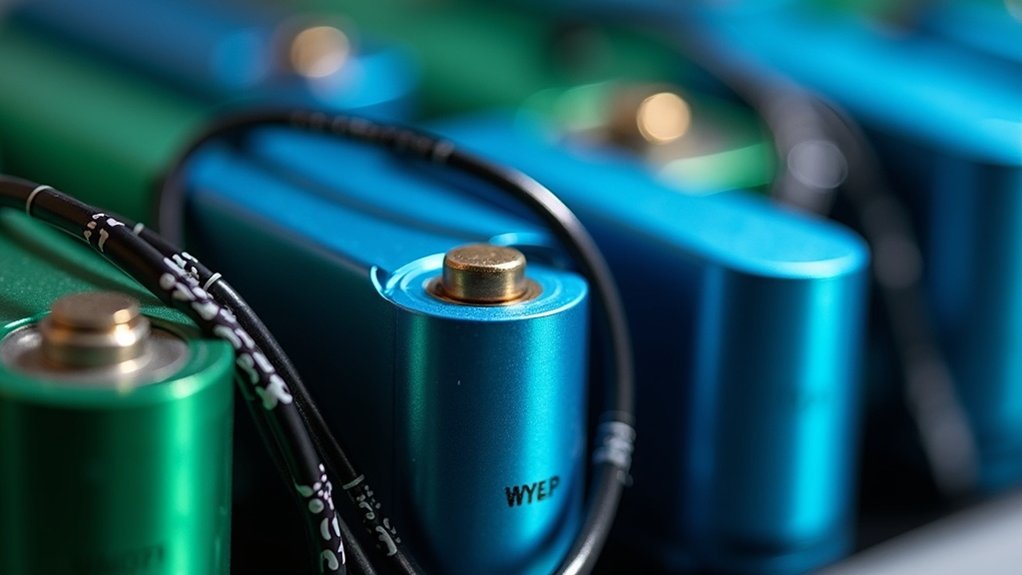
E-bikes commonly utilize several lithium battery chemistries, including Lithium Iron Phosphate (LiFePO4), which is known for its safety and longevity, and Lithium Manganese Oxide (LiMn), recognized for its lightweight and cost-effectiveness. Lithium Nickel Manganese Cobalt Oxide (NMC) offers a balance of performance and energy density, while RC LiPos (Lithium Cobalt) deliver high power but pose safety risks. Each chemistry has its pros and cons, impacting performance and longevity in your e-bike setup. Discover more about battery selection factors.
Key Takeaways
- Lithium Iron Phosphate (LiFePO4) batteries are popular for their safety, longevity, and ability to last over 2,000 charge cycles.
- Lithium Manganese Oxide (LiMn) batteries are lightweight and cost-effective, ideal for everyday riders seeking good thermal stability.
- Nickel Manganese Cobalt Oxide (NMC) batteries offer a balance of weight and performance, providing reliable power for varied terrains.
- RC LiPos (Lithium Cobalt) batteries deliver high power output, suitable for racing but come with significant safety risks.
- Battery choice depends on weight, longevity, cost, and specific riding styles to optimize e-bike performance.
Overview of Lithium Battery Chemistries
As the backbone of modern electric bicycles, lithium battery chemistries play an essential role in performance and usability.
Lithium-ion batteries dominate the market due to their high energy density, lightweight design, and impressive battery life of 500 to 1,000 charge cycles.
Lithium-ion batteries lead the electric bicycle market, offering exceptional energy density and a lifespan of 500 to 1,000 charge cycles.
Lithium Iron Phosphate (LiFePO4) batteries excel in safety and longevity, achieving over 2,000 charge cycles, though they’re bulkier.
Nickel Manganese Cobalt Oxide (NMC) batteries strike a balance between weight and performance, lasting 800 to 1,000 charge cycles.
In contrast, Lithium Manganese Oxide (LiMn) batteries are lighter but offer a shorter lifespan of 600 to 800 charge cycles.
Lithium Iron Phosphate (LiFePO4) Characteristics
Lithium Iron Phosphate (LiFePO4) batteries stand out in the landscape of battery chemistries due to their remarkable safety features and longevity.
You’ll appreciate the following characteristics:
- Exceptional safety features, reducing the risk of thermal runaway.
- Long cycle life, exceeding 2,000 charge cycles for durability.
- Stable performance across a wide temperature range, despite being heavier.
- Environmentally friendly, made from non-toxic materials for easier disposal.
While their energy capacity ranges from 90 to 120 Wh/kg, they excel in longevity and safety, making them a reliable choice for e-bikes.
Lithium Manganese Oxide (LiMn) Advantages
When considering battery options for your e-bike, Lithium Manganese Oxide (LiMn) batteries offer several distinct advantages that make them particularly appealing.
Their smaller size and lighter weight are essential for e-bike applications, enhancing overall performance.
The compact and lightweight design of LiMn batteries significantly boosts e-bike performance.
LiMn batteries exhibit improved thermal stability, greatly reducing risks of overheating and ensuring compliance with safety standards.
They provide excellent charging and discharging performance, allowing for quicker acceleration.
With a cycle life of approximately 600-800 charge cycles, they maintain reliable performance over time.
Additionally, LiMn batteries are cost-effective, striking a balance between affordability and performance for everyday riders.
Lithium Nickel Manganese Cobalt Oxide (NMC) Performance
When considering Lithium Nickel Manganese Cobalt Oxide (NMC) batteries for your e-bike, you’ll appreciate their impressive energy density, which ranges from 150 to 220 Wh/kg.
This high energy density not only extends your riding range but also contributes to a lighter overall battery pack.
Additionally, with a cycle life of 800 to 1,000 charge cycles, NMC batteries provide reliable performance for regular use, ensuring you get the most out of your investment.
Energy Density Advantages
One of the standout features of Lithium Nickel Manganese Cobalt Oxide (NMC) batteries is their impressive energy density, which typically ranges from 150 to 220 Wh/kg.
This characteristic makes NMC batteries ideal for e-bike applications, providing significant advantages:
- Lightweight design enhances portability.
- Better acceleration and climbing ability on varied terrains.
- Higher voltage options improve overall efficiency.
- Reliable power source guarantees longer rides.
With their balance of performance, safety, and a cycle life of around 800-1,000 cycles, NMC batteries represent a compelling choice in the growing e-bike battery market.
Lifespan and Cycle Performance
Although NMC batteries excel in energy density, their lifespan and cycle performance play a crucial role in their appeal for e-bike applications.
Typically, you can expect 800-1,000 charge cycles from these lithium batteries, ensuring long life and reliability. NMC technology balances energy density with cycle performance, catering to various riding styles and conditions.
These batteries sustain high discharge rates, enhancing performance during steep climbs or high-speed rides. Additionally, their lighter weight compared to Lithium Iron Phosphate batteries improves handling and range.
Proper maintenance and charging practices can further maximize the lifespan and performance of your NMC batteries, ensuring consistent reliability.
RC LiPos (Lithium Cobalt) and Their Applications
RC LiPos, or Lithium Cobalt batteries, deliver high power output, making them ideal for applications like racing drones and remote control vehicles.
However, their significant safety concerns, particularly the risk of thermal runaway, require careful handling.
While these batteries excel in weight-sensitive scenarios, their short cycle life limits their practicality in standard e-bike applications.
High Power Output
High power output is a defining characteristic of Lithium Cobalt (LiPo) batteries, making them a go-to choice for applications demanding rapid acceleration and high performance.
The advantages of RC LiPos include:
- Exceptional energy density, enabling impressive speeds.
- Compact size, allowing for sleeker designs in e-bikes.
- Quick discharge rates for immediate power delivery.
- Lightweight construction, enhancing overall bike performance.
However, the limited cycle life poses challenges, typically lasting only a couple hundred charge cycles.
While the performance metrics are enticing, safety concerns, particularly regarding fire risk, necessitate stringent handling protocols for these powerful batteries.
Safety Concerns
The impressive performance of Lithium Cobalt (LiPo) batteries comes with significant safety risks that can’t be overlooked.
These batteries are prone to thermal runaway, a condition that can result in fires or explosions if mishandled or charged incorrectly.
While their compact size and high power output appeal to performance enthusiasts, their limited lifespan—typically just a couple hundred charge cycles—raises important safety concerns.
For e-bike use, where reliability is paramount, RC LiPos are generally ill-suited due to these hazards.
As a result, considering safer lithium battery chemistries is vital to guarantee both performance and safety in electric bicycles.
Comparing Battery Lifespans and Cycle Durations
When comparing battery lifespans and cycle durations, it’s vital to recognize how different chemistries impact e-bike performance and longevity.
Understanding battery chemistry is crucial for optimizing e-bike performance and ensuring longevity.
- Lithium Iron Phosphate (LiFePO4): Offers over 2,000 charge cycles, ensuring long life.
- Lithium Manganese Oxide (LiMn): Provides 600-800 charge cycles, balancing performance and lifespan.
- Lithium Nickel Manganese Cobalt Oxide (NMC): Generally achieves 800-1,000 cycles, combining energy density with longevity.
- RC LiPo (Lithium Cobalt): Lasts only 200-300 cycles, less suitable for long-term use.
Choosing the right ebike battery chemistry directly influences maintenance costs and replacement frequency, making informed decisions essential.
Safety Considerations for Different Battery Types
Selecting the right battery chemistry not only affects performance and lifespan but also plays a significant role in safety considerations.
Lithium Iron Phosphate (LiFePO4) batteries excel with enhanced safety features, minimizing thermal runaway risks. In contrast, Lithium Manganese Oxide (LiMn) batteries offer improved thermal stability, reducing overheating chances.
However, RC LiPo (Lithium Cobalt) batteries are more hazardous due to fire susceptibility when damaged.
Implementing a Battery Management System (BMS) is essential, as it prevents overheating and overcharging.
Choosing the Right Battery Chemistry for Your E-Bike
How do you determine the best battery chemistry for your e-bike? Consider these factors:
- Weight: Lighter Li-ion batteries improve handling and performance.
- Charging Times: Faster charging enables more ride time with less downtime.
- Long Life: Lithium Iron Phosphate (LiFePO4) offers over 2000 cycles, ideal for reliability.
- Cost: Evaluate your budget against the benefits of different battery types.
Choosing the right e-bike battery affects your ride’s weight, range, and overall experience.
The right e-bike battery significantly impacts your weight, range, and overall riding experience.
Li-ion is popular for its energy density, while LiFePO4 excels in longevity.
Make a choice that aligns with your riding style and needs.