To enhance your visibility while cycling, place reflective gear on key areas of your bike. Apply reflective strips on the frame’s down tube, seat tube, and rear triangle, ensuring at least 30 square inches are visible. For the seat post, use a reflective strap and light. Don’t forget wheel strips and spoke clips for extra visibility. Equip your helmet with reflective elements, and install lights on your handlebars for thorough safety. There’s more significant information to explore!
Key Takeaways
- Apply reflective strips to the down tube, seat tube, and rear triangle for optimal side and rear visibility.
- Attach reflective materials along the height of tire sidewalls and consider using spoke clips for added visibility.
- Ensure your helmet features reflective strips or decals, and use bright colors to enhance nighttime recognition.
- Install reflective lights on handlebars and the seat post, aiming for 400 lumens in front and flashing lights in the rear.
- Regularly inspect and maintain all reflective gear to ensure effectiveness and replace any worn-out materials promptly.
Optimal Placement of Reflective Strips on the Frame
When it comes to placing reflective strips on your bike frame, focus on key areas for maximum visibility.
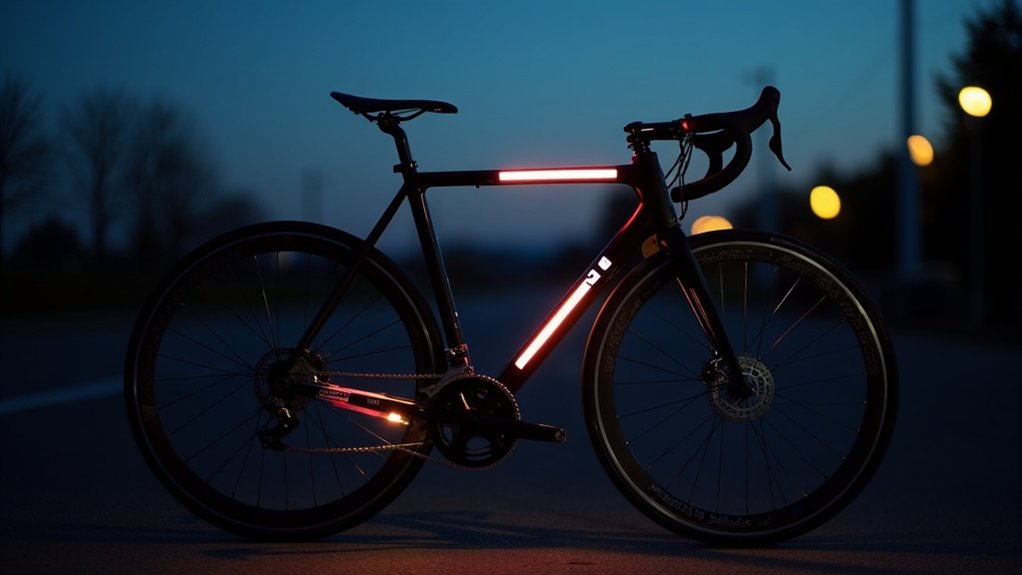
Start by applying reflective strips to the down tube and seat tube; these spots are highly visible to approaching vehicles from the side and rear.
Don’t forget the rear triangle, where strips enhance visibility from behind, especially in low-light conditions. Aim for at least 30 square inches of reflective material on these sections.
Position strips around the fork and front triangle to improve visibility at intersections.
Make certain they’re securely attached and clean to maintain their high visibility during night rides.
Enhancing Wheel Visibility With Reflective Materials
To boost your bike’s visibility at night, consider enhancing the wheels with reflective materials.
Attaching reflective wheel strips, using spoke clips, and adding sidewall reflectivity can greatly improve safety while riding in low-light conditions.
Each of these options not only increases your visibility but also helps make your bike look great.
Reflective Wheel Strips Placement
Applying reflective wheel strips to your bike’s tires greatly enhances visibility, especially during low-light conditions.
For maximum effectiveness, place continuous reflective material along the entire height of the tire sidewalls. This creates a highly visible area that meets safety standards.
Verify the reflective strips you choose are certified for durability, complying with ANSI/ISEA 107 or EN1150 guidelines.
Regularly inspect the condition of these strips; dirt and wear can reduce their effectiveness considerably.
Reflective Spoke Clips Benefits
While riding your bike at night or in low-light conditions, reflective spoke clips can greatly enhance your visibility. These clips reflect light continuously, grabbing motorists’ attention. When attached to each spoke, they create a rotating light effect, improving visibility from various angles. Made from durable, weather-resistant materials, they guarantee consistent performance. Reflective spoke clips are an easy and cost-effective addition to your reflective gear, boosting safety during night riding.
| Benefit | Description |
|---|---|
| Increased Visibility | Reflects light, catching motorists’ attention. |
| Rotating Light Effect | Enhances visibility from multiple angles. |
| Durable Materials | Weather-resistant for lasting performance. |
| Easy Installation | Simple to add without special tools. |
| Complements Other Gear | Works well with other reflective safety items. |
Tire Sidewall Reflectivity Options
Reflective gear doesn’t stop with spoke clips; tire sidewall reflectivity options play an important role in enhancing your bike’s visibility at night.
Applying continuous reflective stripes on both sides of your tire sidewall is a practical way to guarantee you’re seen from multiple angles.
Pair this with white reflective spoke clips for added visibility, especially when you’re in motion.
When using reflective tape, make certain it adheres to safety regulations to meet visibility standards.
Regular maintenance checks on these reflective materials are significant, making sure they stay intact and effective, just like your reflective clothing, for peak safety during rides.
Positioning Reflective Gear on the Seat Post
The seat post is a prime spot for positioning reflective gear, as it’s typically elevated and easily visible to drivers approaching from behind.
Here are three effective ways to enhance your bike’s visibility:
- Attach a reflective strap or tape to provide an additional 30 square inches of rear-facing reflectivity.
- Use a reflective seat post clamp that adds visibility without interfering with your ride.
- Install a reflective light to guarantee you’re seen in low-light conditions.
Make certain all reflective materials are securely fastened and regularly checked for cleanliness and damage to maintain their effectiveness and visibility.
Importance of Reflective Helmets for Night Riding
When cycling at night, wearing a reflective helmet can make all the difference in ensuring you’re seen by other road users. Reflective helmets greatly enhance your visibility, allowing motorists to recognize you from up to 160 meters away, especially when paired with reflective clothing.
Bright, neon-colored helmets also boost your conspicuity, reducing accident risks in low-light conditions. Adding reflective strips or decals creates a biomotion effect, fostering quicker recognition.
Many safety regulations recommend these features, highlighting their importance in nighttime riding. Incorporating LED lights or reflective accessories further elevates your visibility, alerting others to your presence and enhancing your safety.
Utilizing Reflective Accessories on Handlebars
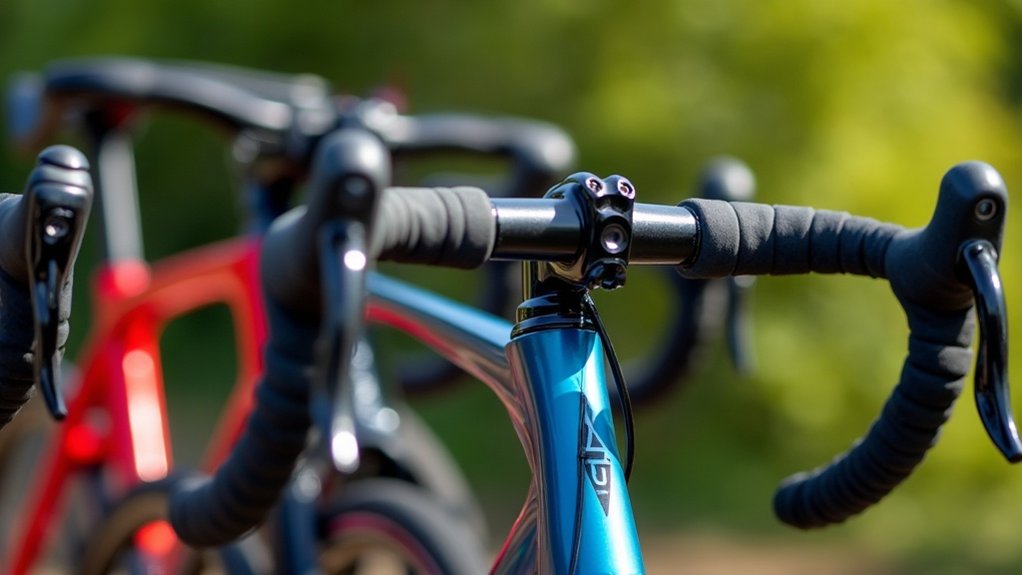
To enhance your visibility while riding, start by strategically placing reflective lights on your handlebars.
You can also apply reflective tape or stickers for added safety, ensuring they catch the eye of oncoming traffic.
Finally, consider using accessories like reflective grips or bags to boost your overall visibility during night rides.
Handlebar Light Placement
Proper handlebar light placement is essential for ensuring your safety and visibility on the road.
Follow these tips for ideal placement:
- Position your front handlebar light 4 to 5 feet above the ground to illuminate the road without blinding oncoming traffic.
- Use reflective accessories, like handlebar tape with reflective strips, to increase visibility from both sides during low light conditions.
- Secure a small, flashing reflective light on the front handlebars for quick adjustments.
Reflective Tape Application
Adding reflective tape to your handlebars greatly boosts your visibility on the road, especially during turns or when signaling.
When applying reflective tape, use high-quality options that meet ANSI/ISEA 107 or EN1150 standards for maximum effectiveness. Position the tape at the ends of the handlebars and along the grips to catch light from multiple angles.
Brightly colored reflective tape can enhance contrast with your bike’s existing colors, improving visibility in low-light conditions.
Regularly check for wear and tear, replacing any damaged tape to maintain ideal reflective qualities and guarantee your safety while riding.
Accessories for Increased Visibility
Reflective accessories on your handlebars can greatly enhance your visibility while riding, especially in dim lighting.
To boost your safety, consider adding these items:
- Reflective Handlebar Tape: This not only increases visibility but also enhances the biomotion effect, making you easily recognizable.
- Flashing Reflective Lights: These can catch attention through movement, considerably improving your visibility during night rides.
- Reflective Handlebar Bags: These serve a practical purpose while providing additional visibility.
Ensure that any reflective gear doesn’t obstruct your control of the bike, maintaining both safety and functionality.
Adding Reflective Elements to Bags and Backpacks
How can you make your bags and backpacks more visible during your rides? Adding reflective elements, like strips or patches, is highly recommended for making you visible, especially in low-light conditions. Consider neon-colored rain covers that not only protect your belongings but also enhance visibility. Brands like ORTLIEB offer stylish bags with built-in reflective features. Additionally, attaching reflective stickers to your existing bags boosts safety without needing new gear.
| Reflective Element | Benefits |
|---|---|
| Reflective Strips | Increases visibility |
| Neon Rain Covers | Protects + reflects light |
| Reflective Stickers | Easy upgrade for safety |
| Integrated Designs | Stylish + functional |
| Bright Colors | Complements reflective gear |
Best Practices for Installing Reflective Tape
When you’re ready to enhance your bike’s visibility, installing reflective tape is a straightforward yet effective solution. Follow these best practices to guarantee peak results:
- Clean the Surface: Make sure the bike frame is clean and dry for better adhesion.
- Strategic Placement: Apply larger strips on the rear triangle and seat stays for rear visibility, and place reflective tape on the front fork and handlebars for forward visibility, following the recommended areas.
- Regular Inspections: Check the tape for wear or damage regularly, replacing it as needed to maintain effectiveness during low light conditions.
Ensuring Comprehensive Visibility With Multiple Light Sources
Enhancing your bike’s visibility is essential for safe riding, especially in low light conditions.
Position your front light on the handlebars to illuminate the road ahead, aiming for at least 400 lumens. Attach a rear light on the seat post, using flashing lights to catch motorists’ attention from afar.
To improve side visibility, consider adding side-mounted lights or reflectors. Don’t forget to place reflective strips along your bike frame and wheel spokes.
Regularly check your lights’ functionality and adjust their positions based on the terrain to guarantee ideal visibility while cycling in the dark.
Safety should always come first!