You should store your batteries in a dry, temperature-controlled environment between 15-20°C (59-68°F) during winter. Avoid damp areas and concrete floors; opt for wooden surfaces instead. Disconnect battery terminals to prevent any slow drain and consider using a trickle charger for maintenance. Regularly check the charge status to avoid deep discharge. Keeping them safe and secure is essential for their performance. Stay tuned for more tips on ensuring your batteries remain in top shape.
Key Takeaways
- Store batteries in a dry, temperature-controlled environment, ideally between 15-20°C (59-68°F), to maintain optimal health.
- Avoid damp areas, such as concrete floors; use wooden surfaces to prevent moisture exposure.
- Disconnect battery terminals to eliminate electrical loads and prevent slow drainage during storage.
- Regularly monitor storage conditions and check the charge status at least once a month.
- Use dedicated storage containers to protect batteries from physical damage and avoid contact with metal objects.
Ideal Storage Locations for Batteries
When it comes to storing batteries during the winter, choosing the right location is essential for maintaining their performance and longevity.
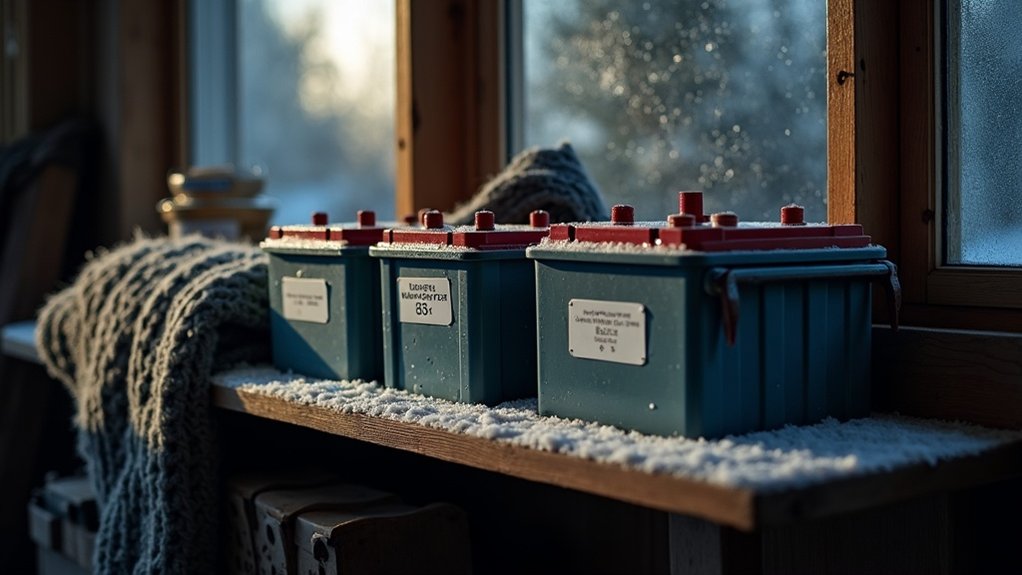
Ideal storage locations include dry, temperature-controlled environments, preferably between 15-20 degrees Celsius (59-68 degrees Fahrenheit). You should avoid damp areas like concrete floors by keeping your batteries on wooden surfaces.
Basements or garages equipped with battery maintainers are excellent choices, as they provide stable temperatures and allow for regular charging.
Always protect your batteries in dedicated storage containers to prevent physical damage and reduce the risk of short circuits from contact with metal objects.
Importance of a Controlled Environment
Choosing the right storage location for your batteries is only part of the equation; maintaining a controlled environment is equally important. Storing batteries in a temperature-controlled area between 32°F and 80°F helps preserve their charge and prevents damage. Here’s a quick overview of essential considerations:
| Factor | Recommendation |
|---|---|
| Temperature Range | 32°F to 80°F |
| Avoid Below | 0°F (-18°C) to prevent freezing |
| Humidity Control | Keep dry to avoid corrosion |
| Storage Position | Off the ground, away from sunlight |
Regularly monitor these conditions to guarantee ideal battery health during winter.
Preparing Batteries for Winter Storage
Before you tuck your batteries away for winter, it’s crucial to prepare them properly to guarantee they remain in peak condition.
First, make sure they’re fully charged; this helps them withstand lower temperatures and reduces the risk of freezing.
Next, disconnect the battery terminals to eliminate any electrical loads during storage.
Properly store the batteries in a dry, temperature-controlled environment between 15-20 degrees Celsius (59-68 degrees Fahrenheit).
Don’t forget to periodically check their charge status, and consider using a trickle charger to maintain ideal performance.
These steps will ascertain your batteries are ready when you need them.
Recommended Temperature Range for Storage
When storing batteries in winter, keep them in a temperature range between 32°F (0°C) and 80°F (27°C) to guarantee their longevity and performance.
Extreme cold can cause batteries to lose up to 50% of their capacity, especially if they’re fully charged.
Aim for a stable room temperature of 15-20°C (59-68°F) while avoiding direct sunlight and humidity to protect your batteries from damage.
Ideal Temperature Range
To guarantee your batteries perform at their best and last longer, store them in a temperature range between 15-20 degrees Celsius (59-68 degrees Fahrenheit).
This ideal temperature range helps maintain peak performance and longevity. Avoid temperatures below 0 degrees Celsius (32 degrees Fahrenheit), as extreme cold can decrease capacity and increase freezing risks.
Remember, a fully charged lead-acid battery can endure colder temperatures down to -15 degrees Celsius (5 degrees Fahrenheit).
Always maintain a dry environment while storing the battery, as moisture can lead to corrosion.
Regularly check storage conditions, especially in winter, to guarantee peak battery health.
Effects of Extreme Temperatures
Extreme temperatures can greatly affect battery performance and lifespan, making it vital to understand the risks associated with improper storage.
When you store batteries in extreme cold, a fully charged battery can lose up to 50% of its capacity. Temperatures below 32°F (0°C) increase the chances of deep discharge, potentially rendering your batteries unusable and causing permanent damage.
Curiously, a fully charged lead-acid battery withstands freezing better than a discharged one. Although cold temperatures reduce self-discharge rates, keeping batteries at a consistent room temperature around 15-20°C is the best way to guarantee their health and longevity.
Maintenance Tips During Winter Storage
As you prepare to store your batteries for winter, it’s crucial to take specific maintenance steps that can greatly extend their lifespan.
First, regularly check the charge status at least once a month to prevent deep discharge. Clean the terminals and casing with a baking soda solution to avoid corrosion.
If you use battery maintainers, verify they’re compatible and check them periodically. Store your batteries in a temperature-controlled environment, ideally between 15-20°C (59-68°F).
Finally, disconnect the terminals to eliminate any electrical loads and prevent slow drain. Following these maintenance tips will help you store your batteries effectively.
Common Mistakes to Avoid
When storing batteries, it’s essential to maintain proper temperature control to prevent damage.
Neglecting regular checks can lead to issues like corrosion or self-discharge, shortening their lifespan.
Stay vigilant and guarantee your batteries are stored correctly to maximize their performance through the winter months.
Improper Temperature Control
Improper temperature control can greatly impact battery performance and longevity, so it’s crucial to avoid common mistakes during winter storage.
Here are three key points to take into account:
- Avoid Extreme Temperatures: Store batteries between 32°F and 80°F (0°C to 27°C) to prevent rapid self-discharge and damage.
- Keep Them Dry: Humid environments accelerate corrosion; choose a dry, controlled area for ideal health.
- Don’t Expose to Direct Light: Excessive heat or sunlight can degrade batteries quickly.
Neglecting Regular Checks
Neglecting to perform regular checks on your stored batteries can lead to significant issues that compromise their functionality and safety.
Failing to monitor charge levels can result in deep discharge, making your battery unusable after long periods. It’s vital to inspect for swelling or leakage, as these signs indicate potential failure and pose safety risks.
Additionally, not controlling storage conditions can accelerate deterioration, increasing the risk of corrosion. Regularly cleaning terminals is essential; dirt can hinder performance.
Finally, ignoring the need for periodic recharging means your batteries may not be fully charged, leading to irreversible damage over time.
Safety Considerations for Battery Storage
To guarantee your safety while storing batteries during winter, it’s crucial to follow specific precautions. Here are some key safety considerations for storing batteries:
- Store batteries away from flammable materials to minimize fire hazards.
- Use original packaging or a dedicated battery case to prevent accidental short circuits.
- Keep batteries out of reach of children and pets to avoid accidents.
Additionally, regularly monitor stored batteries for signs of swelling or leakage, which can indicate potential safety risks.