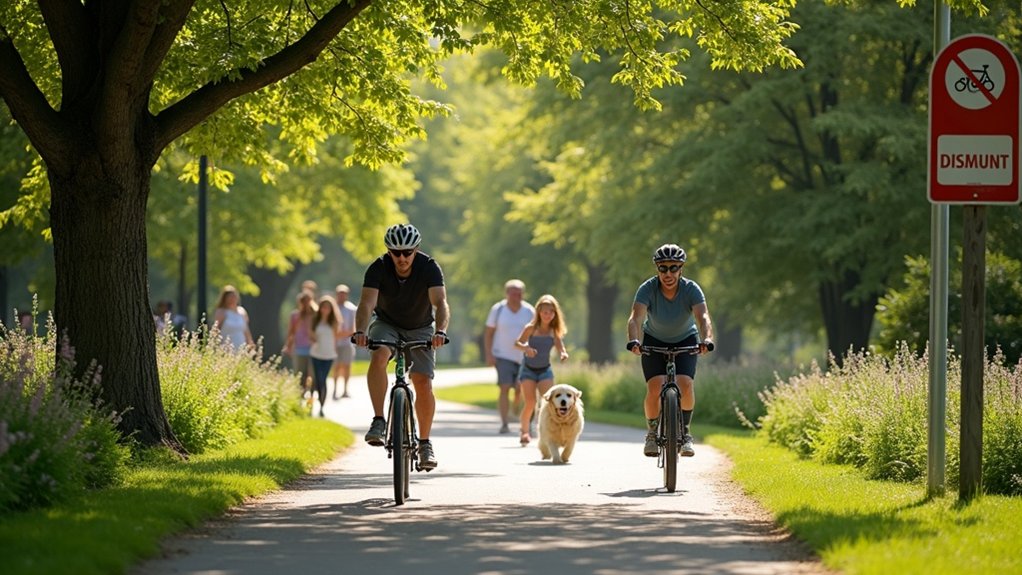
On campus, dismount zones on shared paths require you to walk your wheeled vehicle during weekdays from 7 a.m. to 7 p.m. You’ll find these zones marked near high-traffic areas like the Purnell Center for the Arts and the Cohon University Center. These regulations enhance pedestrian safety and reduce conflicts. Staying informed about these areas helps create a safer environment for everyone. Explore further to learn about guidelines and interactions that promote harmony on these paths.
Key Takeaways
- Dismount zones are in high-traffic areas, such as near the Purnell Center for the Arts and Doherty Hall.
- The west side of the Cohon University Center also has designated dismount zones.
- Merson Courtyard, especially near the tennis courts, features marked dismount areas.
- East-west walkways connecting major campus centers include specific dismount zones.
- Signage and ground stencils clearly indicate where dismounting is required during specified hours.
Understanding Dismount Zones
Understanding dismount zones is essential for anyone traversing shared spaces with personal wheeled vehicles. These designated areas require you to dismount and walk your vehicle, typically enforced Monday to Friday from 7 a.m. to 7 p.m.
Clear signs and ground stencils mark the boundaries, ensuring you know where to comply for safety. Dismount zones are often located in high-traffic spots near campus buildings, prioritizing pedestrian safety during peak hours.
If you want to avoid these zones, consider using designated wheels-only paths or shared paths with specific guidelines. This awareness fosters a safer environment for everyone involved in shared spaces.
Locations of Dismount Zones on Campus
Maneuvering the campus requires awareness of specific dismount zones, which are strategically placed to enhance pedestrian safety.
Key locations include the north-south walkway along the east side of the Purnell Center for the Arts and the path connecting it to Doherty Hall.
Key dismount zones are located along the east side of the Purnell Center for the Arts and its connection to Doherty Hall.
Additional dismount zones are found on the west side of the Cohon University Center and in Merson Courtyard near the tennis courts.
East-west walkways connecting these centers also feature dismount zones.
Ground stencils and clear signage effectively indicate boundaries and requirements, ensuring riders of personal wheeled vehicles understand when to dismount and prioritize pedestrian safety on shared-use paths.
Importance of Dismounting for Safety
When you dismount in designated zones, you greatly enhance pedestrian safety and help reduce traffic conflicts.
This simple action promotes compliance with regulations designed to protect vulnerable users, such as children and the elderly.
Enhanced Pedestrian Safety
While traversing shared paths, the importance of dismounting near high pedestrian traffic zones can’t be overstated. Dismounting in areas like schools or busy intersections greatly enhances pedestrian safety by minimizing conflicts between cyclists and vulnerable road users.
Research shows that enforcing dismount zones during peak hours, like weekdays from 7 a.m. to 7 p.m., is essential for safe navigation. Clear signage fosters compliance, helping cyclists understand the necessity of dismounting.
Ultimately, paths with such regulations report higher satisfaction rates among pedestrians, encouraging community usage and fostering a positive perception of shared spaces. Prioritizing safety benefits everyone involved.
Traffic Conflict Reduction
Dismounting at key points along shared paths plays a pivotal role in reducing traffic conflicts, especially in areas where pedestrian traffic surges.
Implementing dismount zones at high-traffic intersections is essential for improving safety and comfort for all users. During peak times, like school hours, these zones protect vulnerable road users, particularly children.
Clear signage and designated dismount areas further enhance traffic conflict reduction, minimizing accidents and ensuring smooth flow.
Evidence shows that enforcing dismounting in high-density areas leads to a noticeable decrease in collisions, greatly enriching the shared path experience for both cyclists and pedestrians.
Compliance With Regulations
Ensuring compliance with dismounting regulations is essential for maintaining safety in shared path environments, particularly in zones with high pedestrian traffic.
By dismounting in designated areas, you greatly reduce the risk of collisions, especially with vulnerable users like children and the elderly. Laws mandate dismounting at specific road crossings unless a green bike lantern is present, underscoring the importance of adhering to these regulations to avoid legal issues.
Clearly marked signs and ground stencils guide you in shifting from riding to walking. Statistics show that enforced dismount zones lead to fewer accidents, proving these regulations enhance overall safety.
Guidelines for Using Shared Paths
Using shared paths effectively requires understanding and following specific guidelines that prioritize safety and accessibility for all users.
First, always observe dismount zones, particularly during peak hours, where signage clearly indicates when you need to walk your bike. Maintain a speed limit of 5 miles per hour to guarantee safety for pedestrians.
Staying right of designated lines helps keep traffic flowing smoothly. When paths become crowded, use specific walkways to enhance safety for everyone.
Interactions Between Cyclists and Pedestrians
While traversing shared paths, understanding the dynamics between cyclists and pedestrians is essential for fostering a harmonious environment.
Cyclists must yield to pedestrians, especially when pedestrian traffic exceeds 30%. This rule, reinforced by signage like “BICYCLES YIELD TO PEDS,” guarantees safety and minimizes conflict.
Maintaining an 11-foot path width and 2-foot lateral clearance enhances comfort for all users. Effective wayfinding signs help clarify directionality and expected behaviors, contributing to smoother interactions.
Reporting Accidents in Dismount Zones
Accidents in dismount zones can disrupt the flow of pedestrian traffic and pose safety risks, making it essential to understand the reporting process.
When an incident occurs, promptly report it to campus safety or local authorities. Document the details, including time, location, and any involved parties.
Clear signage and ground stencils help define dismount zone boundaries, guiding users to comply with the rules. Knowing these boundaries reduces accidents, but when they happen, swift reporting guarantees a thorough investigation.