
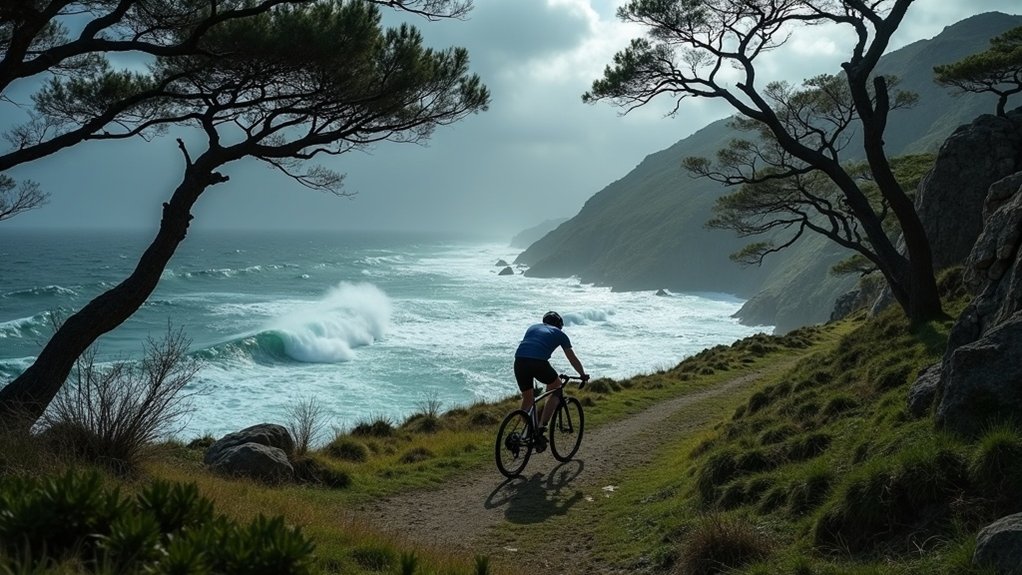
You should avoid riding during high winds in open areas like bridges and highways, where strong gusts can destabilize your bike. Steer clear of large stationary objects that create unpredictable turbulence. Mountain passes and valleys can amplify winds, while roads lined with tall trees or power lines pose risks from falling debris. Be cautious in regions known for sudden wind changes, as they can catch you off guard. There’s more to evaluate for safe riding in these conditions.
Key Takeaways
- Avoid open areas like bridges and highways where strong winds can push bikes off course due to lack of windbreaks.
- Steer clear of riding near large stationary objects, as they create unpredictable wind patterns and turbulence.
- Do not ride through mountain passes and valleys where high winds can create sudden gusts and hazardous conditions.
- Refrain from routes lined with tall trees or power lines, as strong winds pose risks of falling branches and electrical hazards.
- Stay away from areas with sudden wind changes, such as open plains and urban environments, that can lead to abrupt gusts.
Open Areas: Bridges and Highways
When you ride through open areas like bridges and highways, you face unique challenges posed by strong winds.
These locations often lack natural windbreaks, exposing you to sudden wind gusts that can compromise motorcycle stability. On bridges, intense crosswinds may push your bike off course, while highways present uninterrupted wind flow, increasing the risk of losing control, particularly at higher speeds.
Shifting from sheltered areas to these open spaces can lead to abrupt changes in wind conditions.
To guarantee your riding safety, it’s advisable to avoid riding in high winds, as gusts can exceed safe limits for maintaining control and stability.
Near Large Stationary Objects
Riding near large stationary objects can greatly increase your exposure to unpredictable wind patterns, which may jeopardize your control over the motorcycle.
In windy conditions, structures like buildings and bridges create turbulence, leading to sudden gusts of wind that can push you off course. This risk is heightened for lighter bikes and inexperienced riders.
Windy conditions around buildings and bridges can create sudden gusts, posing risks, especially for lighter bikes and less experienced riders.
Additionally, large vehicles, such as trucks, can block wind but create a wake of turbulence that’s equally hazardous.
To guarantee motorcycle safety, use effective riding techniques and stay aware of the potential for gusts when maneuvering areas with large stationary objects, as they can considerably worsen weather conditions.
Mountain Passes and Valleys
Traversing mountain passes and valleys can be particularly dangerous during high winds due to unpredictable gusts and sudden shifts in wind direction.
These areas often feature exposed ridges that amplify wind speed, making it difficult to anticipate wind conditions. Valleys can act as wind tunnels, intensifying gusts and increasing the risk of losing control while riding.
Elevation changes lead to rapid weather conditions that can catch riders off guard. Additionally, tight turns and steep grades become more hazardous in strong crosswinds.
When riding in windy conditions, always be cautious in these treacherous terrains to guarantee your safety.
Roads Lined With Tall Trees or Power Lines
High winds can create hazardous conditions not only in mountainous terrains but also on roads lined with tall trees or power lines.
In windy conditions, the risk of falling branches or entire trees increases considerably, posing serious road hazards for motorcyclists. Power lines can sway dangerously, resulting in potential electrical hazards or even falling lines.
Additionally, turbulence from strong gusts can disrupt your stability, making control difficult. To prioritize safety, it’s wise to avoid routes heavily lined with trees or power lines during high winds.
Staying aware of these risks can help you navigate safely on your motorcycle.
Areas With Sudden Wind Changes
When steering through areas with sudden wind changes, it’s crucial to remain vigilant, as these unpredictable gusts can greatly impact your riding experience.
Areas near large bodies of water often see sudden shifts due to temperature differences, while open plains lack windbreaks, resulting in abrupt gusts during windy weather.
Bridges and overpasses can amplify wind speeds, creating dangerous crosswinds.
Additionally, riding through valleys and canyons may funnel winds, increasing instability on your motorcycle.
Finally, urban environments with tall buildings can form wind tunnels, where gusts become intense.
Always assess your surroundings to navigate these risky terrains safely.