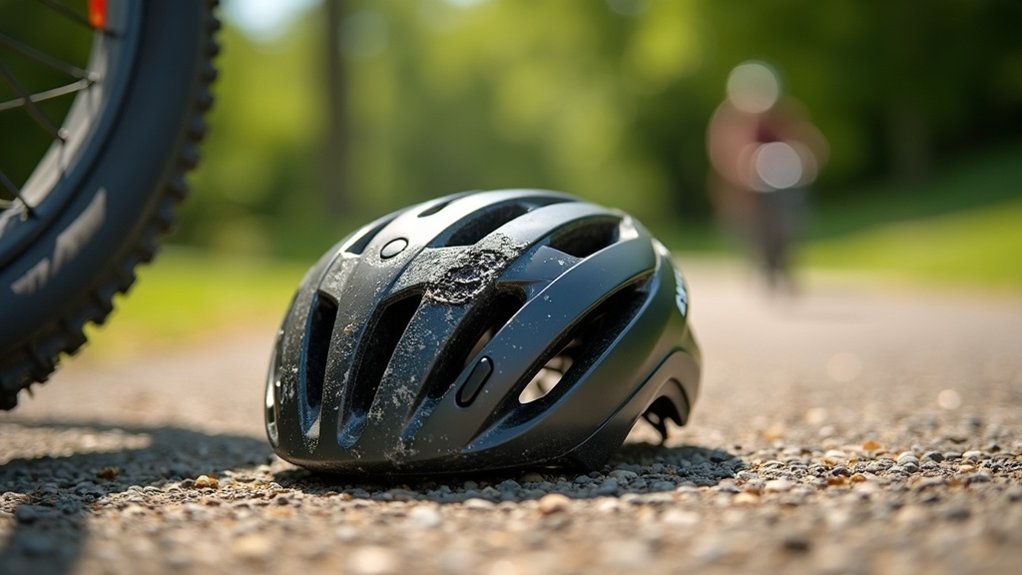
You should replace your eBike helmet immediately after any crash, no matter if there’s visible damage. Even if it looks intact, the internal foam may be compromised and won’t provide the same protection. Helmets are designed to absorb impact, reducing serious head injury risk by nearly 70%. It’s essential for your safety to prioritize helmet replacement. There are several more aspects to take into account regarding helmet maintenance and technology advancements that can greatly influence your ride.
Key Takeaways
- Replace your e-bike helmet immediately after any crash, regardless of visible damage, to ensure optimal safety.
- Internal foam may be compromised after a crash, reducing impact protection even if the exterior appears intact.
- Experts recommend changing helmets every three to five years to maintain safety standards and performance.
- Regularly inspect for visible cracks, dents, or worn straps, as these are signs that replacement is necessary.
- Consult legal experts to understand helmet compliance for injury claims and ensure you have proper documentation for maintenance.
The Importance of Immediate Helmet Replacement After a Crash
When you experience a crash on your e-bike, it’s essential to replace your helmet immediately, even if there are no visible signs of damage. The internal foam may have compressed from the impact, compromising your safety.
Research shows helmets can reduce serious head injury risk by nearly 70%, making timely replacement critical. Experts recommend changing helmets every three to five years, as their effectiveness diminishes over time.
Signs That Indicate You Need a New Helmet
Although you might think your helmet is still safe after a minor incident, it’s crucial to recognize the signs that indicate a need for replacement. Ignoring these can lead to a serious head injury.
Recognizing the signs for helmet replacement is vital; neglecting them can lead to serious head injuries.
- Look for visible cracks, dents, or chips on the outer shell.
- Check for deformation in the interior foam, which suggests it’s absorbed an impact.
- Inspect straps and adjusters for wear and tear that affects fit.
If you notice any of these issues, it’s time to replace your helmet to guarantee your safety while riding. Don’t compromise on protection!
Manufacturer Recommendations for Helmet Lifespan
Replacing your helmet after a crash is only part of the equation; understanding how long to keep a helmet before replacing it’s equally important.
Manufacturers recommend replacing your bike helmet every three to five years, regardless of visible damage. The Consumer Product Safety Commission suggests a five to ten-year interval based on usage and care, while the Snell Foundation emphasizes a five-year guideline due to wear and tear.
If your helmet is older than five years or lacks modern safety certifications, replace it immediately. Regular inspections and adherence to these recommendations guarantee your safety while riding.
Factors Affecting Your Helmet’s Performance Over Time
Several factors can significantly impact your helmet’s performance over time, making it vital to stay aware of their effects.
- Material degradation from UV light and heat can compromise your helmet for safety.
- Environmental elements like humidity and chemicals weaken structural integrity, affecting impact protection.
- Regular wear and tear diminishes performance, even without visible damage.
To guarantee you’re adequately protected, replace helmets periodically, especially as technology improves safety features.
Older models may not meet current standards for impact protection, so staying informed about advancements is essential for your safety while riding.
Understanding the Impact of UV Exposure on Helmets
UV exposure can silently degrade your helmet’s materials, compromising its protective capabilities over time.
When helmets are exposed to prolonged sunlight, the shells can become brittle, increasing the risk of failure during an impact.
To protect your helmet, store it in cool, dark places and regularly inspect it for signs of UV-related wear.
UV Damage Mechanisms
While you mightn’t see it happening, prolonged exposure to sunlight can considerably weaken your helmet’s materials due to ultraviolet (UV) rays.
This UV damage occurs invisibly, leading to brittleness and compromised structural integrity over time, rendering your helmet less effective in protecting against impacts.
- Fading colors may indicate potential weakening of the exterior shell.
- Regular inspections for cracks or brittleness are essential.
- Store your helmet in cool, dark places to minimize UV exposure.
Understanding these mechanisms helps you recognize when it’s time to replace your helmet for maximum safety.
Don’t underestimate the effects of UV rays on your gear.
Protection Strategies for Helmets
To guarantee your helmet remains effective in protecting you during rides, it’s crucial to implement strategies that combat the damaging effects of UV exposure.
Store your helmet in a cool, dark place to minimize deterioration. Inspect it regularly for signs of wear, like cracks or brittleness, which indicate potential weakness.
Manufacturers recommend replacing your helmet every three to five years, especially if you notice fading colors or other UV damage.
How to Properly Inspect Your Helmet
Inspecting your helmet regularly is essential for guaranteeing your safety while riding an ebike. Look for visible signs of damage that could compromise your protection:
Regular helmet inspections are crucial for your safety on an ebike; look for any visible damage that may affect your protection.
- Check the outer shell for cracks, dents, or wear.
- Inspect the interior foam for compression or deformation; this affects impact absorption.
- Verify straps and adjusters are intact, as wear can impact fit and security.
After any significant impact, perform a thorough inspection to determine if your helmet needs replacement.
Regular checks contribute to ideal safety and help you ride with confidence, knowing your equipment is in top shape.
Advancements in Helmet Technology You Should Know
When it comes to choosing an ebike helmet, understanding the latest advancements in technology is essential for your safety.
Newer models feature enhanced impact resistance and rotational force mitigation systems, offering superior protection against head injuries.
Additionally, improved ventilation features make these helmets lighter and more comfortable, encouraging consistent use during your rides.
Enhanced Impact Resistance
As advancements in helmet technology continue to evolve, cyclists can benefit from enhanced impact resistance that considerably reduces the risk of head injuries during crashes.
Newer helmets utilize advanced materials and designs for superior impact performance, ensuring better protection than older models.
- Specialized foam absorbs energy more efficiently during impacts.
- Lightweight and well-ventilated options maintain rigorous safety performance.
- Staying informed helps you choose the best models for ideal protection.
Investing in a helmet with enhanced impact resistance can markedly improve your safety while riding, adapting to the ongoing advancements in helmet technology.
Rotational Force Mitigation
Understanding the importance of rotational force mitigation can greatly enhance your safety while riding an ebike. Mips® technology is a significant advancement designed to reduce rotational forces during impacts, ultimately helping to prevent brain injuries. It features a low-friction layer allowing the helmet’s outer shell to move independently from the inner foam liner, improving energy absorption during oblique impacts.
| Feature | Mips® Technology | Traditional Helmets |
|---|---|---|
| Rotational Force Reduction | Yes | No |
| Energy Absorption | Enhanced | Limited |
| Brain Injury Prevention | Improved | Standard |
Improved Ventilation Features
Modern ebike helmets are designed with advanced ventilation features that greatly enhance your riding experience. These improved ventilation features guarantee better airflow, keeping you cool during long rides or warm weather.
They also boost comfort by minimizing sweat build-up, allowing for better concentration and performance.
- Many helmets use moisture-wicking materials for hygiene.
- Adjustable vents let you control airflow based on conditions.
- Enhanced ventilation systems focus on both safety and comfort.
With these advancements, your ebike rides can be more enjoyable, allowing you to focus on the journey ahead without the distraction of discomfort.
Legal Considerations for Injuries Related to Helmet Use
When you’re involved in a bicycle or e-bike accident, the legal considerations surrounding helmet use can significantly affect your injury claims.
If your helmet is still intact but outdated, you may need to replace it to strengthen your case. Experts agree that demonstrating compliance with safety standards is essential; a damaged or inadequately replaced helmet can undermine your claims.
In some jurisdictions, proof of proper helmet maintenance is required for claims related to head injuries. Consulting legal experts familiar with cycling accidents can help you navigate these complexities and guarantee your rights regarding helmet safety are upheld.