
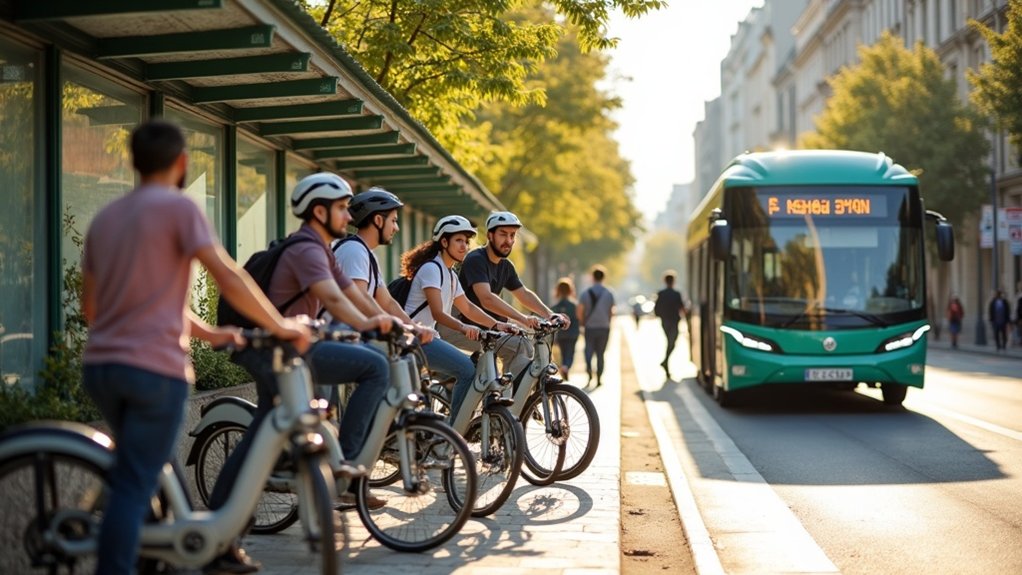
Public transport is most e-bike friendly during off-peak hours. This is when you can easily integrate cycling with transit systems, reducing crowding and enhancing accessibility. Cities often provide e-bike rentals at transit locations, making it convenient for you to combine cycling and public transport. As you embrace e-bikes, you’ll find that they can alleviate traffic issues and contribute to a more sustainable commuting experience. Discover how infrastructure developments further support this integration and the benefits you can enjoy.
Key Takeaways
- Public transport is most e-bike friendly during off-peak hours, reducing crowding and facilitating easier access for riders.
- E-bike rentals at transit locations enhance convenience for commuters, especially during quieter times.
- Dedicated bike lanes and charging stations improve safety and accessibility for e-bike users near transit hubs.
- Cities with supportive policies and infrastructure see increased e-bike ridership during off-peak periods.
- Improved integration of e-bikes with public transport fosters a sustainable urban environment and reduces congestion.
Off-Peak Hours: The Best Time for E-Bike Integration
While many commuters rush to catch public transport during peak hours, off-peak times present a prime opportunity for integrating e-bikes into the transit ecosystem.
E-bike riders can access transit stations more easily, alleviating the pressure on crowded buses and trains. By encouraging e-bike usage during these quieter periods, cities can enhance public transportation efficiency and promote sustainable commuting.
Designated bike parking and e-bike share options at transit hubs facilitate this integration.
Studies show that leveraging off-peak hours for e-bike usage can increase overall ridership by 15-30%, ensuring cycling infrastructure supports a balanced and efficient transit system.
Infrastructure Enhancements for E-Bike Users
To fully enjoy the benefits of e-bikes, cities need to enhance their infrastructure with dedicated bike lanes and convenient charging stations.
You’ll find that safe parking facilities near transit hubs not only secure your e-bike but also encourage more riders to make the switch.
These improvements are essential for fostering a safer and more integrated urban transport system.
Dedicated Bike Lanes
Dedicated bike lanes play an essential role in enhancing the safety and accessibility of e-bike users, allowing you to travel alongside or even separate from motor vehicle traffic.
Cities like Minneapolis and Portland showcase how dedicated bike lanes drive cycling growth, greatly boosting e-bike ridership.
By making infrastructure investments in these lanes, cities not only improve safety for e-bike users but also promote public transit integration, facilitating seamless first-mile/last-mile connectivity.
Research shows that dedicated bike lanes reduce traffic congestion and lower accident rates, creating a safer environment for e-bike riders, encouraging more people to adopt cycling as a primary transportation mode.
E-Bike Charging Stations
E-bike charging stations are transforming urban landscapes, making it easier for riders to incorporate electric bikes into their daily routines.
Cities like Portland and San Francisco are leading the charge, investing in infrastructure that supports e-bike users. By placing charging stations near public transit, municipalities enhance first-mile/last-mile connectivity, allowing commuters to seamlessly shift between e-bikes and public transportation.
This initiative promotes cycling while reducing carbon emissions, aligning with urban sustainability goals. As more businesses install charging stations, they’re not only catering to e-bike riders but also fostering a culture that prioritizes eco-friendly urban transportation.
Safe Parking Facilities
As cities invest in e-bike charging stations, the need for safe parking facilities naturally follows. Secure parking is essential for promoting e-bike use, particularly in bike-friendly urban centers. Cities like Minneapolis, Portland, and San Francisco have made strides by integrating dedicated bike racks and monitored parking areas near public transportation hubs. This enhances convenience for e-bike users and mitigates theft concerns. Improved parking options can greatly boost ridership, making public transport more attractive.
| City | Safe Parking Features | Impact on E-Bike Use |
|---|---|---|
| Minneapolis | Extensive bike parking options | Increased ridership |
| Portland | E-bike parking programs | Enhanced security |
| San Francisco | Monitored parking areas | Reduced theft risk |
Benefits of E-Bikes in Public Transport
E-bikes greatly enhance your connectivity options, making it easier to reach transit stations and navigate urban areas.
By integrating e-bikes into your public transport routine, you can help reduce traffic congestion, especially during peak hours.
This shift not only improves your commuting experience but also supports a more sustainable urban environment.
Enhanced Connectivity Options
While maneuvering urban environments can often feel intimidating, enhanced connectivity options through e-bikes greatly alleviate the challenges of accessing public transport. E-bikes tackle the “first-mile/last-mile” issue, making it easier for you to reach transit stations. Cities investing in bike lanes and e-bike share programs promote accessibility, encouraging more commuters to opt for car-free travel. This integration reduces overcrowding on public transportation, enhancing your commuting experience.
| Benefits | Description |
|---|---|
| Improved Accessibility | E-bikes connect you to transit hubs seamlessly. |
| Reduced Overcrowding | Less congestion on buses and trains. |
| Sustainability | Lower carbon footprints and better air quality. |
Reduced Traffic Congestion
When considering solutions to urban traffic woes, the role of e-bikes emerges as a powerful alternative for short trips.
By integrating electric bikes into your daily commute, you can help reduce traffic congestion in several ways:
- Less Crowding: E-bikes ease the burden on public transportation, decreasing the number of cars and overcrowded buses.
- Improved Infrastructure: Cities investing in bike lanes enhance traffic flow, making commutes smoother.
- Lower Carbon Footprint: Utilizing e-bikes reduces single-occupancy vehicles, improving air quality and promoting sustainable urban mobility.
Embracing e-bikes not only supports your journey but also contributes to cleaner, more efficient cities.
Case Studies: Cities Excelling in E-Bike Friendly Transit
Cities across the United States are embracing e-bikes as an essential component of their public transit systems, enhancing mobility and reducing congestion.
Minneapolis leads with over 120 miles of bikeways and a strong focus on cycling infrastructure.
In Portland, Oregon, 90% of cycling funds support a bike share program featuring subsidized e-bikes and extensive e-bike charging facilities.
San Francisco sees nearly 30% of residents biking weekly, thanks to supportive policies.
Seattle has redesigned streets for e-bikes, while Davis integrates e-bike charging stations within its 100-mile bike path network, showcasing the positive environmental impact of e-bike friendly public transportation across cities in the U.S.
Challenges Faced by E-Bike Users in Public Transport
Maneuvering public transport with an e-bike can be a frustrating experience, especially since many transit systems lack designated spaces for them.
Here are three key challenges you face:
- Limited Space: Many public transport options don’t accommodate e-bikes well, leading to inconveniences for both you and other passengers.
- Peak Hour Restrictions: During busy times, e-bike usage is often restricted, limiting your commuting options.
- Inconsistent Regulations: Varying rules across cities can confuse you, impacting your overall experience.
These issues highlight the urgent need for improved infrastructure and safety measures for e-bike users traversing public transportation.
Community Engagement and Support for E-Bike Adoption
As communities recognize the environmental and economic benefits of e-bikes, local governments are actively engaging residents to foster support for their adoption.
Through public awareness campaigns, they highlight e-bike initiatives that reduce traffic congestion and emissions. Engaging you in identifying infrastructure needs, like charging stations and secure parking, boosts e-bike visibility and acceptance.
Partnerships with local businesses enhance these facilities, while progressive transportation policies mandate protected bike lanes and offer incentives for e-bike use.
Continuous evaluation of community engagement strategies guarantees these initiatives remain effective and responsive to your local needs, promoting a more sustainable transportation future.
Future Trends in E-Bike and Public Transport Collaboration
While many urban areas are embracing e-bikes as a viable mode of transportation, the synergy between e-bikes and public transport is poised to redefine urban mobility.
Here are some future trends to watch:
- Integrated Mobility Models: Rent e-bikes at transit locations, seamlessly combining cycling with public transport.
- Enhanced Infrastructure: Cities are investing in dedicated lanes and parking facilities to support e-bikes and improve the overall public transport experience.
- Sustainable Urban Mobility: E-bikes will alleviate overcrowding during peak hours, promoting alternative transportation options and reducing carbon footprints.
These trends not only enhance convenience but also encourage a shift towards sustainable urban mobility.