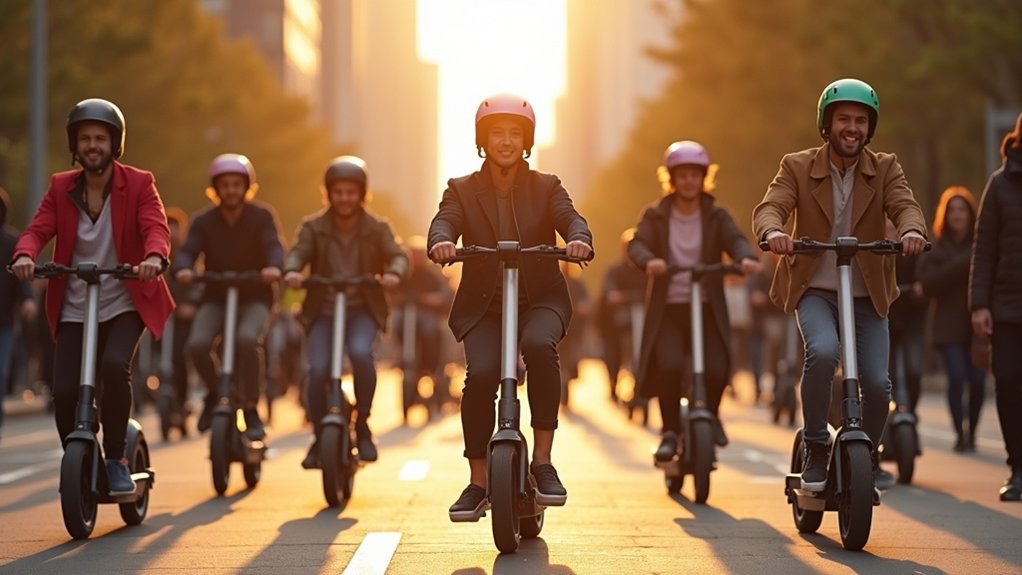
Electric scooters gained popularity around 2018 with the rise of dockless sharing services like Bird and Lime. These services offered a convenient way to rent e-scooters through mobile apps, sparking a micro-mobility revolution in urban areas. Innovations like lithium-ion batteries and GPS technology enhanced efficiency and accessibility, making scooters appealing to a diverse demographic. As a result, millions of rides were recorded, transforming how you and others navigate the city. There’s much more to uncover about this electrifying trend.
Key Takeaways
- Electric scooters gained popularity around 2018 with the introduction of dockless scooter-sharing services by companies like Bird and Lime.
- The rise of electric scooter rentals coincided with advancements in lithium-ion battery technology, enhancing performance and convenience.
- By 2019, millions of rides had been logged across the U.S., solidifying e-scooters’ role in urban transportation.
- Urban commuting trends highlighted electric scooters as a practical alternative, with one in four trips replacing car journeys.
- The focus on sustainable micro-mobility solutions contributed significantly to the growing adoption of electric scooters in cities.
The Early Days of Electric Scooters
Although electric scooters as we perceive them today are a recent phenomenon, their origins trace back over a century. The scooter revolution began in the late 19th century, with the patent for the first electric bicycle granted in 1895.
Early designs, like the Autoped in 1913, showcased motorized capabilities, albeit powered by gasoline. By the 1970s, enthusiasts explored electric bike prototypes that laid the groundwork for modern electric scooters.
The introduction of lithium batteries in 1991 transformed the landscape, offering lighter, more efficient power sources. This pivotal innovation made electric scooters practical, setting the stage for their future popularity and widespread adoption.
The Rise of Dockless Scooter Sharing
As urban areas grapple with congestion and pollution, the rise of dockless scooter sharing has emerged as a game-changer in the landscape of urban mobility.
Introduced around 2018, companies like Bird and Lime transformed urban transportation by allowing users to rent e-scooters via mobile apps without needing designated parking docks.
This innovation led to rapid expansion in the micro-mobility market, with millions of rides logged across the U.S. by 2019.
The introduction of dockless scooters sparked explosive growth in the micro-mobility market, with millions of rides recorded across the U.S. by 2019.
The convenience and affordability of dockless scooters not only attracted commuters but also tourists, solidifying their essential role in modern urban transportation solutions.
Key Innovations Driving Popularity
Key innovations have played a crucial role in making electric scooters a favored choice for urban transportation. The introduction of lithium-ion batteries revolutionized the industry, offering faster charging and eco-friendliness.
With the Peugeot ScootÉlec’s launch in 1996, electric scooters became more accessible to the public. By 2018, the rise of dockless GPS bike rentals ushered in a scooter revolution, enhancing visibility in urban settings.
As battery prices dropped and smartphone usage soared, electric scooters emerged as a practical option for short-distance travel. This focus on sustainable, convenient micro-mobility solutions has solidified their popularity in today’s cities.
Urban Commuting Trends and E-Scooter Usage
With urban areas becoming increasingly congested, many commuters are turning to electric scooters as a practical solution for their daily travels.
These scooters offer a convenient alternative to walking or biking, especially for short distances.
Here are some key reasons for their popularity:
- One in four scooter trips replaces a car journey, reducing traffic congestion.
- E-scooters appeal to a diverse demographic, including both children and adults.
- Decreasing battery and GPS technology costs have accelerated adoption.
As you navigate your urban environment, electric scooters can enhance your commuting experience while contributing to cleaner transportation options.
The Role of Technology in E-Scooter Growth
Technology’s transformed the electric scooter landscape, making them more appealing than ever.
With advancements in battery technology, smartphone integration, and GPS tracking systems, you get a safer and more efficient commuting option.
These innovations not only enhance the riding experience but also address urban mobility challenges effectively.
Battery Technology Advancements
Battery technology has been a game changer in the rise of electric scooters, transforming them into a viable and attractive mode of transportation.
Modern advancements have led to significant improvements, including:
- Faster charging times, allowing you to get back on the road quickly
- Increased efficiency and range, with some models covering 10-40 miles on a single charge
- Decreased battery costs, fueling the popularity of rental e-scooter companies since 2018
As ongoing research continues to enhance battery technology, you can expect even more sustainable and high-performance electric scooters in the future.
This evolution is essential for the growth of this eco-friendly transportation option.
Smartphone Integration
Convenience has been a key driver in the rapid growth of electric scooters, largely thanks to smartphone integration. With app-based rental services, you can easily locate, access, and pay for e-scooter rentals, making urban travel more accessible. This technology enhances your experience and encourages short-distance trips.
| Feature | Benefit | Impact |
|---|---|---|
| GPS Tracking | Real-time navigation | Safer urban riding |
| User Behavior Data | Optimized fleet management | Improved service quality |
| Speed Monitoring | Responsible riding | Enhanced safety |
| Seamless Payments | Hassle-free rentals | Increased user adoption |
GPS Tracking Systems
As urban mobility evolves, GPS tracking systems have become essential to the growth of electric scooters, transforming how riders interact with these vehicles.
With GPS trackers enabling dockless e-scooter rentals, you can now effortlessly locate and access scooters via your smartphone. These systems offer multiple benefits:
- Efficient fleet management for companies like Lime and Bird
- Enhanced user safety and convenience through real-time tracking
- Improved scooter distribution based on data-driven insights
Furthermore, geofencing features promote responsible riding by restricting scooter usage in specific areas, ensuring a safer experience for all.
GPS technology truly revolutionizes urban transportation.
Environmental Benefits and Challenges
While electric scooters offer a promising alternative to traditional vehicles, their environmental benefits come with notable challenges. They can considerably reduce CO2 emissions, especially when replacing car trips, promoting sustainability in urban areas.
However, the manufacturing of e-scooter batteries raises concerns about resource extraction and recycling, potentially hindering their overall environmental impact.
Furthermore, as their popularity grows, so do incidents resembling motorcycle accidents, highlighting the urgent need for safety measures. Implementing local regulations, such as helmet mandates, is crucial to mitigate these risks and guarantee that the benefits of electric scooters truly enhance sustainable urban mobility.
Future Prospects for Electric Scooters
With advancements in technology on the horizon, the future of electric scooters looks promising.
The future of electric scooters is bright, with promising technological advancements set to reshape urban transport.
You can expect several exciting developments that enhance their role in urban transport:
- Increased use of sustainable materials, including biodegradable and recycled components, to reduce environmental impact.
- Integration of autonomous features and AI, improving user safety and experience.
- Exploration of solar-powered models to extend range and lower reliance on traditional electricity sources.