Electric bikes gained popularity primarily in the 1990s. This surge was fueled by advancements in lithium-ion battery technology and a growing awareness of environmental concerns. As people sought alternative transportation, pedal-assist systems made e-bikes more appealing. By the early 21st century, efficient batteries and innovative motor technology drove their boom, leading to significant sales increases worldwide. E-bikes are now a major player in urban mobility. There’s much more to uncover about their evolution and impact.
Key Takeaways
- Electric bikes began gaining popularity in the 1990s due to increased environmental awareness and advancements in lithium-ion battery technology.
- The introduction of pedal-assist systems in the 1970s made e-bikes more appealing for alternative transportation.
- By 2016, e-bike sales in China reached around 210 million units, indicating a significant rise in popularity.
- In Europe, e-bike sales surged from 2 million units in 2016 to over 5 million units by 2021.
- The COVID-19 pandemic in 2020 led to a 72% increase in e-bike sales in North America, further boosting their popularity.
The Early Beginnings of Electric Bikes
While many people might think of electric bikes as a modern invention, their roots actually trace back to the late 1800s. In 1895, Ogden Bolton Jr. filed a patent for a battery-powered bicycle featuring a rear-wheel hub motor. Early models were bulky due to heavy batteries and inefficient motors, limiting their range.
The 1970s introduced pedal-assist technology, broadening the appeal of e-bikes. By 1993, Yamaha launched the first commercially available e-bike, marking a significant step toward popularity.
Advancements in battery technology, particularly lithium-ion batteries, in the early 2000s reignited interest, paving the way for today’s efficient electric bikes.
Key Technological Advancements
Recent advancements in battery technology and motor efficiency have transformed the e-bike landscape, making them more accessible and user-friendly.
You’ll find that improved lithium-ion batteries now offer longer ranges, while brushless motors enhance performance and require less maintenance.
These innovations not only boost the practicality of e-bikes but also greatly contribute to their rising popularity.
Battery Technology Improvements
As advancements in battery technology continue to reshape the electric bike landscape, the introduction of lithium-ion batteries has been a game changer since the early 2000s.
These batteries considerably enhance efficiency, allowing for longer ranges of 40 to 48 kilometers on a single charge. You’ll appreciate the faster charging times, with many batteries fully charging in around eight hours.
Furthermore, battery management systems optimize energy usage, boosting performance and extending battery life. Innovations like regenerative braking further improve energy recovery, making electric bikes more practical and enjoyable for daily use.
These developments are essential for the growing popularity of e-bikes.
Motor Efficiency Enhancements
Motor efficiency enhancements have transformed the electric bike experience, making rides smoother and more responsive. The introduction of brushless hub motors has significantly improved performance, while mid-drive motors excel in efficiency across speed ranges.
Advances in battery technology, particularly lightweight lithium-ion batteries, have boosted range and overall performance. Additionally, regenerative braking technology captures kinetic energy during stops, further extending battery life.
Smart technologies, including torque sensors and pedal-assist systems, adapt motor output based on your input, optimizing energy use. Together, these innovations guarantee that electric bikes aren’t only efficient but also tailored for an enjoyable riding experience.
The Rise of E-Bikes in the 1990s
With the dawn of the 1990s, the landscape of personal transportation began to shift, as the introduction of the first commercially available electric bikes (e-bikes) captured the attention of environmentally conscious consumers.
The rise in e-bike popularity stemmed from:
- Increased environmental awareness
- Advancements in lithium-ion battery technology
- The appeal of pedal-assist systems
- A demand for alternative transportation in urban areas
These advancements made e-bikes more practical and efficient, paving the way for their adoption.
The 21st Century Boom
While many factors contributed to the electric bike boom in the 21st century, technological advancements played a pivotal role in transforming e-bikes into a viable transportation option for millions.
The introduction of efficient lithium-ion batteries considerably boosted their reliability and performance. In China, e-bike sales soared to around 210 million units by 2016, reflecting a clear shift in consumer preference.
The rise of lithium-ion batteries revolutionized e-bike reliability and performance, driving sales to 210 million units in China by 2016.
Europe followed suit, with over 5 million e-bikes sold by 2021. The COVID-19 pandemic accelerated this trend, leading to a 72% sales increase in the U.S. as people sought safer alternatives for transportation.
E-bikes became a popular choice for many.
Global Adoption Trends
As you explore the global adoption trends of electric bikes, you’ll notice significant growth across various markets.
In Europe, e-bike sales have surged, while North America experienced a notable spike, especially during the pandemic.
Meanwhile, Asia continues to dominate the landscape, showcasing how different regions embrace this eco-friendly transportation solution.
European Market Growth
Although you might think of e-bikes as a recent trend, their popularity in Europe has surged impressively over the past few years, marking a significant shift in the cycling landscape.
- Sales exceeded 5 million units in 2021, up from 2 million in 2016.
- E-bikes made up 57% of all bike sales in the Netherlands in 2022.
- Government incentives have spurred interest in sustainable transport.
- A 23% increase in sales in 2019 reflects growing consumer interest.
The European market is leading the charge in e-bike use, showcasing an undeniable adoption trend that’s reshaping transportation dynamics.
North American Surge
The rise of e-bikes in North America marks a transformative moment in urban mobility, especially as the COVID-19 pandemic prompted many to seek safer transportation options.
In 2020, e-bike sales surged by 72%, generating over $1.3 billion in revenue and highlighting a shift toward sustainable transportation. This trend reflects a broader global phenomenon, as affordable options starting around $1,500 attracted diverse users, including older adults and individuals with disabilities.
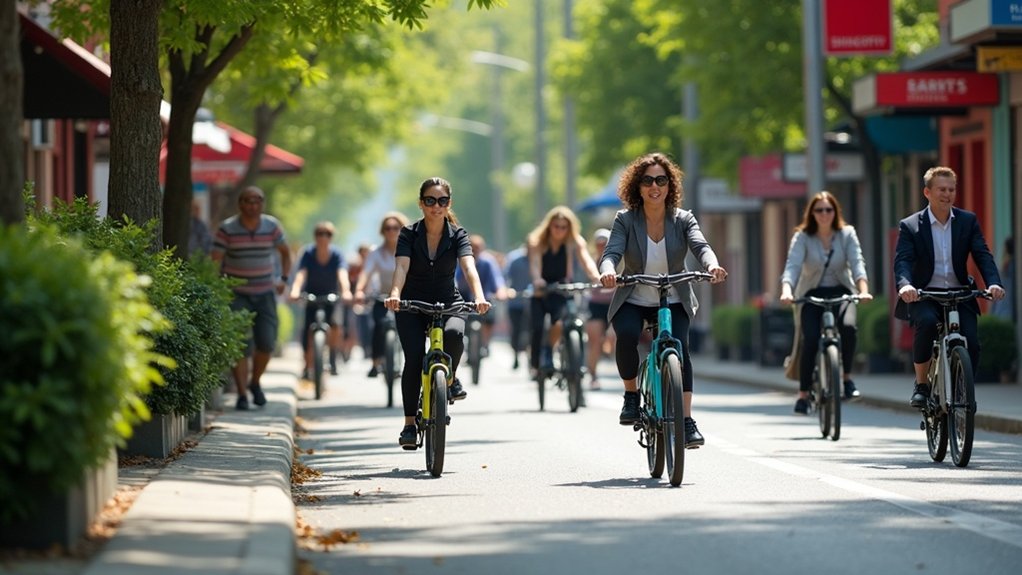
Many cities now integrate electric bikes into their transportation systems, improving air quality and reducing emissions, making e-bikes a crucial part of the evolving North American market.
Asian Sales Dominance
China’s e-bike market has dominated global sales, with around 210 million e-bikes in use daily by 2016, underscoring the country’s pivotal role in shaping adoption trends.
The surge in e-bike popularity in Asia has influenced global markets and encouraged regions like the European Union to follow suit.
- E-bike sales in China soared to 10 million units by 2005.
- In the Netherlands, e-bikes represented 57% of bike sales in 2022.
- Consumers are increasingly drawn to electric bicycles for their environmental benefits.
- The shift in consumer preference highlights e-bikes’ efficiency and appeal across continents.
Regulatory Challenges and Future Prospects
As e-bike usage surges, maneuvering the regulatory landscape becomes increasingly complex.
You’ll find that varying jurisdictions impose different rules on speed limits and motor power, creating regulatory challenges.
With safety concerns on the rise, municipalities are exploring helmet laws and rider education to guarantee safe riding.
Municipalities are prioritizing safety by considering helmet laws and rider education initiatives for e-bike users.
As cities rethink infrastructure, investments in dedicated e-bike lanes and charging stations are vital for accommodating this growing trend.
Looking ahead, technological advancements promise to enhance e-bikes’ role in urban transportation, fostering sustainable mobility solutions.
Addressing these regulations now may pave the way for a safer, more efficient e-bike future.