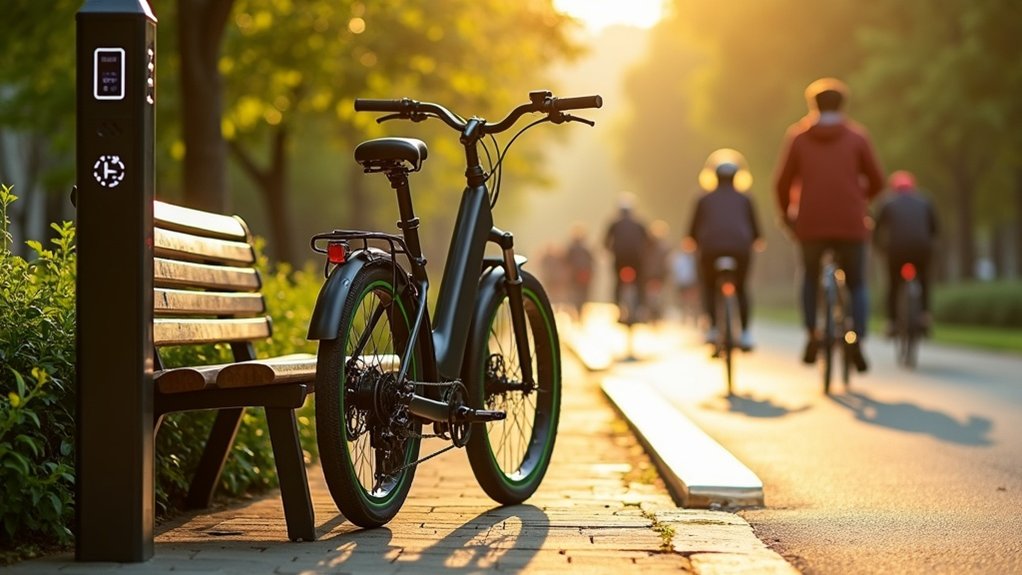
When considering electric bicycles, start by understanding the different classes, which affect where you can ride. Think about how you’ll use the e-bike—commuting, recreation, or cargo? Safety is essential, so always follow traffic rules and maintain a safe distance from others. Regular maintenance is key for longevity; check tire pressure and your battery often. If you want to get the most out of your e-bike experience, there’s plenty more to explore.
Key Takeaways
- Understand e-bike classifications (Class 1, 2, and 3) to choose the right model for your needs and local regulations.
- Determine your intended use—commuting, recreation, or cargo hauling—to guide your e-bike selection.
- Consider your budget; first-time buyers typically find a good balance in the $1,500 to $2,000 range.
- Prioritize safety by following traffic rules, signaling intentions, and maintaining a safe distance from e-bikes.
- Regular maintenance, including battery care and inspection of brakes, is essential for e-bike longevity and safety.
Understanding E-Bike Categories
When you’re exploring the world of electric bicycles, understanding the different e-bike categories is crucial for both your safety and compliance with local regulations.
E-bikes are classified into three main types: Class 1, Class 2, and Class 3.
Class 1 e-bikes feature pedal-assist up to 20 mph and are widely accepted on multi-use paths.
Class 2 e-bikes are throttle-assisted, also capped at 20 mph, but may be restricted to city streets.
Class 3 e-bikes, designed for speeds up to 28 mph, often require additional safety gear and adherence to specific local laws.
Knowing these distinctions helps guarantee safe riding practices.
Key Considerations for E-Bike Purchase
When you’re ready to buy an e-bike, start by pondering how you’ll use it—commuting, recreation, or maybe hauling cargo.
Your budget will play a big role too, as options range from budget-friendly models to high-end bikes, with many first-time buyers finding the sweet spot around $1,500 to $2,000.
Don’t forget to evaluate the different e-bike classes and features that best suit your riding style and local regulations.
E-Bike Types Overview
As you explore the world of electric bicycles, understanding the different types available can greatly impact your purchasing decision.
E-bike types include performance road bikes, mountain bikes, hybrids, cruisers, and cargo bikes, each tailored for unique experiences.
If you’re commuting, consider a Class 1 e-bike for pedal-assist up to 20 mph. For more control, Class 2 e-bikes offer throttle assistance, while Class 3 e-bikes boost you up to 28 mph.
Assess your intended use and the bike’s weight—typically between 50 to 75 pounds—as it affects handling and transportation.
Choose wisely for the best riding experience!
Budget and Pricing
Maneuvering the budget and pricing landscape for electric bicycles can be tricky, especially with a wide price range that spans from under $500 to over $7,000.
For first-time buyers, aiming for a quality e-bike around $1,500 is often the sweet spot. Budget-conscious consumers should avoid very low-end bikes, as they may compromise on durability.
Keep an eye on tariffs that could increase prices, and take advantage of discounts from brands like Specialized or Trek during the peak riding season.
These strategies can help you make a well-informed purchase that aligns with your budget and riding needs.
E-Bike Safety and Road Awareness
As an e-bike rider, you need to be aware that your speed can reach up to 28 mph, which is much faster than traditional bicycles.
This speed increases the importance of following traffic rules and clearly signaling your intentions to guarantee everyone on the road stays safe.
Speed Awareness for Safety
While e-bikes offer an exhilarating ride, their ability to reach speeds of up to 28 mph can catch many road users off guard.
Unlike conventional bikes, e-bikes accelerate quickly and operate quietly, often leading to late recognition by pedestrians and drivers. This can result in dangerous situations, especially when riders execute speedy maneuvers.
To enhance safety, maintain a safe distance from e-bikes, as their braking and acceleration differ from traditional bicycles.
E-Bike Traffic Rules
Understanding e-bike traffic rules is essential for both riders and other road users to guarantee a safe riding environment.
E-bikes must follow the same traffic laws as conventional bicycles, and here are key points to keep in mind:
- Always wear a helmet where required
- Signal your intentions to other road users
- Stay in the flow of traffic
- Be mindful of higher speeds, especially with Class 3 e-bikes
- Engage in educational programs to promote road safety
Maintenance Tips for E-Bikes
Proper maintenance is essential for keeping your electric bicycle in peak condition, ensuring both safety and performance during your rides.
Regularly inspect your tire pressure and brakes to maximize safety. Keep that battery charged and stored correctly, as lithium-ion batteries can degrade without proper care.
Don’t forget to clean and lubricate the chain and drivetrain frequently to prevent wear and maintain smooth operation.
Inspect electrical components for any signs of damage, as these are vital for your e-bike’s functionality.
Finally, schedule professional servicing as needed to tackle any mechanical issues and keep your ride in top shape.
Popular E-Bike Models in 2025
The electric bicycle market in 2025 is bustling with exciting options that cater to a variety of riding styles and preferences.
Here are some standout models you’ll want to evaluate:
- Aventon Level 3: Features a suspension seatpost and smart GPS tracking for comfort and safety.
- Lectric One eBike: Low-maintenance Gates belt drive and a powerful motor for impressive torque.
- Aventon Aventure 3: A fat tire e-bike perfect for mountain bikers on trails.
- Aventon Soltera 2.5: Lightweight and efficient for city streets and suburban commuters.
- Lectric XP4: A budget-friendly, portable e-bike for easy rides on bike paths.
You’ll find a perfect fit!
Exploring E-Bike Accessories and Enhancements
As you explore the exciting world of electric bicycles, consider how the right accessories can elevate your riding experience.
Helmets guarantee compliance with safety standards, while sturdy locks protect against theft. Lights enhance visibility during night rides, making you more noticeable to others.
Adding fenders keeps you clean by shielding against splashes and mud. Panniers or baskets increase practicality, allowing you to carry items effortlessly.
For longer rides, upgrading to a higher-capacity battery extends your range. Additionally, aftermarket enhancements like blind spot warning systems and crash detection provide peace of mind, guaranteeing a safer journey on your e-bike.