The recommended tire pressure for e-bikes typically ranges between 30-80 PSI, depending on your weight and the terrain you ride. For road tires, pressure can vary from 70-120 PSI. Start at around 50 PSI and adjust based on your specific needs. Heavier riders may need higher pressure to avoid tire compression, while lighter riders can lower it. Regular pressure checks are essential to maintaining peak performance and safety. Keep exploring to enhance your understanding of tire maintenance.
Key Takeaways
- The typical tire pressure range for e-bikes is between 30-80 PSI, varying by rider weight and terrain.
- Road tire pressure generally ranges from 70-120 PSI, while fat tires require 5-30 PSI.
- A starting pressure of around 50 PSI is recommended, adjustable based on rider weight and terrain.
- Regular weekly checks are essential, especially in changing weather conditions that may affect tire pressure.
- Always refer to the tire sidewall for the specific recommended PSI range for optimal performance.
Understanding Tire Pressure Basics for E-Bikes
Understanding the basics of tire pressure is essential for maintaining your e-bike’s performance and safety. Proper tire pressure directly affects your riding comfort and efficiency.
Typically, e-bike tires require a pressure range between 30-80 PSI, depending on various factors like rider weight and terrain. Heavier riders should check the sidewall for the recommended pressure range, as they often need higher PSI for peak performance.
Regularly check your inflated tires, as they lose air over time, which can compromise handling and increase the risk of flats. Adjusting pressure according to weather conditions also enhances grip and overall riding experience.
Recommended Tire Pressure Ranges by Tire Type
When choosing the right tire pressure for your e-bike, understanding the specific ranges for different tire types is essential.
Standard tires typically require 30-80 PSI, while fat tires, ideal for off-road conditions, should be set between 5-30 PSI.
Always check the sidewall for manufacturer recommendations to guarantee peak performance based on your riding style and conditions.
Standard Tire Pressure Guidelines
Tire pressure plays an essential role in the performance and safety of your e-bike, with specific ranges varying by tire type.
Standard e-bike tires typically require a pressure range of 30-80 PSI, while road e-bike tires operate at higher pressures, around 70-120 PSI.
The ideal pressure starts at 50 PSI, adjustable based on rider weight and terrain. Heavier riders should inflate tires to the upper end of the range for support, while lighter riders can reduce pressure for comfort.
Regularly checking your tire inflation helps enhance safety, performance, and reduces tire wear, ensuring an excellent riding experience.
Fat Tire Pressure Recommendations
If you’re riding a fat tire e-bike, proper tire pressure is essential for maximizing both performance and comfort.
Typically, fat tires require a pressure range of 5-30 PSI. For soft surfaces like sand or snow, aim for 5-10 PSI, while 20-30 PSI is ideal for pavement. A good starting point is around 15-17 PSI, balancing traction and rolling resistance.
Lower pressures enhance grip on uneven terrain, but always check the tire sidewall for specific recommendations.
Regularly monitoring tire pressure is vital, as fat tires can lose air quickly, impacting stability and control during your ride.
Factors Influencing Tire Pressure Adjustments
When adjusting tire pressure for your e-bike, consider factors like your weight, the type of terrain you ride on, and the specific tire type.
Heavier riders typically need higher PSI, while different tire types and conditions may require unique pressure levels for peak performance.
Additionally, weather can impact grip and rolling resistance, so adjust accordingly for safety and comfort.
Rider Weight Considerations
Understanding how rider weight impacts tire pressure is vital for maximizing your e-bike’s performance.
Heavier riders typically need higher pressure to prevent excessive tire compression, while lighter riders can benefit from lower pressures within the recommended range for better comfort and grip.
Remember to account for any additional weight from gear or cargo, as this can necessitate adjustments to maintain peak performance.
Each rider’s unique weight affects tire pressure distribution, making it important to experiment within limits to avoid issues like pinch flats.
Always adjust tire pressure based on your weight to guarantee an enjoyable and safe riding experience.
Terrain and Weather Effects
Rider weight influences tire pressure, but terrain and weather also play significant roles in determining the ideal settings for your e-bike.
Different terrain types require specific tire pressure adjustments; lower pressures (5-10 PSI) suit soft surfaces like sand, while higher pressures (20-30 PSI) reduce rolling resistance on paved roads.
On gravel, slight reductions enhance traction.
Weather conditions matter too; decrease pressure in wet weather for improved grip, and opt for higher pressure in dry conditions.
Heavier riders should increase pressure for peak performance, and remember that seasonal temperature changes necessitate regular checks to maintain proper tire pressure.
Tire Type Variations
Tire type greatly affects the ideal pressure settings for your e-bike, as different designs are engineered for specific riding conditions and performance characteristics. Here’s a quick reference for recommended PSI based on tire types:
| Tire Type | Recommended PSI |
|---|---|
| Standard Tires | 30 – 80 PSI |
| Fat Tires | 5 – 30 PSI |
| Thin/Road Tires | 70 – 120 PSI |
| Heavier Riders | Higher PSI Needed |
| Rough Terrain | Lower PSI for grip |
Adjust tire pressure according to rider weight, terrain type, and personal comfort to avoid overinflated tires, ensuring peak contact with the road.
How to Measure and Adjust Your Tire Pressure
To guarantee your e-bike performs at its best, measuring and adjusting tire pressure is essential.
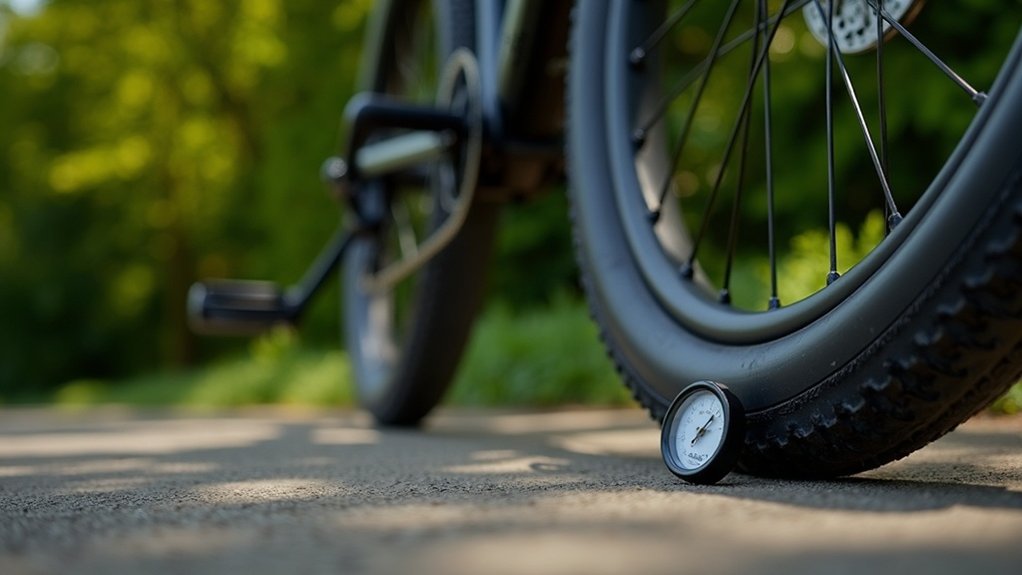
- Use a reliable pressure gauge or a pump with a built-in gauge.
- Refer to the tire sidewall for the recommended pressure range in PSI.
- Regularly check tire pressure at least once a week.
Start by measuring when tires are cold for accuracy.
Adjust pressure to the midpoint of the recommended range, making small changes based on comfort and terrain.
To inflate, use a pump, and release air via the valve stem for deflation.
Confirm your tires are properly inflated for peak performance on your electric bike.
The Importance of Regular Tire Inspections
Although many riders may overlook it, regular tire inspections are vital for maintaining peak performance and safety on your e-bike.
Tires naturally lose air, so checking your ebike tire pressure daily guarantees ideal performance. Under-inflation can compromise traction and handling, increasing the risk of accidents.
Regularly checking your e-bike tire pressure is essential; under-inflation can severely impact traction and increase accident risks.
Additionally, sharp objects can puncture tires, so inspect for debris during regular maintenance to avoid flats. Consistent brake performance is fundamental for tire longevity, while cleaning tires and checking rims for rust can extend their life.
Prioritizing these inspections not only enhances your riding experience but also promotes safer journeys on your e-bike.
Tips for Maintaining Optimal Tire Pressure
Maintaining ideal tire pressure is essential for ensuring your e-bike performs at its best.
- Regularly check your tires at least once a week with a reliable gauge.
- Adjust air pressure based on weather; increase it in heat and decrease in cold.
- Experiment within the manufacturer’s recommended range for optimal comfort and efficiency.
Monitoring tire condition is vital; under-inflated or over-inflated tires increase rolling resistance and can lead to blowouts.
Keeping track of your ideal tire pressure settings will enhance your riding experience and prolong tire life.
Proper Storage Practices for E-Bike Tires
Proper storage of e-bike tires is just as important as maintaining their pressure for peak performance.
Clean your tires thoroughly to eliminate dirt and moisture-related damage, ensuring they’re completely dry. Use airtight plastic bags to shield them from UV light and extreme temperatures, which can cause rubber deterioration over time.
Store tires flat, separated by cardboard, or hang them by the rim with slight inflation to aid in maintaining shape. Avoid ozone-emitting devices in storage areas.
Before long-term storage, apply a tire protectant, but make sure it’s free from harsh chemicals that could harm the tire material.