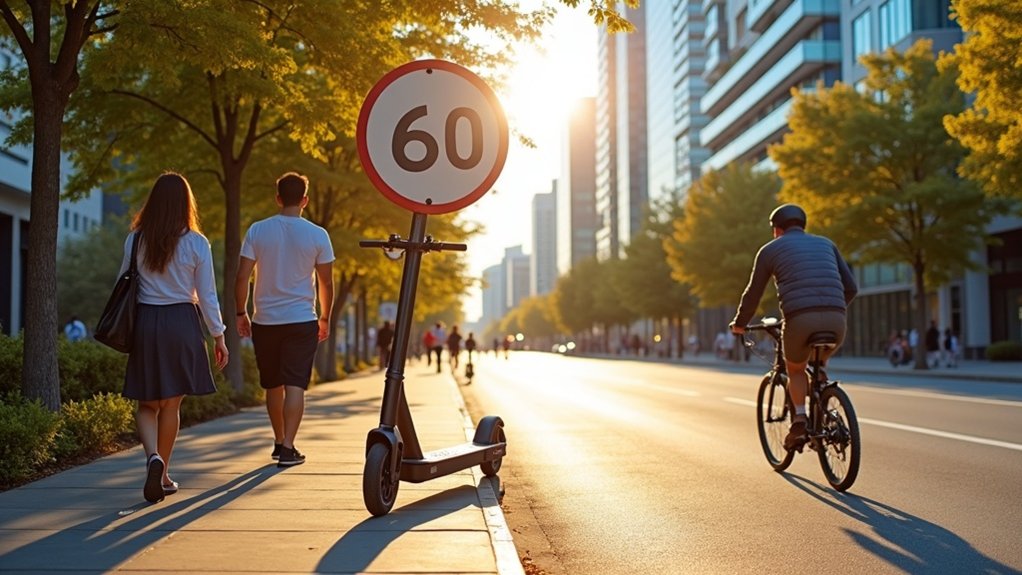
The legal speed limit for e-scooters varies by state, typically ranging from 10 to 25 mph. Generally, the federal maximum is set at 20 mph. For example, California caps speeds at 15 mph, while Florida allows up to 20 mph in bike lanes. Local regulations can further dictate these limits, so you’ll need to check your specific area’s rules. Stay tuned to discover more about helmet requirements, designated riding areas, and other essential regulations.
Key Takeaways
- The federal maximum speed limit for e-scooters is 20 mph, but local regulations may differ significantly.
- California restricts e-scooter speeds to 15 mph, while Washington, D.C. limits it to 10 mph.
- In Texas, e-scooter speeds can range from 15-20 mph based on local rules.
- New York allows speeds of up to 20 mph, with helmet requirements for riders under 18.
- Always check local regulations to ensure compliance with speed limits and other requirements in your area.
Overview of E-Scooter Speed Limits in the USA
As you navigate the landscape of e-scooter regulations in the USA, it’s crucial to understand the varying speed limits that govern these popular modes of transportation.
Federal laws cap the maximum speed for electric scooters at 20 mph, but most shared scooters typically operate between 10-15 mph.
Federal regulations set the top speed for electric scooters at 20 mph, while shared scooters often run between 10-15 mph.
Local regulations vary greatly; California limits speeds to 15 mph, while Michigan allows up to 25 mph. In Washington, D.C., the maximum speed is only 10 mph.
Riders must comply with these local laws, as exceeding speed limits can lead to fines, emphasizing the importance of understanding local e-scooter regulations for safe riding.
State-Specific Regulations and Speed Restrictions
Understanding the nuances of state-specific regulations and speed restrictions for e-scooters is essential for riders looking to navigate safely and legally.
In Texas, local regulations dictate maximum speeds of 15-20 mph, while California enforces a 15 mph limit and requires a valid driver’s license.
Florida allows speeds up to 20 mph in bike lanes, but local rules apply.
New York permits 20 mph, with helmet requirements for riders under 18.
In Washington, D.C., the maximum speed drops to 10 mph in designated areas, and sidewalk use is prohibited.
Riders must follow these electric scooter laws for public safety.
Helmet and Age Requirements for E-Scooter Riders
When riding an e-scooter, you need to be aware of the minimum age requirements and helmet guidelines in your area.
In Houston, for instance, you must be at least 18 years old to ride, while helmet use, though not enforced, is highly recommended for safety.
Other states, like California, mandate helmets for riders under 18, highlighting the importance of checking local regulations.
Minimum Age Regulations
While regulations regarding the minimum age for e-scooter riders vary considerably across states, they often reflect a growing concern for safety, particularly among younger users.
| State | Minimum Age |
|---|---|
| Texas | 18 |
| New York | 16 |
| Virginia | 14 |
Many states enforce age requirements and helmet laws for riders under 18 years, with Texas having no helmet mandate. In contrast, New York requires helmets for those under 18, and Virginia mandates helmet use for riders under 16. Understanding your state’s specific rules guarantees safety and compliance for electric scooter riders.
Helmet Use Guidelines
How essential is helmet use for e-scooter riders, especially those under 18?
Helmet use guidelines vary considerably across states, with many requiring riders under 18 to wear helmets. In states like California and Florida, regulations are even stricter for those under 16.
While Texas doesn’t mandate helmets for riders over 18, safety experts strongly recommend wearing protective gear regardless of age. Helmets are critical in reducing head injuries during accidents, making them a must for all e-scooter users.
Always check local laws, as some cities enforce mandatory helmet requirements for all riders to enhance safety.
Riding Areas: Where Can You Legally Use E-Scooters?
Where can you legally ride e-scooters? Understanding your riding areas is essential for compliance. Here’s a breakdown:
Understanding where you can legally ride e-scooters is crucial for staying compliant with local regulations.
- Bike Lanes: You can use e-scooters in designated bike lanes.
- Streets: Scooters are legal on streets with speed limits of 35 mph or less.
- Sidewalks: Generally prohibited in business districts and specific trails.
- Local Regulations: Always check local rules, as traffic engineers may impose additional restrictions.
Licensing and Registration Requirements by State
Understanding the licensing and registration requirements for e-scooters is essential, as these laws vary greatly from state to state.
In some areas, like Texas and California, you won’t need a driver’s license, while states such as Louisiana and North Carolina require DMV registration.
Additionally, local regulations can introduce further complexities, so it’s important to stay informed about the specific rules in your area.
State-Specific Licensing Laws
While many states don’t require a driver’s license for operating electric scooters, the landscape of licensing and registration laws is anything but uniform.
Here’s what you should know:
- States like California and New York require a valid driver’s license for electric scooters to be legal.
- North Carolina, Hawaii, and Louisiana mandate DMV registration for personal scooters.
- Local municipalities often dictate specific rules and regulations.
- Federal regulations cap the speed at 20 mph, but states may enforce stricter limits.
To guarantee you’re riding safe and legal, always stay updated on your state-specific licensing requirements.
Registration Requirements Overview
Maneuvering the registration requirements for e-scooters can be complex, as these laws vary considerably from state to state.
In most areas, a driver’s license isn’t necessary, but states like North Carolina, Hawaii, and Louisiana do require DMV registration for personal mobility scooters.
It’s crucial to verify with your local council about specific regulations, as some areas may prohibit electric scooters or impose additional restrictions.
Laws differ frequently, so stay updated on the current registration requirements in your area.
Understanding these nuances guarantees that your scooters are street legal and compliant with local rules.
Safety Considerations for E-Scooter Riders
Safety is paramount for e-scooter riders, as traversing urban environments can present various challenges.
To guarantee your safety and comply with traffic laws, consider these essential tips:
- Wear a helmet and protective gear to minimize injury risk.
- Adhere to speed limits—typically capped at 15 mph in Houston—to maintain control.
- Stay vigilant for pedestrians and respect right-of-way rules at intersections.
- Conduct regular maintenance checks on brakes and lights to guarantee safe operation.