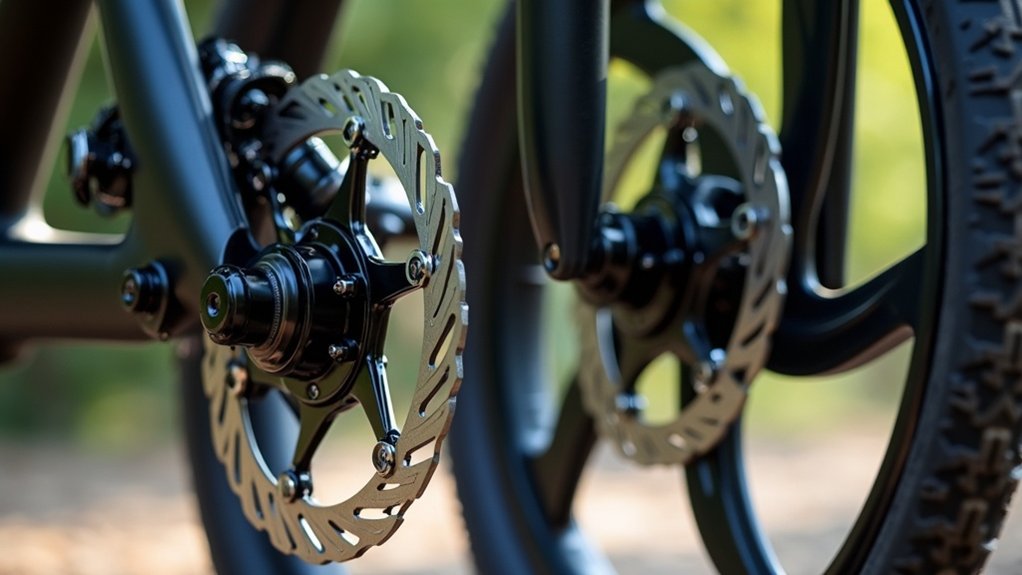
Disc brakes use a rotor at the wheel hub, providing superior stopping power, especially in wet or muddy conditions. They minimize wear on wheels, making them ideal for aggressive riding. In contrast, rim brakes apply pressure to the wheel rim and are lighter, simpler, and easier to maintain. However, they struggle in adverse weather, leading to longer stopping distances. Understanding these differences helps you choose the right system for your e-bike, enhancing your riding experience. More insights await you.
Key Takeaways
- Disc brakes offer superior stopping power, especially in wet or muddy conditions, making them ideal for e-bikes used in diverse environments.
- Rim brakes are lighter and easier to maintain, making them suitable for casual e-bike riders who prioritize simplicity and cost-effectiveness.
- Disc brakes minimize wear on wheels, preserving their integrity and reducing replacement costs over time, which can be beneficial for aggressive riding.
- Rim brakes may have diminished performance in adverse weather, leading to longer stopping distances on e-bikes in rain or mud.
- Maintenance for disc brakes, particularly hydraulic systems, is more complex, whereas rim brakes require simpler, more straightforward upkeep.
Understanding Bicycle Brake Systems
When you consider the mechanics of bicycle brake systems, it’s essential to understand the fundamental differences between rim and disc brakes.
Disc brakes, available in hydraulic and mechanical types, provide superior stopping power and consistent braking performance, especially in wet conditions. They squeeze pads against a rotor at the wheel hub, ensuring reliability during high-speed or off-road riding.
Disc brakes offer unmatched stopping power and reliability, particularly in wet conditions and challenging terrains.
In contrast, rim brakes clamp pads onto the wheel rim, making them lighter and more cost-effective but potentially less effective in adverse weather.
Ultimately, your choice depends on your riding style, terrain, and budget, particularly for e-bike brakes.
Overview of Rim Brakes
Rim brakes, a traditional braking system, function by applying pressure from brake pads against the outer edge of the bicycle wheel rim, generating the friction needed to slow down or stop the bike.
They offer significant weight savings, typically saving about 1 pound compared to disc brakes. Additionally, rim brakes are easier to maintain and repair, featuring simpler components like brake levers and cables.
However, their braking performance can diminish in wet conditions, as brake pads struggle to create enough friction, risking slips and reduced stopping power.
Over time, they may wear down the wheel rims, leading to replacement costs.
Overview of Disc Brakes
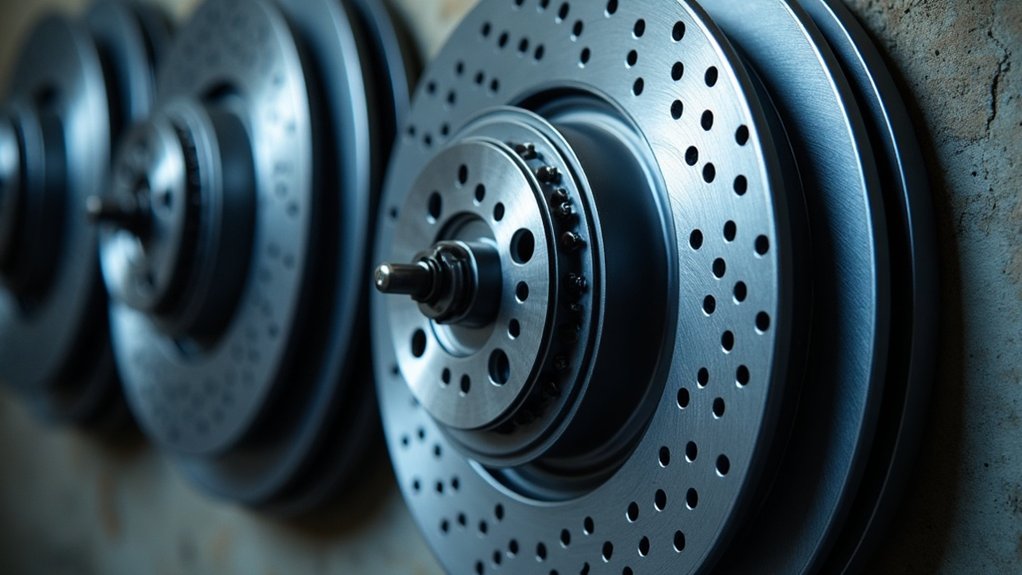
Disc brakes are designed with a rotor mounted at the wheel hub, which enhances braking efficiency compared to rim brakes.
You’ll find two main types: mechanical and hydraulic, each offering unique performance benefits.
These brakes excel in various conditions, especially when it’s wet or muddy, ensuring reliable stopping power and reduced wear on your bike’s rims.
Types of Disc Brakes
Two main types of disc brakes are commonly used in e-bikes: mechanical and hydraulic. Mechanical disc brakes operate through a cable system, offering straightforward maintenance and cost-effectiveness. In contrast, hydraulic disc brakes utilize fluid-filled lines, providing superior stopping power and smoother braking performance, especially in wet conditions. Here’s a quick comparison:
| Feature | Mechanical Disc Brakes | Hydraulic Disc Brakes |
|---|---|---|
| Braking Performance | Moderate | Superior |
| Maintenance | Easier and cheaper | Requires bleeding |
| Stopping Power | Good | Excellent |
| Ideal Conditions | All weather | Best in wet conditions |
Understanding these types helps you choose the right braking system for your e-bike.
Performance Benefits of Disc Brakes
When you consider the performance benefits of disc brakes for e-bikes, their ability to deliver consistent stopping power in various conditions stands out.
Disc brakes require less maintenance and provide superior stopping power, especially during steep descents or in wet or muddy conditions. Their design minimizes wear on the wheels, preserving rim integrity over time.
Hydraulic disc brakes enhance this experience by offering smoother and more powerful braking, reducing rider fatigue.
For those seeking reliability and effectiveness, particularly in high-speed or off-road scenarios, disc brakes are an affordable option that greatly improves your overall riding experience.
Performance Comparison: Disc Brakes vs. Rim Brakes
While both braking systems serve the fundamental purpose of slowing down your e-bike, the performance of disc brakes greatly outshines that of rim brakes, particularly in demanding conditions.
Disc brakes offer superior stopping power, especially on steep descents and in wet conditions, ensuring immediate and consistent performance.
Rim brakes, however, may struggle in rain or mud, leading to longer stopping distances.
While rim brakes are lighter and easier to maintain, disc brakes incur less wear on wheels and are better suited for aggressive riding.
Ultimately, your choice should reflect the riding style and conditions you encounter most often.
Advantages and Disadvantages of Each Brake Type
Choosing between disc and rim brakes involves weighing their respective advantages and disadvantages, as each system caters to different riding preferences and conditions.
Disc brakes excel in stopping power and consistent performance, especially in wet conditions, making them ideal for varied terrains. However, they tend to be heavier and incur higher maintenance costs.
Rim brakes, on the other hand, are lighter and simpler, making them more accessible for casual riders. They’re also cost-effective, though they may wear out rims over time.
Ultimately, your choice should reflect your riding style, desired performance, and maintenance willingness.
Maintenance and Cost Considerations
Understanding the maintenance and cost considerations of disc and rim brakes is vital for making an informed decision about your e-bike. Here’s what you should know:
- Rim brakes are simpler and cheaper to maintain, ideal for casual riders.
- Disc brakes require more routine maintenance, especially hydraulic systems needing bleeding.
- Regular inspections are essential to check for pad wear, cable damage, and rotor warping.
- Mechanical disc brakes are easier to adjust than hydraulic, which may incur higher repair costs.
Both types demand attention to guarantee peak performance and safety, making maintenance a key aspect for all riders.
Choosing the Right Brake System for Your E-Bike
After considering the maintenance and cost aspects of both brake systems, it’s important to evaluate which brake system aligns with your riding needs.
If you tackle steep or varied terrain and often ride in wet conditions, disc brakes provide superior stopping power and reliability.
For casual riders on flat, dry paths, cost-effective rim brakes might suffice.
Consider your riding style: commuters benefit from the consistent performance of disc brakes.
Additionally, if you’re weight-sensitive, remember that rim brakes save about a pound.
Ultimately, prioritize your environment and choose the system that best suits your braking requirements.
Final Thoughts on Brake Selection
When selecting the right brake system for your e-bike, it’s essential to weigh various factors that influence performance and suitability.
Consider the following:
- Braking performance: Disc brakes offer superior stopping power, especially in adverse weather.
- Riding style: Performance-oriented riders may prefer disc brakes for varied terrain.
- Maintenance costs: Rim brakes typically involve lower long-term upkeep.
- Weather conditions: Disc brakes excel in wet or downhill conditions, while rim brakes suit casual riders on flat surfaces.
Ultimately, your decision should align with your budget and typical riding conditions to guarantee an ideal experience.