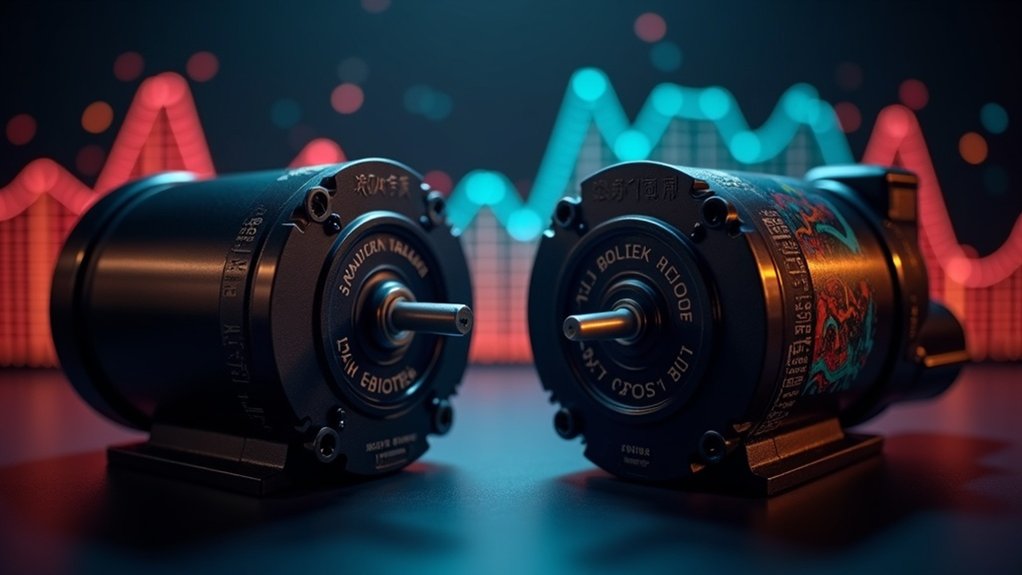
Nominal power refers to the continuous wattage a motor can sustain without overheating, typically around 250W for standard use. In contrast, peak power represents the maximum wattage available for short bursts, which can be notably higher. While peak power helps during demanding situations like steep climbs, overusing it risks overheating and motor damage. Understanding the balance between these two power ratings is essential for optimizing your e-bike’s performance and overall experience. More insights are available on this topic.
Key Takeaways
- Nominal power refers to the continuous wattage a motor can sustain without overheating, typically rated at 250W for standard use.
- Peak power is the maximum wattage available for short bursts, exceeding nominal power for brief, high-demand situations.
- Extended use of peak power risks overheating and potential motor damage; cooling periods are essential afterward.
- Understanding the difference between nominal and peak power helps users make informed decisions regarding e-bike performance and battery life.
- Proper motor and battery compatibility is crucial for optimal performance, ensuring reliability during regular rides and efficient power usage.
Understanding E-Bike Motor Power
When you consider the power of an e-bike motor, it’s essential to understand the distinction between nominal and peak power.
Nominal power, typically rated at 250W for standard use, represents the continuous output that e-bike motors can maintain without overheating. In contrast, peak power is the maximum short-term output, which can exceed nominal ratings—like a 500W motor peaking at 750W during intense demands such as climbing steep hills.
Knowing this difference helps you select motors that balance everyday performance with occasional high-demand situations, ensuring reliability while avoiding overheating and prolonging the motor’s lifespan.
Peak Power vs. Nominal Power
When you evaluate e-bike performance, it’s essential to distinguish between nominal and peak power outputs.
Nominal power represents the continuous level your motor can sustain without risk, while peak power indicates the maximum output for short bursts.
Understanding these differences will help you make informed decisions about your riding experience and guarantee peak performance.
Definition of Power Outputs
Power outputs in electric motors, particularly in e-bikes, are defined by two critical metrics: nominal power and peak power.
Nominal power represents the continuous wattage a motor safely delivers for extended durations, ensuring reliable everyday performance. Conversely, peak power indicates the maximum wattage available in short bursts, allowing the motor to handle sudden demands, like climbing steep hills.
For instance, a 500W motor may peak at 750W. While peak power enhances performance temporarily, prolonged use can cause overheating, necessitating cooling periods.
Understanding these distinctions helps you choose a motor that balances consistent operation with the ability to tackle challenging situations.
Duration of Power Outputs
Understanding the duration of power outputs in electric motors is essential for maximizing eBike performance.
Nominal power is sustainable, allowing your motor to run continuously without overheating. In contrast, peak power is available only for brief bursts, typically lasting from fractions of a second to a couple of seconds.
Extended use of peak power risks overheating, which can lead to motor damage or failure. After using peak power, you might notice a temporary reduction in nominal output until the motor cools down.
Recognizing these differences in duration helps you optimize performance and extend your motor’s lifespan.
Practical Implications for Riders
Recognizing the differences between nominal and peak power not only aids in performance enhancement but also has practical implications for your riding experience.
Nominal power indicates the continuous output your electric bike can sustain, ensuring reliability for regular rides. In contrast, peak power offers bursts for challenging situations, like steep climbs. However, using peak power excessively can lead to overheating and damage, so cooling periods are essential.
Selecting a motor with appropriate nominal power for your commuting needs—like 250W for flat terrain or 750W for hilly areas—ensures superior battery performance and motor longevity, enhancing your overall riding experience.
Nominal Power (Average Power)
When selecting a motor for your e-bike, it’s essential to take into account the nominal power, as it reflects the continuous output a motor can safely deliver without risking overheating.
Typically rated in watts, a 250W nominal power motor is ideal for regular commuting, providing reliable performance over extended periods.
In many regions, particularly in Europe, e-bike motors are limited to this nominal power to comply with local regulations.
Understanding nominal power guarantees you choose a motor that meets your riding needs, delivering consistent performance on flat roads and casual cycling while promoting the longevity of the motor.
Peak Power (Maximum Output)
Peak power represents the maximum output your motor can deliver, ideal for brief bursts during climbs or rapid acceleration.
While this temporary boost enhances performance, relying on it too often can lead to overheating and potential damage.
Understanding when to utilize peak power is essential for optimizing your riding experience and maintaining motor longevity.
Temporary Power Boost
Understanding how peak power functions can greatly enhance your e-bike experience, especially during demanding rides.
Peak power represents the maximum power your motor can deliver for short periods of time, typically during acceleration or climbing steep hills. For instance, a 500W motor might briefly reach 750W, providing a temporary performance boost when needed.
However, this maximum power isn’t sustainable; extended use risks overheating and motor damage. Generally, you can utilize peak power for fractions of a second to a couple of seconds, making it essential to understand its limitations for ideal e-bike performance in challenging conditions.
Climbing and Acceleration Aid
While maneuvering steep inclines or accelerating quickly, the ability to tap into peak power offers significant advantages for e-bike riders.
This temporary boost, often exceeding nominal output, enables your motor to deliver extra energy when it matters most. For instance, a 500W motor may provide peak power of 750W, allowing for better handling of sudden climbs.
Peak power is available for brief bursts, facilitating performance in challenging terrains or during quick sprints.
Understanding the difference between nominal and peak power is essential, as relying on peak output continuously can lead to overheating and potential motor damage.
Risks of Overheating
Riding an e-bike requires balancing the advantages of peak power with the risks associated with its sustained use.
Continuous power at peak levels can lead to overheating, which poses several threats:
- Potential damage to motor components
- Reduced performance or complete failure
- Activation of thermal protection systems
- Shortened motor lifespan and decreased battery efficiency
Regularly operating at peak power not only risks immediate shutdowns but also necessitates cooling periods, where motor output decreases until safe temperatures are achieved.
To guarantee ideal performance and longevity, it’s essential to manage peak power use carefully and allow for recovery periods after intense demands.
How Peak Power Affects E-Bike Performance
Peak power greatly influences e-bike performance, especially during demanding scenarios like steep climbs or rapid acceleration. E-bike motors with high peak power ratings can deliver short bursts of energy, enhancing your ability to tackle sudden load increases effectively.
However, this peak power is typically sustainable for only a few seconds, which can lead to overheating if overused. While a motor may provide the necessary torque for quick climbs, it might reduce nominal power output until it cools.
Understanding how to strategically apply peak power helps optimize your e-bike’s performance while ensuring safe operation and prolonging motor longevity.
Practical Considerations for E-Bike Buyers
Understanding motor power ratings, including both nominal and peak values, is essential when selecting an e-bike that meets your needs.
Consider the following practical aspects:
- Nominal power typically ranges from 250W for reliable commuting.
- For hilly terrains, opt for e-bike motors with peak power ratings around 750W.
- Be aware of local regulations limiting nominal power, which can impact your choice.
- Match your riding style with motor capabilities, as higher peak power enhances speed bursts.
Ensuring compatibility between motor demands and battery systems is vital for optimizing performance and efficiency in your e-bike experience.
Common Misconceptions About Rated and Peak Power
While many assume that a higher peak power rating always signifies a superior motor, this belief overlooks the importance of nominal power in delivering consistent performance.
A common misconception is that continuous use of peak power is sustainable; however, it’s designed for short bursts and can lead to overheating if overused.
Many mistakenly think all e-bikes handle peak power effortlessly, but motors are primarily built for rated power.
Additionally, it’s a myth that higher-rated power guarantees better battery life; efficient use of nominal power is vital for longevity.
Understanding these distinctions is essential for making informed decisions about motor performance.