A torque sensor on an e-bike measures the force you apply to the pedals, allowing for precise adjustments in motor assistance based on your effort. This technology mimics the natural feel of traditional cycling, offering smoother power delivery and better control on varied terrains. By optimizing battery usage, it helps extend your ride without frequent recharges. For a deeper understanding of how these sensors enhance your cycling experience and energy efficiency, continue exploring the topic.
Key Takeaways
- A torque sensor measures the force applied to the pedals, allowing for real-time motor assistance adjustments based on rider effort.
- It mimics traditional cycling dynamics, providing a natural riding experience by integrating pedaling effort with motor support.
- Torque sensors are typically located in the bottom bracket or rear axle and improve responsiveness during rides.
- They enhance battery efficiency by activating assistance only when necessary, extending ride duration without frequent recharges.
- Compared to cadence sensors, torque sensors offer better terrain adaptability and smoother power delivery, enhancing overall cycling control.
Understanding Torque Sensors
When you ride an e-bike equipped with a torque sensor, you experience a seamless integration of your pedaling effort and the motor’s assistance. This sensor measures the force applied to the pedals, allowing the electric motor to adjust power assistance in real-time.
Unlike cadence sensors that only gauge speed, torque sensors mimic traditional cycling dynamics for a more natural ride. They enhance battery life by activating assistance only when you exert force, conserving energy and extending your bike’s range.
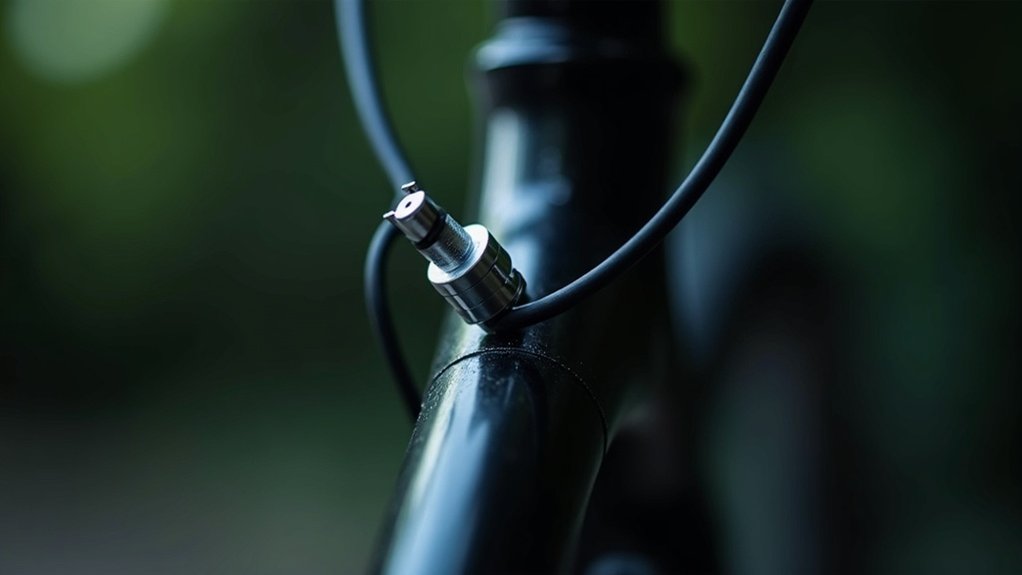
Typically found in the bottom bracket or rear axle, torque sensors offer a responsive experience tailored to terrain and rider input.
How Torque Sensors Work
Torque sensors operate by measuring the force you apply to the pedals through a strain gauge, which is a key component in the sensor’s design. This integration into the e-bike’s drivetrain enables real-time adjustments based on the effort you put in.
The torque sensor measures rotational force and translates it into motor assistance, enhancing your riding experience.
- Real-time adjustments improve responsiveness.
- Power output increases with more force applied.
- Energy efficiency is optimized by activating assistance only when necessary.
This technology guarantees a seamless cycling experience, allowing for better control across diverse terrains.
Benefits of Torque Sensors
The integration of torque sensors into e-bikes offers significant advantages that enhance the overall riding experience.
By adjusting motor assistance based on your pedaling effort, torque sensors create a natural riding experience that closely resembles traditional cycling. This technology boosts battery efficiency as it delivers power only when necessary, conserving battery life and extending your range.
You’ll notice smoother power delivery, eliminating sudden bursts of assistance that can be jarring. Ideal for varied terrains, torque sensors improve control during acceleration and climbing, encouraging higher engagement and effort, ultimately promoting a more active and enjoyable cycling experience through optimized pedal assist.
Drawbacks of Torque Sensors
While torque sensors enhance the riding experience by providing responsive assistance, they also come with notable drawbacks that could affect your enjoyment.
Here are three key drawbacks to evaluate:
- Increased Effort: You’ll need to exert more effort to receive electric assistance, which may not suit those seeking a leisurely ride.
- Higher Cost: The complexity of torque sensors often makes e-bikes more expensive than those with cadence sensors.
- Speed Limitations: Achieving top speeds can be challenging, as power output depends on your pedaling effort rather than solely on speed.
These factors could make torque sensors less appealing for casual riders.
Comparison With Cadence Sensors
When comparing torque sensors with cadence sensors, you’ll notice significant performance differences that affect your riding experience.
Torque sensors respond directly to your pedal force, providing a more intuitive feel as you tackle various terrains, while cadence sensors focus solely on pedaling speed, which can lead to a less engaging ride.
Understanding these distinctions can help you choose the right system for your cycling preferences and needs.
Performance Differences
Compared to cadence sensors, torque sensors deliver a more responsive riding experience by directly measuring the force you apply to the pedals.
This results in enhanced performance and assistance tailored to your efforts. Here’s how they differ:
- Dynamic Response: Torque sensors adjust motor output in real-time, providing smoother shifts in assistance levels.
- Terrain Adaptability: Enhanced control allows for better handling on varied terrains, including climbing hills.
- Battery Efficiency: Torque sensors conserve battery life by offering assistance only when necessary, unlike cadence sensors that may drain power continuously.
Choose torque for a more engaging ride.
Riding Experience
Choosing a torque sensor greatly enhances your riding experience, as it intuitively adjusts the motor assistance based on the force you apply to the pedals. This provides a more natural riding feel, mimicking traditional cycling.
In contrast, cadence sensors primarily focus on pedaling speed, which can create a disjointed connection with your bike. With torque sensor ebikes, you gain enhanced control and responsiveness, especially on inclines, while conserving battery life by delivering power only when needed.
This adaptive assistance guarantees you receive the right amount of power at the right time, making your rides more dynamic and engaging.
Impact on Battery Life and Efficiency
Torque sensors greatly enhance battery life and efficiency on eBikes by directly measuring the rider’s pedaling force. This allows for improved motor assistance and reduces unnecessary battery drain.
Here are three key impacts:
- Efficient Power Usage: Torque sensors engage the motor only at ideal effort levels, conserving battery power.
- Smoother Power Delivery: Real-time adjustments based on your pedaling result in reduced energy consumption during rides.
- Extended Range: On average, torque sensor-equipped eBikes achieve greater mileage per charge compared to those with cadence sensors, considerably enhancing battery life and overall efficiency.
Ideal Riding Scenarios for Torque Sensors
When exploring the capabilities of eBikes, the advantages of torque sensors become particularly evident in various riding scenarios.
For hilly terrains, torque sensors deliver responsive power assistance that aligns with your pedaling effort, making climbs more manageable. This enhances your riding experience, especially if you’re a fitness enthusiast, as it encourages an engaging workout.
Whether traversing off-road trails or urban commutes, torque sensors provide better control over speed and acceleration, adapting seamlessly to varied conditions.
Additionally, they optimize battery efficiency by supplying power only when necessary, extending your eBike’s range for longer rides.
Choosing the Right Sensor for Your E Bike
When selecting a sensor for your e-bike, it’s essential to compare sensor types and assess your riding style.
Consider how often you tackle varied terrain and how much efficiency matters to you during longer rides.
Your choices can greatly influence your overall riding experience, so weigh your options carefully.
Sensor Type Comparison
Choosing the right sensor for your e-bike can greatly influence your riding experience, especially when considering how different technologies respond to your input.
Here’s a comparison to help you decide:
- Torque Sensors: Measure pedal force, adjust motor assistance accordingly, and enhance control on varied terrains, promoting better battery efficiency.
- Cadence Sensors: Focus on pedal speed, providing continuous assistance based on RPM, ideal for casual riders seeking simplicity.
- Power Output: Torque sensors optimize power delivery based on effort, while cadence sensors may lead to quicker battery drain.
Understanding these differences is essential for selecting the best fit for your e-biking needs.
Riding Style Considerations
Riding style influences sensor selection greatly, as each type caters to different preferences and terrains.
If you prioritize a natural cycling feel, torque sensors are your best bet, adjusting assistance levels based on your pedal effort. This feature enhances your e-bike experience, especially when traversing hills or varied terrains, providing better control over acceleration.
Conversely, if you prefer minimal effort, cadence sensors might suit you better, delivering consistent power based on pedaling speed.
Understanding your riding style—whether you seek fitness engagement or ease of use—is vital for making the right choice between torque and cadence sensors for your e-bike.
Terrain and Efficiency Factors
While traversing diverse terrains, understanding the efficiency of your e-bike’s sensor becomes essential. Torque sensors excel in various environments, particularly when tackling hills.
Consider these factors:
- Terrain Adaptability: Torque sensors adjust power output in real-time based on your pedaling force, enhancing control.
- Battery Efficiency: They optimize battery use, allowing for longer rides without frequent recharging.
- Riding Experience: By adapting assistance levels, torque sensors provide a smooth, responsive ride, minimizing abrupt power surges.
Choosing a torque sensor guarantees a dynamic cycling experience, especially if you prioritize exercise and engage with challenging terrains.