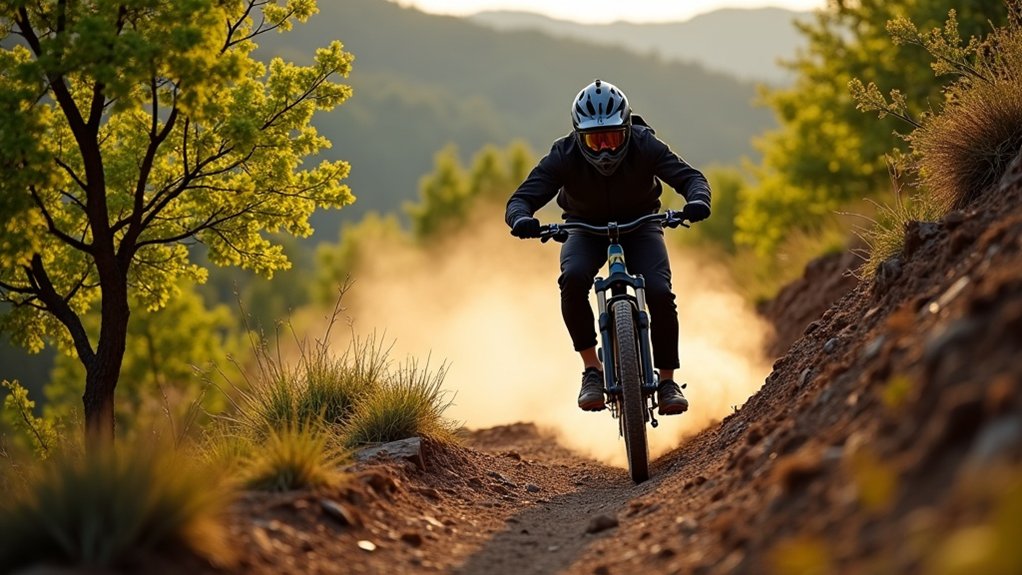
To safely descend steep hills on your e-bike, start with a lower pedal-assist mode for control. Use both front and rear brakes evenly while feathering them to maintain stability. Shift your weight back to prevent lifting the front wheel, and keep your body low to absorb shocks. Always monitor your speed and adjust your braking based on terrain conditions. Knowing these tips can enhance your riding experience, and there’s more to learn about mastering descents.
Key Takeaways
- Start with a lower pedal-assist mode for better control and gradually increase as needed to manage battery power.
- Use both front and rear brakes evenly while feathering them for smooth deceleration and stability.
- Shift your weight back on the saddle and lower your torso to maintain balance and absorb shocks.
- Monitor speed closely and adjust braking distance based on terrain conditions like loose gravel or wet surfaces.
- Practice consistent braking techniques and engage brakes earlier to account for the increased weight and speed of e-bikes.
Start With the Right Pedal-Assist Mode
When you begin your descent on an e-bike, it’s crucial to start with the right pedal-assist mode to guarantee a safe ride.
Begin with the pedal-assist set to a lower level or off entirely, allowing you to maintain better control. Gradually adjust the pedal-assist as needed, using it sparingly to conserve battery power and prevent motor overheating. This reduction enhances your stability, helping you react swiftly to terrain changes.
If faced with a steep descent, switch to a mode prioritizing braking systems over motor assistance. Always monitor your speed and remain vigilant to obstacles for a secure descent.
Use Your Brakes Properly on Descents
Maintaining control during descents involves more than just selecting the right pedal-assist mode; it’s also about using your brakes correctly.
Apply both front and rear brakes evenly to achieve controlled deceleration and prevent skidding. Feather the brakes, gradually applying slight pressure to avoid sudden stops that can destabilize your bike.
Apply both front and rear brakes evenly to decelerate smoothly and maintain stability while riding.
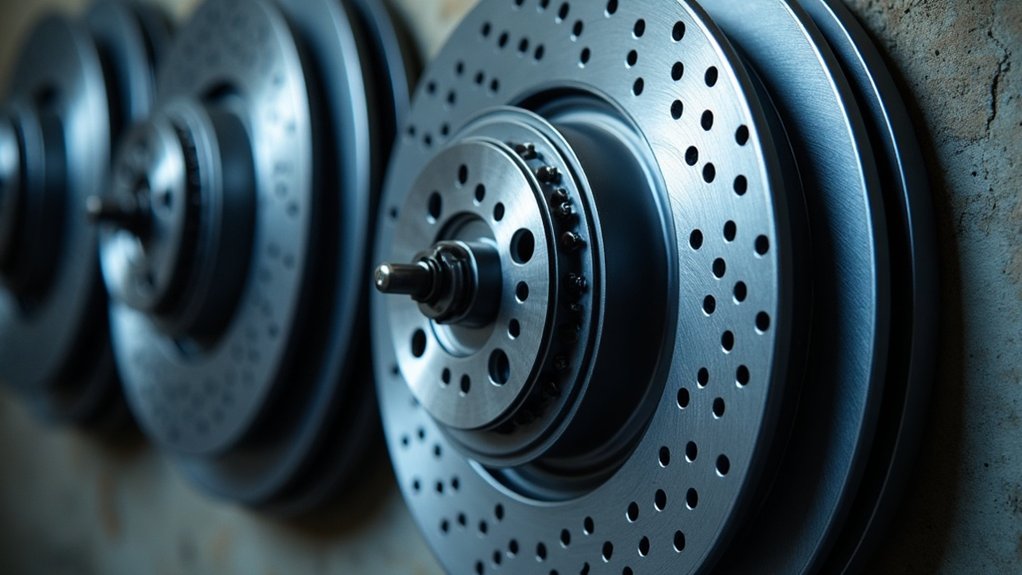
Anticipate corners and obstacles, adjusting your braking distance to maintain control. If your e-bike has hydraulic disc brakes, use them for reliable stopping power, especially on steep descents.
Practice these techniques to enhance safety and become familiar with how your bike responds to brake inputs before tackling challenging hills.
Adjust Your Body Position for Stability
Adjusting your body position is essential for stability while descending on an e-bike. Shift your weight back on the saddle to prevent the front wheel from lifting.
Lower your torso and stand slightly on the pedals to absorb shocks and maintain control. Keep your elbows relaxed and bent for better maneuverability.
As you approach descents, lean forward slightly to lower your center of gravity, which enhances traction on the rear wheel. Maintain a balanced position with your feet flat on the pedals for additional control.
These adjustments will greatly improve your stability and safety during steep descents.
Monitor Your Speed and Terrain Conditions
Monitoring your speed and being aware of terrain conditions are essential for a safe descent on an e-bike. Before you start, assess the surface; loose gravel or wet ground can lead to losing control. Carefully monitor your speed, using both front and rear brakes for a steady descent. Anticipate changes in terrain, adjusting your braking as needed. Remember the bike’s weight affects stopping distance and stability; heavier bikes may need longer braking distances. Using a lower gear can enhance control and responsiveness.
| Terrain Type | Speed Control Tips | Braking Technique |
|---|---|---|
| Loose Gravel | Slow down | Gradual braking |
| Wet Surfaces | Reduce speed | Light braking |
| Steep Inclines | Moderate speed | Even pressure |
| Corners | Slow down | Shift weight |
| Obstacles | Prepare to stop | Controlled braking |
Practice Consistent Braking Techniques
When you’re descending on an e-bike, practicing consistent braking techniques is crucial for maintaining control and safety.
Apply both front and rear brakes evenly to guarantee controlled deceleration and prevent skidding. Use feathering techniques to gradually slow down, which helps maintain good traction.
Anticipate corners and obstacles to adjust your braking distance, allowing for a smoother ride. If your e-bike has hydraulic disc brakes, take advantage of their reliable stopping power and better modulation on steep terrain.
Remember to engage your brakes earlier than on a regular bike to account for your e-bike’s increased weight and speed.