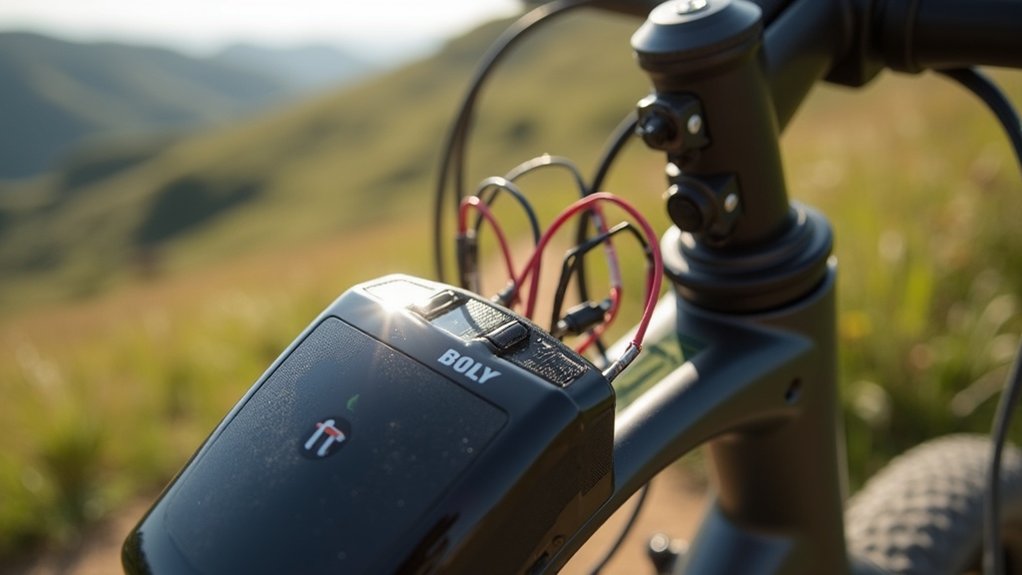
A controller on an e-bike is the crucial component that coordinates your battery, motor, and rider input. It manages power distribution, responds to throttle requests, and guarantees smooth pedaling via pedal-assist features. Equipped with safety protocols, it prevents overcurrent and overheating while monitoring voltage and performance in real-time. Maintenance is straightforward, assuring longevity and reliability. If you want to understand how to install, maintain, and troubleshoot your e-bike controller effectively, there’s much more to explore.
Key Takeaways
- The e-bike controller is the central unit that manages power distribution from the battery to the motor for optimal performance.
- It interprets rider inputs, adjusting motor output for smooth acceleration and efficient power usage.
- The controller uses sensors to monitor speed and torque, ensuring real-time feedback for a responsive riding experience.
- Safety features are integrated, such as overcurrent and thermal protection, to prevent damage during operation.
- Various types of controllers exist, including throttle-based and pedal-assist, catering to different riding preferences and needs.
Understanding the Role of an E-bike Controller
Although you mightn’t realize it, the e-bike controller plays an essential role in your riding experience. Acting as the brain of your e-bike, the controller manages power distribution from the battery to the motor, responding to your throttle input and pedal assist requests.
It utilizes sensors to monitor speed and torque, dynamically adjusting motor assistance for peak e-bike performance. Additionally, controllers include safety features like overcurrent and thermal protection to prevent common issues.
Different types, such as sine wave and square wave controllers, cater to varying riding styles, ensuring you get the most out of your e-bike’s firmware and capabilities.
Key Functions of an E-bike Controller
The key functions of an e-bike controller greatly influence your riding experience. This essential component manages power flow between the motor and battery, ensuring peak performance.
Here are the main functions:
- Interprets input from the rider, adjusting motor output for smooth acceleration.
- Communicates with various sensors and components, providing real-time feedback.
- Monitors battery voltage, ensuring safe operation and preventing damage.
- Manages critical safety features like overcurrent and thermal protection.
Types of E-bike Controllers
When choosing an e-bike controller, understanding the different types available can greatly impact your riding experience.
Common controller types include Brushless DC (BLDC) Controllers, which offer efficient power and utilize Hall Sensor feedback for peak motor performance.
Alternatively, you might opt for Throttle-based Controllers, providing direct control based on throttle input, or Pedal-assist Controllers, which adjust assistance according to your pedaling effort.
Additionally, Standard Battery Style Controllers allow for easy battery installation, while Box Style Controllers maintain a streamlined look.
Buffing Mid-Drive Controllers integrate directly into the motor, simplifying the setup but complicating repairs due to their electronic components.
Installation and Maintenance of E-bike Controllers
Installing and maintaining your e-bike controller is key to ensuring ideal performance and longevity. Follow these steps for effective installation and maintenance:
- Disconnect the battery to the motor for safety before starting.
- Use basic tools like screwdrivers and pliers to install the controller, matching wire colors or labels correctly.
- Regularly check and clean connectors, and look for firmware updates to optimize performance.
- Diagnose performance problems by inspecting voltage with a multimeter and checking for cable damage or loose connections.
Understanding error codes displayed by the controller can also help pinpoint specific issues affecting your e-bike’s performance.
Troubleshooting Common E-bike Controller Issues
Troubleshooting common e-bike controller issues can be straightforward if you know what to look for. If you experience no power or jerky acceleration, start by inspecting voltage at critical points with a multimeter.
Faulty connections can also lead to these common issues. Pay attention to error codes; they provide diagnostic information, so refer to your manufacturer’s manual for insights.
Faulty connections can cause significant issues; always monitor error codes for valuable diagnostic insights.
Overheating can occur from inadequate cooling or incorrect voltage ratings, so make sure of proper ventilation.
Regular maintenance, like cleaning connections and checking the sensors and firmware, can greatly enhance your e-bike controller’s performance and extend battery life.