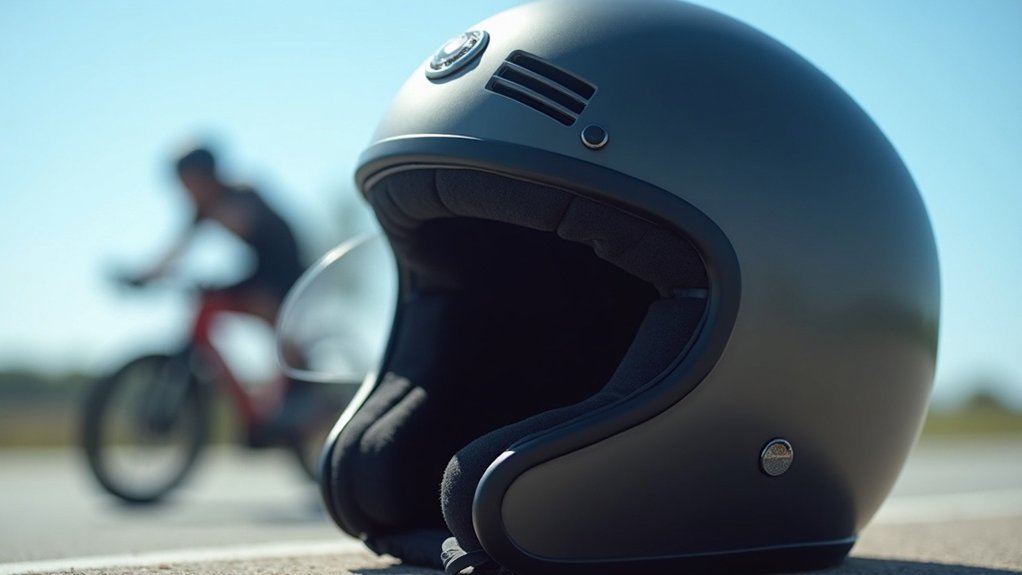
For higher speeds, a streamlined aerodynamic helmet is essential. Look for time trial (TT) helmets that minimize drag, though they may sacrifice ventilation. Make certain it has safety certifications like ECE or Snell for impact protection. A snug fit is critical to reduce shifting and improve stability. Also, consider lightweight materials to enhance comfort on long rides. If you need more insights on specific helmet features and their benefits, there’s more information available.
Key Takeaways
- TT helmets are recommended for higher speeds due to their aerodynamic design that minimizes drag.
- Full-face helmets provide maximum protection while maintaining stability at high speeds, but may sacrifice some ventilation.
- Look for MIPS-equipped helmets to reduce rotational forces and enhance safety during impacts.
- Choose helmets with ECE or Snell certifications to ensure rigorous safety standards are met for high-speed riding.
- A snug fit and quality padding are essential for comfort and performance, preventing helmet shift and reducing drag.
Understanding the Importance of Helmet Aerodynamics
When you’re riding at higher speeds, understanding helmet aerodynamics is essential for optimizing your performance. A streamlined helmet design considerably reduces wind resistance, enhancing your overall speed.
Tempo and time trial (TT) helmets are specifically engineered to minimize drag, often sacrificing ventilation for a smooth surface. The helmet’s shape greatly influences airflow; tapered rear designs create less turbulence than textured surfaces.
Proper positioning on your head can further improve aerodynamics, allowing for efficient airflow and reduced drag. Studies indicate that aerodynamic helmets can shave several seconds off your time over typical distances, underscoring their importance in high-speed cycling.
Types of Helmets for High-Speed Riding
Selecting the right helmet for high-speed riding is crucial for both safety and performance. Full-face helmets offer maximum protection, featuring a chin bar and face shield essential for safety at speeds above 30 mph. Aerodynamic designs, like time trial (TT) helmets, minimize drag but may lack ventilation. Helmets equipped with MIPS technology enhance protection against rotational forces during impacts. For high-speed riding, prioritize helmets with ECE or Snell certifications, ensuring they meet rigorous safety standards. Lightweight materials such as carbon fiber improve comfort and reduce fatigue on long rides.
| Helmet Type | Key Features | Safety Standards |
|---|---|---|
| Full-Face Helmet | Chin bar, face shield | ECE, Snell certifications |
| TT Helmet | Aerodynamic, reduced drag | ECE certifications |
| MIPS-Equipped Helmet | Rotational impact protection | ECE, Snell certifications |
| Lightweight Helmet | Carbon fiber construction | ECE certifications |
Comfort and Fit: Key Factors for Performance
Ensuring a snug fit is vital for high-speed helmets since an improperly fitting helmet can shift during your ride, leading to increased drag and compromised safety.
A snug fit is crucial for high-speed helmets to prevent shifting, reduce drag, and maintain safety during your ride.
Adjustable straps and quality padding greatly enhance comfort and stability, allowing you to ride longer without discomfort.
High-speed helmets often prioritize aerodynamics, which can limit ventilation; therefore, balancing comfort and airflow is essential.
Testing various models helps you discover the best fit for your head shape.
Additionally, lightweight materials like carbon fiber reduce fatigue, making them ideal for high-speed cycling.
Prioritize comfort and fit to optimize your performance on the road.
Safety Standards and Certifications to Consider
High-speed riding demands more than just comfort and fit; safety is paramount. When choosing a helmet, prioritize safety standards like ECE and Snell.
The ECE 22-05 standard is essential for high-speed helmets in Europe, ensuring they meet strict impact resistance criteria. Helmets with Snell certification have undergone extensive testing for high-impact performance, making them ideal for speed enthusiasts.
Look for helmets that comply with these rigorous standards, as they provide better protection through multiple impact scenarios. Additionally, a higher star rating from the STAR testing system can greatly lower the risk of concussions during impacts, enhancing your safety on the road.
User Experiences and Recommendations for Speed Helmets
When riders share their experiences with speed helmets, they often emphasize the critical role of fit and comfort in enhancing performance.
Here are some key recommendations:
- Snug Fit: Choose a helmet that fits tightly without discomfort; this reduces drag and enhances stability at high speeds.
- Ventilation: Look for models that balance aerodynamics with airflow to keep you cool during intense rides.
- Safety Certifications: Opt for ECE or Snell certified helmets for superior impact protection, especially when riding over 30 mph.