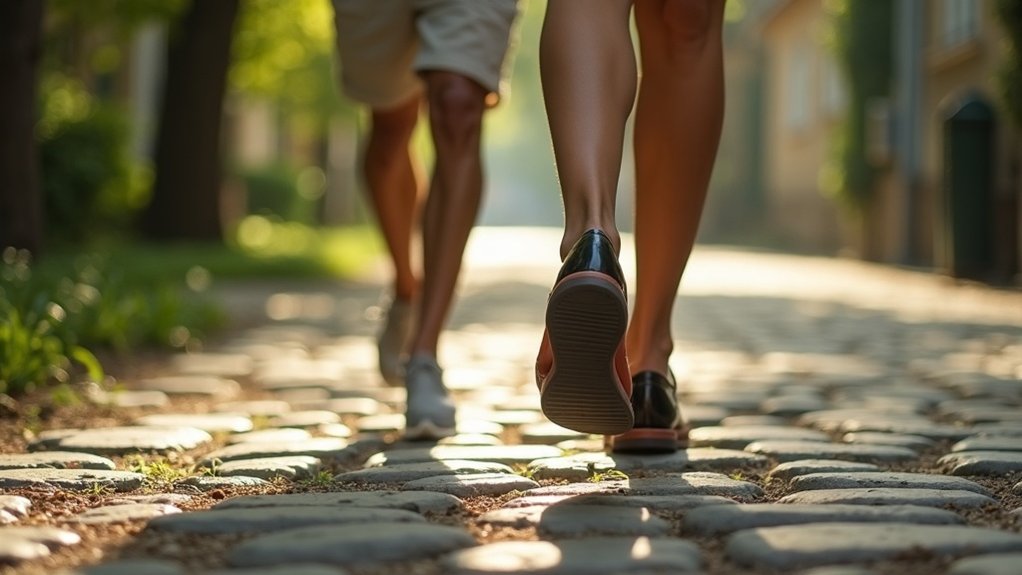
To navigate cobblestones without rattles, wear supportive shoes with good arch support and flexible soles. Keep your grip on the handlebars relaxed to absorb shocks, and shift your weight for better balance. Engage your core muscles to enhance stability and reduce discomfort. Remember to take frequent breaks to relieve tension and assess your path. With these tips, you can enjoy a smoother ride on uneven surfaces, and discover more strategies for comfortable navigation ahead.
Key Takeaways
- Opt for wider tires (25mm to 32mm) and lower tire pressure (as low as 4 bar) to absorb more shock from cobblestones.
- Maintain a relaxed grip on the handlebars and bend your elbows to improve handlebar control and absorb vibrations.
- Shift your weight onto your legs while riding to enhance balance and traction on uneven surfaces.
- Regularly take breaks to relieve tension, hydrate, and reassess your riding strategy for a smoother experience.
- Engage your core muscles to stabilize your body, reducing discomfort from jolts while navigating cobblestone paths.
Understanding the Impact of Cobblestones on Comfort
When you ride over cobblestones, the uneven surface can make your journey uncomfortable due to the increased shock and vibration.
To improve your comfort in a cobblestone section, consider using wider tires, ideally between 25mm to 32mm, as they better absorb impact.
Consider using wider tires, between 25mm to 32mm, for better impact absorption on cobblestones.
Adjusting tire pressure to as low as 4 bar can also enhance shock absorption, reducing rattling.
Additionally, adopting a relaxed riding position with a loose grip on the handlebars maintains control and comfort.
Finally, maintaining a higher speed can smooth out the ride, minimizing the impact of those pesky cobbles.
Embrace these tips for a more enjoyable experience!
Choosing the Right Footwear for Cobblestone Navigation
When traversing cobblestones, choosing the right footwear is essential for your comfort.
Look for supportive sneakers that offer good arch support and cushioning to absorb impact and reduce strain.
A sturdy sole with flexibility can provide the stability you need to tackle uneven surfaces confidently.
Arch Support Importance
As you navigate the charming yet uneven surfaces of cobblestones, proper arch support becomes essential for your comfort and stability.
Choosing footwear with effective arch support helps distribute pressure evenly across your foot, reducing strain on muscles and joints. This can prevent common issues like plantar fasciitis and metatarsalgia, which cobbled surfaces can aggravate.
Opt for shoes with thick, flexible soles to enhance stability and balance. Avoid flats and high heels that lack adequate arch support.
Consider custom orthotics for additional support and improved foot alignment, ensuring a more pleasant walking experience on those picturesque cobblestones.
Cushioning for Comfort
Finding the right cushioning in your footwear is key to traversing cobblestone streets comfortably. Supportive sneakers with excellent arch support and cushioning absorb shock, reducing foot fatigue.
Choose walking shoes with thick, flexible soles for better stability and balance on uneven surfaces, minimizing the risk of ankle sprains. Steer clear of flats and high heels, as they lack the support needed, increasing pressure on your feet.
Consider custom orthotics for additional cushioning and support.
Finally, moisture-wicking socks paired with well-fitting shoes can help prevent blisters, ensuring a more enjoyable experience as you navigate those charming cobbled streets.
Sturdy Sole Recommendations
Having the right cushioning is only part of the equation for traversing cobblestones effectively; the soles of your shoes play a significant role too.
Look for supportive sneakers with thick, flexible soles that provide stability and grip on uneven surfaces. These sturdy sole recommendations will help prevent slips and enhance balance.
Avoid flats and high heels, as they lack essential support and cushioning, increasing discomfort.
To further improve your experience, choose moisture-wicking socks and guarantee your shoes fit properly.
Consider custom orthotics for tailored support, reducing the risk of foot pain while exploring cobblestone streets comfortably.
Techniques for Maintaining Balance on Uneven Surfaces
To stay balanced on uneven surfaces like cobblestones, adjusting your body position is key.
Shift your weight appropriately and guarantee your tires are at the ideal pressure for better traction and control.
These adjustments help you navigate smoothly, making your ride safer and more enjoyable.
Adjust Body Position
Maneuvering cobblestones effectively requires a keen awareness of your body position on the bike. Slide your pelvis back a bit to create a more upright stance, enhancing both visibility and control.
Keep a relaxed grip on the handlebars; this helps absorb shocks and improves maneuverability. Bend your elbows and maintain a loose neck to stabilize the bike over uneven surfaces.
Shift your weight onto your legs instead of your backside to alleviate discomfort and boost balance. Finally, relax your core and limbs to reduce tension, preventing poor line choices and minimizing those annoying rattles while riding.
Choose Optimal Tire Pressure
After adjusting your body position, the next step in conquering cobblestones is fine-tuning your tire pressure.
Experiment with pressures as low as 4 bar to enhance shock absorption and comfort. Wider tires, ranging from 25mm to 32mm, provide better stability and cushioning, reducing rattles.
Adjust your tire pressure according to your weight and riding style; heavier riders often benefit from slightly lower pressures. Always monitor road conditions and make on-the-fly adjustments to optimize performance for specific cobblestone sections.
Balancing tire pressure with tire width guarantees effective grip and control while minimizing vibrations, making your ride smoother.
Engaging Core Muscles for Enhanced Stability
As you navigate cobblestones, engaging your core muscles is essential for maintaining balance and stability. A strong core helps you absorb jolts from uneven surfaces, minimizing discomfort and enhancing your riding efficiency.
By activating these muscles, you improve weight distribution, allowing for smoother shifts in your center of gravity over irregularities. This stability not only helps your back stay aligned but also enables quick reactions to obstacles, enhancing your ability to choose ideal lines.
To strengthen your core, incorporate exercises like planks and bicycle crunches into your routine, ensuring you’re well-prepared for the challenges of cobblestone riding.
The Importance of Taking Breaks
While tackling cobblestone roads, taking breaks is essential for maintaining your performance and comfort. Frequent pauses let you relieve tension in your legs and feet, reducing fatigue. Plus, you can assess your line choices and adjust your strategy based on road conditions. Incorporating breaks for hydration and nutrition keeps your energy up during long rides. Resting at local spots, like benches or cafés, enhances recovery and prevents injuries from the jarring cobblestones. Ultimately, scheduled breaks lead to a more enjoyable ride, allowing you to appreciate the unique challenges and beauty of the cobbled paths.
| Benefit | Action | Result |
|---|---|---|
| Relieves tension | Take a short pause | Reduces fatigue |
| Assess strategy | Evaluate surroundings | Improved performance |
| Hydrate & snack | Fuel up | Maintains energy levels |
| Enjoy the ride | Rest at cafés | Better appreciation |
Custom Orthotics: A Solution for Added Support
Taking breaks is important for your comfort and performance, but for those frequently traversing cobblestone roads, custom orthotics can provide an added layer of support.
Taking breaks enhances comfort, but custom orthotics offer crucial support for those navigating cobblestone roads.
They’re designed to enhance your walking experience by:
- Offering personalized arch support and cushioning
- Distributing weight evenly, reducing fatigue
- Correcting gait abnormalities to minimize injury risk
- Improving overall foot stability for better control
- Boosting comfort and performance during walks or rides
Many podiatrists recommend custom orthotics as essential for traversing uneven surfaces.
Tips for Preventing Common Foot Injuries
Traversing cobblestones can be tough on your feet, but a few simple strategies can help prevent common injuries.
Start by wearing supportive footwear that offers good arch support and cushioning to absorb shock and reduce fatigue. Choose shoes with thick, flexible soles for stability and to avoid pressure points.
Incorporate foot strengthening exercises like toe curls and calf raises into your routine to enhance resilience. Consider custom orthotics for extra support tailored to your foot shape.
Finally, take frequent breaks during long walks to allow your feet to rest from the strain of uneven surfaces. Your feet will thank you!
Additional Strategies for Smooth Navigation
Maneuvering cobblestones isn’t just about protecting your feet; it also involves mastering your bike for a smoother ride.
To navigate these uneven surfaces effectively, you should safely look far ahead to spot better paths. Here are some additional strategies to enhance your experience:
- Choose wider tires (25mm to 32mm) with lower pressure for better shock absorption.
- Maintain a relaxed grip and keep your body loose to absorb vibrations.
- Pick up speed before reaching cobblestones to glide over bumps.
- Bend your elbows and position your body to allow handlebar movement.
- Always focus on the road to minimize sudden jolts.