To waterproof your commuting setup, invest in heavy-duty waterproof bike panniers like the Ortlieb Back-Roller Classic. Pair this with a durable waterproof backpack to keep your electronics safe. Don’t forget fenders to shield you from road spray. Layer your clothing with a breathable waterproof jacket, padded cycling shorts, and waterproof socks to manage moisture effectively. Regularly maintain your gear and check for damage to guarantee protection. There’s more to explore about enhancing your wet-weather riding experience.
Key Takeaways
- Invest in heavy-duty waterproof bike panniers and backpacks with roll-top designs to protect your essentials from water ingress.
- Use fenders on your bike to shield yourself and your gear from road spray and slush during wet rides.
- Layer your clothing with moisture-wicking baselayers, breathable waterproof jackets, and waterproof socks for effective moisture management.
- Store electronics in waterproof sleeves or dry bags to prevent damage from rain while commuting.
- Regularly inspect and maintain your gear to ensure its waterproof effectiveness and longevity.
Essential Waterproof Gear for Commuting
When you’re commuting in unpredictable weather, having the right waterproof gear can make all the difference in keeping your belongings dry and your ride comfortable.
Invest in heavy-duty waterproof bike panniers, like the Ortlieb Back-Roller Classic, featuring a roll-top design that effectively prevents water ingress. Protect your feet with waterproof socks and mid-ankle shoes, and consider rain shoe covers for enhanced style and function.
Don’t forget fenders, such as the Planet Bike Hardcore Fenders, to shield yourself and your bike from rain and slush.
Finally, a waterproof backpack, like the Ortlieb messenger bag, is essential for safeguarding electronics and other essentials.
Choosing the Right Backpack or Messenger Bag
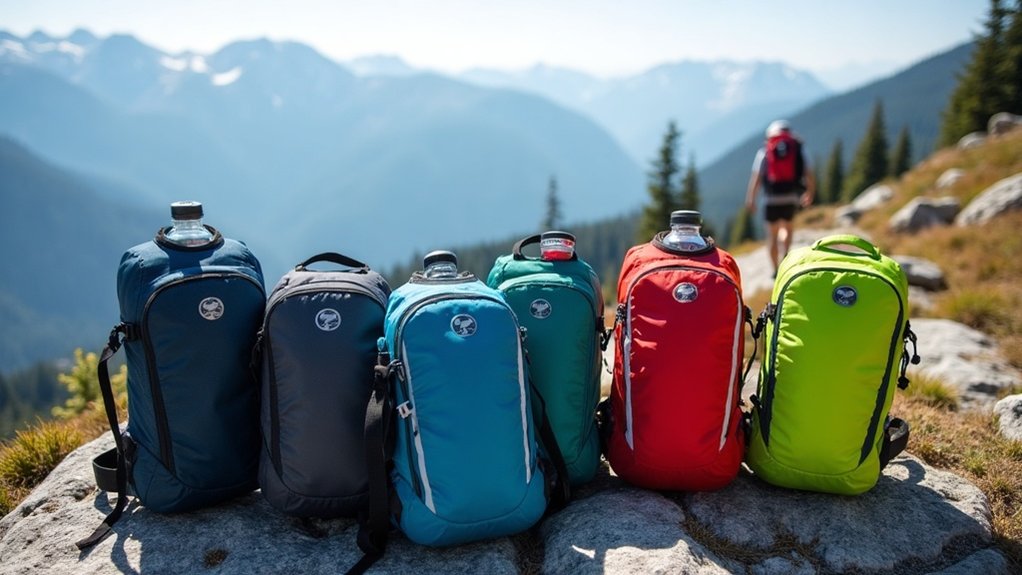
Choosing the right waterproof backpack or messenger bag for your commute is crucial, especially if you want to guarantee your belongings stay dry and protected.
Opt for bags with a roll-top design, like Ortlieb or Seattle Sports, which enhance water resistance and provide easy access. Confirm the bag is made from durable materials with a high hydrostatic head rating to withstand heavy rain.
Look for features like sealed seams, waterproof zippers, and external attachment points. A padded laptop sleeve is essential, and consider size and weight to maintain comfort and minimize bulk during your daily travels.
Protecting Your Electronics and Belongings
To keep your electronics and belongings safe during your daily commute, it’s essential to invest in effective waterproof solutions.
Utilize waterproof panniers like the Ortlieb Back-Roller Classic, featuring roll-top closures that prevent water ingress. For laptops and sensitive devices, consider using dry bags or waterproof sleeves for added moisture protection.
Invest in waterproof panniers like the Ortlieb Back-Roller Classic and consider dry bags for your sensitive devices.
A waterproof messenger bag from Ortlieb or Seattle Sports allows easy access while safeguarding your items. If you’re on a budget, repurpose a FedEx bubble envelope or Tyvek mail pouch as a moisture barrier.
Don’t forget to regularly inspect and maintain your gear to prevent mold and guarantee lasting effectiveness.
Layering Your Clothing for Moisture Management
Effective layering is essential for moisture management during your commute, as it helps regulate your body temperature and wick away sweat.
Start with a high-quality baselayer next to your skin to effectively draw moisture away, preventing uncomfortable dampness. Consider wearing padded cycling shorts under your regular bottoms for added comfort and moisture control.
A breathable waterproof jacket serves as your outer layer, shielding you from rain while allowing sweat to escape. In colder conditions, incorporate arm and leg warmers for extra insulation.
This strategic layering keeps you dry, comfortable, and ready to tackle your commute, regardless of the weather.
Waterproof Footwear Solutions
When it comes to waterproof footwear solutions, you’ve got several effective options to keep your feet dry.
Waterproof socks provide an extra layer of protection, while shoe covers can enhance your regular shoes’ resilience against the rain without sacrificing style.
Additionally, exploring recommended footwear brands that specialize in waterproof materials can make a significant difference in your commuting experience.
Waterproof Socks Options
A variety of waterproof sock options are available to keep your feet dry during wet commutes. Designed with materials like Gore-Tex, these waterproof socks create a barrier against water and mud while allowing breathability, guaranteeing comfort.
Brands like SealSkinz and DexShell are popular among cyclists for their moisture-wicking properties and thermal insulation, ideal for colder conditions. Pairing waterproof socks with mid-ankle hiking shoes can enhance protection against water ingress.
To maintain their effectiveness, wash them with DWR-safe detergent and avoid fabric softeners. This care guarantees that your waterproof socks perform at their best, keeping your feet dry and comfortable.
Shoe Covers Benefits
Waterproof shoe covers serve as an essential solution for cyclists facing wet conditions, ensuring your feet stay dry and comfortable during commutes.
Designed with elastic cuffs and adjustable straps, these covers fit snugly, preventing water ingress while allowing for easy wear. Many utilize breathable materials like Gore-tex, regulating temperature and moisture inside.
By protecting your cycling shoes from rain, mud, and grime, waterproof shoe covers prolong their lifespan, reducing wear and tear.
Additionally, they enhance overall cycling comfort, keeping your feet warm and dry, which minimizes distractions and boosts performance on your daily rides.
Recommended Footwear Brands
Finding the right footwear is key for cyclists who face unpredictable weather. Brands like Gore-Tex offer advanced waterproof footwear with moisture-wicking technology to keep your feet dry, even in heavy rain.
Columbia and Merrell provide budget-friendly options with effective waterproof membranes that breathe. If you’re looking for specialized cycling shoes, Shimano and Pearl Izumi deliver waterproof designs compatible with clipless pedals for peak performance.
For colder, rainy days, Sorel and Timberland combine style with functionality in their waterproof boots. Additionally, waterproof socks from SealSkinz can be paired with any footwear, adding extra moisture protection for your commute.
Maintaining Your Rain Gear
To keep your rain gear performing at its best, you’ll need to focus on reactivating the DWR coating and using the right washing methods.
Regularly washing with DWR-safe detergent and properly storing your gear can greatly extend its lifespan.
Don’t forget to check for any wear and tear that could compromise waterproofing, and address any issues immediately.
DWR Coating Reapplication Techniques
As your rain gear endures regular use, the Durable Water Repellent (DWR) coating can diminish, particularly from friction against backpack straps. To maintain your gear’s water resistance, reapplication techniques are essential. You can reactivate existing DWR by washing your gear with a DWR-safe detergent and tumble drying on low heat. Alternatively, consider these methods:
| Method | Pros | Cons |
|---|---|---|
| Spray-on | Targeted application | May require multiple coats |
| Wash-in | Easy, uniform coverage | Can affect fabric breathability |
Perform routine maintenance at least once a season to prolong your rain gear’s effectiveness.
Proper Washing Methods
When you wash your rain gear, using the right methods is essential for maintaining its waterproof capabilities.
Opt for a DWR-safe detergent to preserve the Durable Water Repellent coating. After washing, tumble dry on low heat to reactivate this coating, ensuring it remains effective.
Avoid fabric softeners and bleach, as these can damage the waterproof membrane. Regularly apply spray-on or wash-in DWR coatings, but be cautious with wash-in products, as they may impact breathability.
Always check care labels for specific washing instructions, since different materials may require unique washing methods to maintain ideal waterproofing capabilities.
Gear Storage Recommendations
Effective gear storage is essential for maintaining the waterproof integrity of your rain gear. For ideal protection, invest in waterproof bike panniers like the Ortlieb Back-Roller Classic, which feature a roll-top design to prevent water ingress.
Store electronics in waterproof bags or dry bags, such as FedEx bubble envelopes, for added moisture protection. For smaller items, consider using 2-gallon Ziploc bags as effective waterproof storage solutions.
Don’t overlook fenders on your bike to minimize rain exposure. Regular maintenance, including washing with DWR-safe detergent, complements these gear storage recommendations, ensuring your gear remains functional and dry during commutes.
Tips for Riding in Wet Conditions
Riding in wet conditions can be challenging, but with the right gear and preparation, you can stay dry and safe.
Invest in a high-quality cycling jacket that offers waterproof protection. Use fenders to block road spray, keeping your clothes dry.
A quality waterproof cycling jacket and fenders are essential for staying dry during wet rides.
Waterproof gloves and shoe covers are essential; consider waterproof hiking shoes or Gore-tex footwear for extra protection.
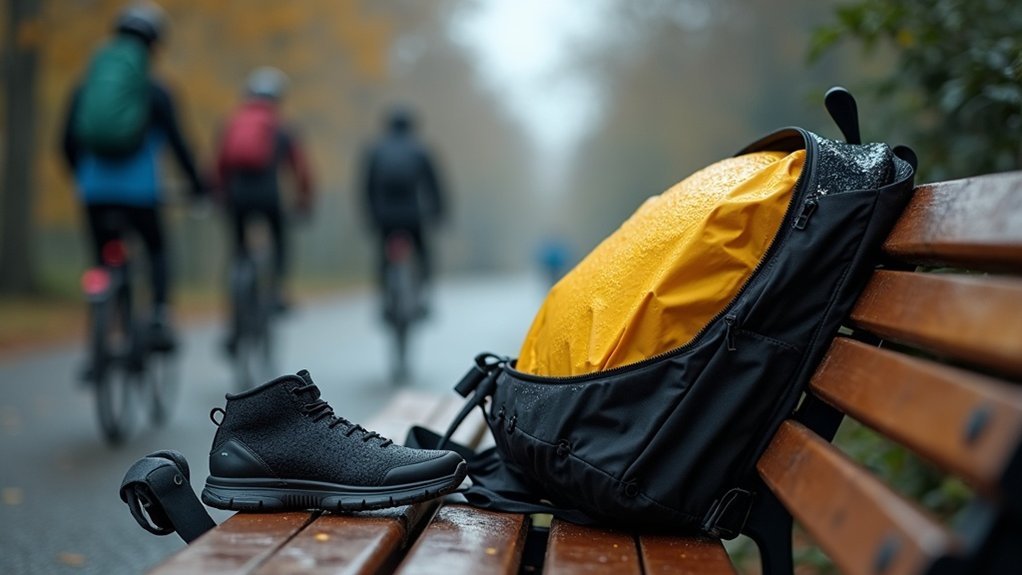
Protect your belongings with a rain cover for your backpack or waterproof dry bags for electronics.
Finally, after wet rides, clean and maintain your bike to prevent rust and guarantee longevity.
These tips will help you tackle the rain confidently.
Community Resources and Support
While maneuvering through the challenges of waterproofing your commuting setup, tapping into community resources can make a significant difference.
Engage with community forums and cycling groups to exchange tips and experiences; fellow cyclists can provide valuable insights.
Don’t overlook local bike shops, where you can find workshops and expert advice on selecting waterproof gear tailored to your needs.
Explore online resources like cycling blogs and YouTube channels for product reviews and DIY solutions.
Additionally, cycling advocacy organizations share information on safe routes and weather considerations, ensuring you stay informed about conditions that may impact your waterproofing strategy.