When transporting e-bike batteries in elevators, first check your building’s regulations, as many prohibit it due to safety concerns. Always detach the battery before use to reduce risks. Inspect it for damage, and use a protective case during transport. Keep the battery’s charge between 30-70% to minimize fire hazards. If your building has restrictions, consider alternatives like stairs or designated storage areas. For additional insights on safe transport, explore more about best practices and regulations.
Key Takeaways
- Check building management policies before using elevators for e-bikes and batteries to ensure compliance with regulations.
- Detach the battery from the e-bike to reduce the risk of overheating and ensure safer handling during transport.
- Conduct a visual inspection of the battery for any damage, such as dents or cracks, before entering the elevator.
- Use a protective case or bag to securely handle the battery while using the elevator, minimizing the risk of accidents.
- Maintain the battery charge between 30-70% to lower fire hazards when transporting in enclosed elevator spaces.
Can I Bring an E-Bike Battery Into an Elevator?
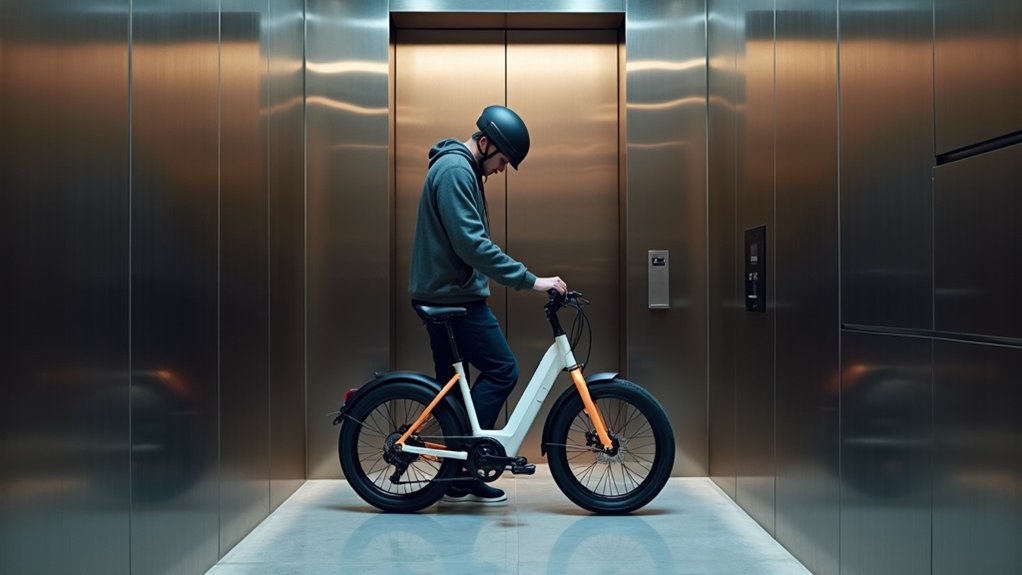
When considering whether you can bring an e-bike battery into an elevator, it’s crucial to understand the specific regulations that may apply. Many buildings and public transport systems enforce rules regarding electric bike battery transport due to fire safety concerns.
Since most modern e-bike batteries are removable, it’s safer to transport them separately. Always conduct visual inspections for any damage before entering the elevator, and confirm the building’s rules, as some may prohibit battery transport altogether.
Using a protective case or bag can help guarantee secure handling and reduce the risk of accidents in enclosed spaces.
Is It Safe to Carry E-Bike Batteries in Elevators?
Carrying e-bike batteries in elevators can be safe if you follow certain guidelines.
Always check your building’s regulations, as policies may vary and are often based on fire safety concerns.
Additionally, verify your battery is undamaged, properly secured, and charged between 30-70% to minimize risks during transport.
Building Regulations and Policies
Many buildings impose strict regulations regarding the transport of e-bike batteries in elevators due to significant fire safety concerns. It’s essential to check with your building management before attempting to transport them. For instance, China’s Chongqing Elevator Safety Management Measures explicitly prohibit carrying electric bicycles and their batteries in elevators. To comply with building regulations, consider detaching the battery and using a protective case. If elevator use is restricted, explore alternative solutions such as stairs or designated storage areas.
| Regulation Type | Example | Fire Safety Concern |
|---|---|---|
| Prohibition of Transport | Chongqing Measures | Prevents battery fires |
| Parking Restrictions | Public Areas | Reduces fire hazards |
| Battery Detachment | Before Elevator Use | Enhances safety during transport |
Battery Safety Best Practices
Ensuring the safe transport of e-bike batteries in elevators hinges on understanding and adhering to best practices.
First, check your building’s policies; some may prohibit battery transport due to fire risks.
Always detach the battery, as it’s easy to remove, to reduce overheating and damage risks.
Use a protective case or bag for secure transport, which helps prevent accidents.
Before entering the elevator, inspect the battery for any signs of damage and avoid using it if issues are found.
Finally, carry batteries at a charge level of 30-70% to minimize fire hazards in enclosed spaces like elevators.
Potential Safety Concerns & How to Avoid Them
When using elevators with e-bike batteries, you need to prioritize safety by detaching the battery before entry.
Inspect it for any damage and consider using a protective case to prevent accidents.
Additionally, familiarize yourself with building regulations regarding e-bike transport to avoid potential hazards.
Battery Damage Prevention
To prevent potential hazards while transporting your e-bike battery in an elevator, it’s essential to conduct a thorough inspection before use.
Implementing effective battery damage prevention strategies will guarantee safety.
Consider these points:
- Inspect the battery for dents or cracks.
- Detach the battery and place it in a protective case or bag.
- Maintain a charge level between 30-70% to reduce fire risks.
- Use less crowded elevators to allow ample handling space.
Elevator Regulations Awareness
Understanding elevator regulations is crucial for safely transporting your e-bike and its battery. Many buildings prohibit e-bikes in elevators due to fire safety concerns. Regulations, like the Chongqing Elevator Safety Management Measures, explicitly ban them.
| Potential Risks | How to Avoid Them |
|---|---|
| Transporting e-bikes | Check building policies first |
| Heavy battery weight | Use protective cases |
| Damaged batteries | Inspect regularly |
| Elevator restrictions | Use stairs or find storage areas |
Elevator regulations awareness helps you navigate safety effectively. Always prioritize safety to prevent accidents in enclosed spaces.
Best Practices for Taking an E-Bike Battery in an Elevator
Taking an e-bike battery into an elevator requires careful attention to safety and proper handling. Here are some best practices to guarantee safe transport:
- Always detach the battery from your electric bicycle before entering the elevator to minimize weight and potential damage.
- Use a protective case or bag to securely transport the battery, preventing accidental drops or impacts.
- Inspect the battery for any damage like dents or swelling; don’t take it into the elevator if it’s damaged.
- Carry the battery at a charge level of 30-70% to reduce the risk of overheating and fire hazards during transport.
What If Your Building Doesn’t Allow E-Bike Batteries in Elevators?
What should you do if your building doesn’t allow e-bike batteries in elevators? Start by considering the stairs if your battery is lightweight. You can also check with management about designated storage areas for e-bikes and batteries. If possible, inquire about charging options in common areas. Additionally, a folding e-bike could be a practical choice, making transport easier under your building’s restrictions. Always familiarize yourself with local regulations regarding battery transport to guarantee safety and compliance.
| Option | Pros | Cons |
|---|---|---|
| Use Stairs | Keeps you fit | May be inconvenient |
| Designated Storage Areas | Safe storage | Limited access |
| Common Area Charging | Convenient | Potentially crowded |
| Folding E-Bike | Easy to carry | Might have less power |
Alternatives to Using Elevators for E-Bike Batteries
Even when elevator access for e-bike batteries is restricted, there are several effective alternatives to evaluate.
Consider the following options:
- Use the stairs if the battery’s lightweight and manageable.
- Check for designated storage areas in your building for e-bikes and batteries, eliminating elevator use entirely.
- Inquire about charging e-bike batteries in common areas, which may also bypass enclosed spaces.
- Opt for a folding e-bike, making it easier to carry or maneuver in tight spaces, thereby avoiding elevator restrictions.
Always confirm your building’s policies on battery transport to verify compliance and safety.
Key Takeaways for Safe E-Bike Battery Transport
When transporting e-bike batteries, it’s crucial to follow specific safety measures to mitigate risks.
Always detach the battery, especially if it’s a dual battery system, to promote safer handling in elevators. Use a protective case or bag during transit to prevent accidents in crowded areas.
Before transport, inspect the battery for damage, such as dents or swelling, and replace it if needed to avoid fire hazards. Keep the charge level between 30-70% to minimize fire risks in enclosed spaces.
Finally, confirm building policies regarding battery transport, as some locations may have strict regulations or prohibitions.