
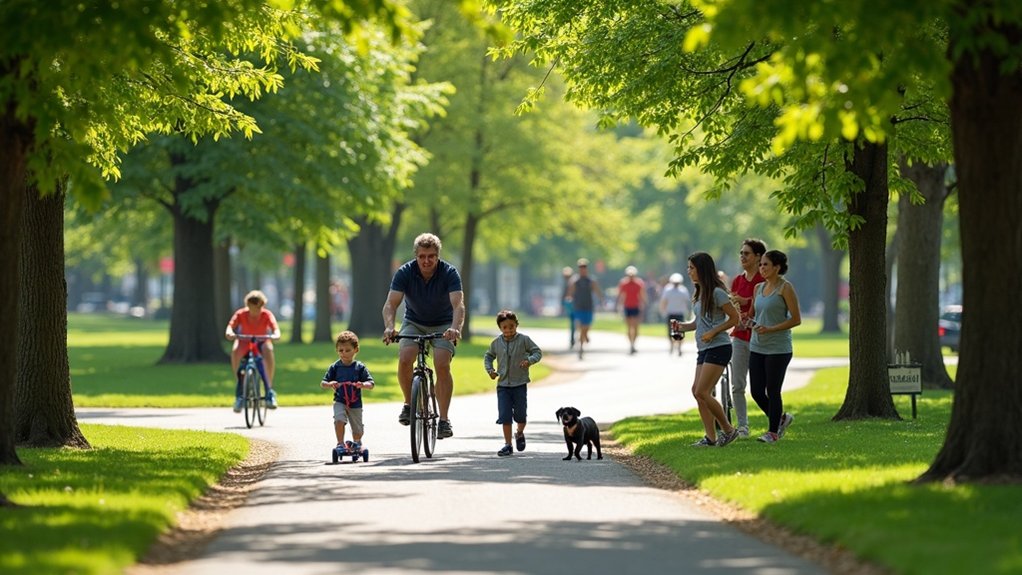
To understand liability rules for shared paths, you need to recognize the responsibilities of all users, property owners, and local governments. Pedestrians and cyclists must exercise reasonable care, while property owners guarantee surfaces are safe and signage is clear. Local governments are responsible for maintaining paths and addressing hazards. When accidents occur, fault is evaluated based on everyone’s behavior and established safety measures. Exploring these nuances reveals critical insights into the legal implications surrounding shared paths.
Key Takeaways
- Understand that pedestrians have the right-of-way but must also exercise caution when using shared paths.
- Cyclists must maintain safe speeds and remain vigilant to avoid accidents with pedestrians.
- Property owners are required to keep paths safe, even, and well-lit to prevent hazards.
- Local governments are responsible for regular maintenance and signage to ensure user safety.
- Liability in accidents is determined by evaluating the actions of all parties involved and the presence of adequate signage.
Responsibilities of Path Users
When traversing shared paths, it’s crucial to understand that both cyclists and pedestrians have specific responsibilities designed to promote safety and reduce accidents.
Pedestrians typically hold the right-of-way, but they must exercise caution, avoiding sudden movements that could lead to collisions.
Cyclists should maintain a safe speed and remain vigilant, especially in crowded areas.
Clear signage is important for delineating lanes and right-of-way rules, helping to prevent misunderstandings.
Ultimately, both groups share the responsibility of exercising reasonable care, ensuring safety, and minimizing liability risks in accordance with traffic laws.
Understanding these responsibilities enhances the experience for everyone.
Property Owner Obligations
Property owners must recognize their crucial role in ensuring the safety of shared paths, as their obligations directly impact the experience of all users.
They’ve legal obligations to maintain safety conditions, which includes ensuring surfaces are even and free of debris. Installing clear signage to designate lanes for pedestrians and cyclists is essential in reducing confusion.
Adequate lighting is necessary to enhance visibility during low-light conditions. Property owners must promptly address hazardous conditions like potholes and overgrown vegetation to fulfill their duty of care.
Regular inspections are essential for identifying potential safety hazards, thereby minimizing liability risks effectively.
Local Government Accountability
While ensuring the safety of shared paths is a collective responsibility, local governments play a pivotal role in maintaining these spaces. They’re accountable for proper maintenance and adherence to safety regulations. Failure to address hazards like potholes can lead to liability for negligence if accidents occur. Additionally, inadequate signage or lack of user education can also contribute to injuries, further implicating local authorities. Understanding these responsibilities helps you appreciate the importance of effective design and maintenance.
| Responsibility | Impact on User Safety |
|---|---|
| Maintenance | Prevents accidents |
| Safety Regulations | Minimizes risks |
| Signage | Informs users |
| User Education | Promotes safe behavior |
| Design | Enhances path usability |
Determining Fault in Pathway Accidents
Determining fault in pathway accidents hinges on evaluating the behavior of both cyclists and pedestrians, particularly in relation to established path rules and right-of-way laws.
In shared-use paths, you must exercise reasonable care; failing to do so can lead to shared liability when an accident occurs. Courts gauge fault among involved parties, which may include cyclists, pedestrians, and property owners responsible for maintenance.
Signage and markings notably influence user behavior expectations, impacting liability determinations. Gathering evidence, such as witness testimonies and surveillance footage, is essential for accurately evaluating fault and responsibility in these incidents, ensuring fair outcomes for all parties involved.
Legal Options for Victims
What legal options do victims of accidents on shared paths have? You can pursue personal injury claims against negligent parties, including other users or local governments.
It’s crucial to understand liability, as establishing negligence often involves evidence gathering. A bicycle accident lawyer can provide legal representation, helping you navigate complexities with insurance companies and state laws related to shared path usage.
They can advocate for fair compensation for medical expenses, lost wages, and pain and suffering. Prioritizing safety measures on shared paths can also reinforce your case, demonstrating responsibility on your part in the incident.