To track per mile maintenance costs without focusing on price, concentrate on key metrics like service interventions, maintenance frequency, and vehicle mileage. Utilize telematics for real-time insights into vehicle performance and maintenance needs. Establish a data-driven maintenance schedule based on usage patterns and history. Regularly analyze trends to identify common issues and adjust strategies accordingly. This proactive approach not only enhances operational efficiency but also minimizes unexpected repairs, leading to a more effective maintenance strategy. There’s more to explore on this topic.
Key Takeaways
- Monitor service interventions per 1,000 miles to identify reliability trends and maintenance needs without emphasizing costs.
- Analyze vehicle performance metrics, such as fuel consumption and engine hours, to correlate maintenance activities with mileage.
- Utilize telematics for real-time monitoring, allowing for timely maintenance interventions based on vehicle health rather than just expenses.
- Track maintenance frequency and specific tasks to ensure vehicles are serviced according to usage patterns, enhancing performance and reliability.
- Implement a data-driven maintenance schedule that adjusts based on historical performance, ensuring efficient resource allocation without focusing on pricing.
Understanding the Importance of Tracking Maintenance Costs
While you may not think about maintenance costs often, tracking these expenses per mile is essential for effective fleet management. By monitoring maintenance costs, you can identify trends in vehicle performance and implement proactive interventions, preventing costly breakdowns.
This approach aids in understanding maintenance expenses relative to mileage, allowing for informed decisions regarding fleet replacements. Regular maintenance schedules enhance vehicle performance, minimizing unexpected repair costs and improving overall fleet efficiency.
Additionally, analyzing these costs supports accurate budgeting and resource allocation, ensuring you anticipate future expenses and manage cash flow effectively.
Prioritize tracking maintenance costs to optimize your fleet’s longevity and reliability.
Key Metrics to Monitor for Effective Maintenance Tracking
To optimize your maintenance tracking, you should focus on key metrics that reveal insights into maintenance frequency and cost-effectiveness.
By monitoring service interventions per 1,000 miles, you can spot trends in vehicle reliability, while analyzing maintenance costs as a percentage of total operating expenses helps assess the efficiency of your strategy.
These metrics not only guide your decision-making but also enhance operational performance across your fleet.
Maintenance Frequency Insights
Effective maintenance tracking hinges on monitoring key metrics that inform your proactive maintenance strategy. By keeping an eye on maintenance frequency and tasks like oil changes and tire rotations, you can create a schedule that reduces unexpected repairs.
Track vehicle mileage to align maintenance intervals with actual usage patterns, ensuring timely servicing. Utilize fleet management software to access maintenance history and upcoming needs, ensuring compliance with schedules.
Analyzing average times between maintenance events helps optimize maintenance frequencies tailored to operational demands. Finally, a maintenance dashboard showcasing key metrics offers insights into efficiency and improvement opportunities, enhancing your overall strategy.
Cost-Effectiveness Analysis
Understanding the cost-effectiveness of your maintenance strategy requires a keen focus on key performance indicators (KPIs) that go beyond mere expense tracking.
To effectively monitor maintenance costs, consider these metrics:
- Average maintenance cost per mile
- Repair frequency and types of services performed
- Vehicle efficiency and operational performance
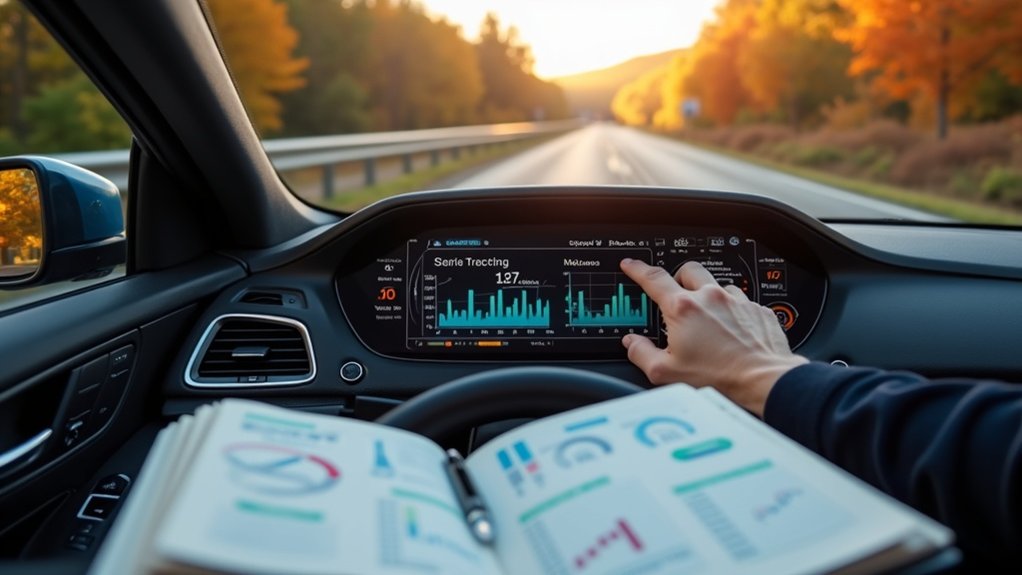
Utilizing telematics systems helps you gather valuable performance metrics, enabling proactive maintenance schedules that reduce breakdowns.
Utilizing Telematics for Real-Time Vehicle Performance Data
By utilizing telematics, you can monitor your fleet’s performance in real time, allowing for immediate insights into critical metrics like fuel consumption and engine hours.
This data empowers you to make informed, data-driven maintenance decisions, ensuring that you address potential issues before they escalate.
Ultimately, leveraging these tools optimizes your maintenance strategy, reduces unexpected repairs, and enhances your overall fleet efficiency.
Real-Time Performance Monitoring
As fleet managers increasingly rely on data-driven strategies, real-time performance monitoring through telematics has become essential for optimizing vehicle maintenance.
Leveraging telematics technology, you can:
- Access real-time data on vehicle performance metrics, like engine health and fuel efficiency.
- Monitor maintenance schedules and receive alerts for necessary service, ensuring timely interventions.
- Analyze vehicle mileage alongside maintenance activities to accurately assess per mile maintenance costs.
This proactive approach not only enhances operational efficiency but also helps you identify areas to reduce expenses and extend vehicle lifespan, ultimately improving your fleet management costs.
Data-Driven Maintenance Decisions
While leveraging telematics for real-time vehicle performance data, you can make informed maintenance decisions that greatly enhance fleet efficiency.
Utilizing telemetrics enables you to monitor vehicle diagnostics and identify maintenance needs proactively. This data-driven approach allows for effective cost analysis, reducing operating costs by 15-20% through targeted interventions.
Establishing a Maintenance Schedule Based on Data Analysis
Establishing a maintenance schedule grounded in data analysis can markedly enhance fleet efficiency and reduce unexpected breakdowns.
To optimize your service approach, consider these key strategies:
- Analyze maintenance history and vehicle performance to identify service intervals.
- Utilize fleet management software for tracking mileage and scheduling preventative maintenance tasks.
- Implement telematics solutions to monitor vehicle health and detect issues early.
Identifying Common Maintenance Issues and Trends
Identifying common maintenance issues and trends is essential for optimizing fleet performance and reducing costs. Regular vehicle inspections and maintenance records allow you to track repairs per mile traveled.
By utilizing telematics data, you can gain insights into maintenance trends, such as engine performance, to anticipate problems before they escalate. Monitoring vehicle wear and tear over time helps forecast future needs based on mileage.
Analyzing the average cost of maintenance per vehicle type highlights discrepancies, guiding proactive measures. Implementing a standardized reporting system facilitates identifying common problems across the fleet, enabling fleet managers to make strategic decisions effectively.
Planning for Future Maintenance Needs With Predictive Analytics
As you aim to enhance fleet efficiency, leveraging predictive analytics for future maintenance planning is essential.
Enhancing fleet efficiency requires the strategic use of predictive analytics for proactive maintenance planning.
Consider these key benefits:
- Reduced Unexpected Breakdowns: Predictive maintenance forecasts vehicle needs, minimizing sudden failures.
- Optimized Maintenance Schedules: Analyzing usage patterns helps establish the best times for maintenance, enhancing vehicle performance.
- Effective Resource Allocation: Real-time monitoring allows fleet managers to direct resources toward timely interventions, lowering maintenance costs by 10-30%.
Enhancing Operational Efficiency Through Proactive Maintenance
Proactive maintenance not only guarantees that your fleet operates smoothly but also greatly boosts operational efficiency.
By implementing standardized procedures and utilizing fleet management software, you can track maintenance activities in real time, reducing downtime considerably.
Analyzing vehicle performance data reveals patterns that help prevent unexpected repair costs, enhancing reliability.
Investing in telematics technology allows insights into driving behavior, informing decisions that further optimize maintenance schedules.
Over time, these strategies can lead to a 30% reduction in unexpected repair costs and a 25% decrease in average maintenance time, ultimately fostering a more efficient, cost-effective fleet operation.
Evaluating the Impact of Maintenance Costs on Overall Fleet Performance
Effective maintenance tracking directly influences overall fleet performance, shaping the way you manage costs and reliability.
Consider these key factors:
- Regular maintenance can extend vehicle lifespan by up to 30%, considerably lowering maintenance costs.
- A proactive maintenance strategy reduces unexpected breakdowns by 25%, enhancing operational efficiency.
- Analyzing driver behavior through telematics can minimize wear and tear, impacting maintenance costs by up to 15%.