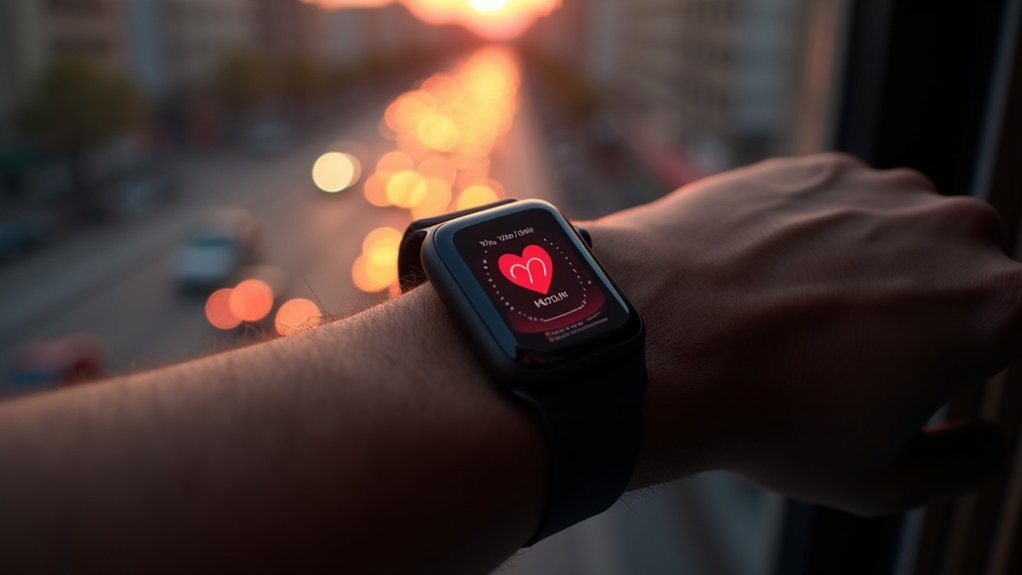
To track your heart rate during commutes, invest in a quality heart rate monitor, like a chest strap for accurate readings. Choose Bluetooth models for easy data access and guarantee a comfortable fit. Use apps like Strava or Wahoo Fitness to analyze your heart rate zones and adjust your intensity accordingly. Keeping an eye on your heart rate helps you stay within your ideal training range, maximizing your fitness while commuting. There’s more to explore about enhancing your training efficiency.
Key Takeaways
- Use a reliable heart rate monitor, such as a chest strap, for accurate tracking during your commute.
- Download compatible apps like Strava or Wahoo Fitness to sync and analyze your heart rate data.
- Monitor your heart rate zones to ensure you maintain ideal effort levels throughout your commute.
- Regularly check your heart rate to prevent overexertion and adjust your pace accordingly.
- Set specific heart rate goals for your commute to enhance fitness and track progress effectively.
Importance of Heart Rate Monitoring During Commutes
Monitoring your heart rate during commutes isn’t just a nice addition to your ride; it’s essential for enhancing your effort and improving your fitness. By tracking your heart rate, you can maintain ideal effort levels, avoiding overexertion while maximizing the health benefits of each ride.
Many cyclists experience average heart rates of 130-170 bpm, which might surprise you. This data helps manage training intensity, ensuring you stay within the aerobic zone.
Additionally, heart rate monitoring provides insights into your cardiovascular fitness, allowing you to tailor your commuting pace and adapt routes for improved overall performance and progress.
Choosing the Right Heart Rate Monitor for Cycling
How do you choose the right heart rate monitor for cycling? Start by considering a chest strap like the Polar H10, known for its electrode accuracy, perfect for tracking varying intensities during commutes.
Look for Bluetooth connections to sync with smartphones and cycling computers for seamless data access. Battery life matters too; models like the Polar H9 offer up to 400 hours, minimizing charging interruptions.
Comfort is key, so opt for monitors with adjustable straps for a secure fit. Additionally, features like heart rate variability tracking and waterproof ratings enhance reliability in different weather conditions, ensuring a better cycling experience.
Benefits of Using a Chest Strap Heart Rate Monitor
When you’re tracking your heart rate during commutes, a chest strap monitor offers superior accuracy that’s hard to beat.
With their snug fit and comfortable design, you’ll hardly notice you’re wearing one, allowing you to focus on the ride.
Plus, the real-time data helps you stay in tune with your body, enhancing your overall cycling experience.
Superior Accuracy Measurement
Although many heart rate monitors are available, chest strap models stand out for their superior accuracy, making them the go-to choice for serious cyclists during commutes.
The Polar H10 and similar chest strap heart rate monitors utilize electrodes to guarantee accurate heart rate recording. Unlike fitness trackers that rely on wrist sensors, chest straps provide real-time data less affected by external factors.
This accuracy helps you monitor heart rate effectively, optimizing your training and preventing overexertion. Plus, with impressive battery life and the ability to sync with multiple devices, you can easily keep track of your performance during daily rides.
Enhanced Comfort and Fit
While accuracy is key for monitoring your heart rate during commutes, comfort and fit are just as important. A chest strap, like the Polar H10, offers an adjustable fit that keeps it securely in place, ensuring enhanced comfort for extended wear.
Unlike wrist-based monitors, chest straps minimize movement-related inaccuracies, providing you with reliable data for your training. Plus, many models come with impressive waterproof ratings, allowing you to track your accurate heart rate in various weather conditions.
Investing in a chest strap can make all the difference in your overall experience while commuting and training effectively.
Recommended Apps for Heart Rate Tracking
When it comes to tracking your heart rate during commutes, choosing the right app is essential.
Popular options like Wahoo Fitness and Strava not only sync seamlessly with your devices but also offer features that enhance your monitoring experience.
With customizable zones and real-time alerts, you’ll have everything you need to optimize your workout intensity on the go.
Best Apps Overview
Tracking your heart rate during commutes can greatly enhance your fitness journey, and choosing the right app makes all the difference.
The Wahoo Fitness app is perfect for its user-friendly interface and compatibility with various heart rate monitors.
Strava shines with robust tracking features, GPS integration, and performance comparisons.
Garmin Connect offers detailed analytics and helps you monitor heart rate zones effectively.
If you own a Polar heart rate monitor, Polar Flow provides in-depth tracking and tailored summaries.
For indoor cycling, the Kinetic app gives real-time feedback on effort levels, ensuring you stay informed throughout your ride.
Compatibility With Devices
Choosing the right app for heart rate tracking can greatly impact your commuting experience, especially when it comes to compatibility with your devices.
Here are some popular options that work well with various heart rate monitors:
- Wahoo Fitness: Pairs seamlessly for real-time data.
- Strava: Syncs with heart rate monitors, tracking speed and distance.
- Polar Flow: Designed for Polar heart rate monitors, offering deep insights.
- Apple Health: Aggregates data from compatible devices like the Apple Watch.
Most heart rate monitors, such as the Polar H10 and compatible Garmin models, support Bluetooth and ANT+ connectivity, ensuring effective tracking with your favorite fitness apps.
Understanding Heart Rate Zones for Effective Training
Understanding heart rate zones is essential for anyone looking to maximize their training efficiency, especially during commutes. By using an HR monitor, you can measure heart rate and identify where you fall within these zones.
Zone 1 focuses on recovery, while Zone 2 is perfect for fat burning during longer rides. As you push into Zone 3, you’ll enhance your aerobic capacity, and Zone 4—known as the “Pain Cave”—will help improve endurance.
Staying aware of your resting heart rate and tracking your training time allows you to manage intensity effectively, ensuring you stay within the right heart rate zones to improve your fitness.
Practical Tips for Monitoring Heart Rate on Commutes
Monitoring your heart rate during commutes can elevate your fitness game considerably.
Elevate your fitness journey by monitoring your heart rate during commutes for enhanced performance and results.
Here are some practical tips to help you track your heart rate effectively:
- Use a reliable heart rate monitor like the Polar H10 for high accuracy.
- Sync with apps like Wahoo Fitness or Strava for real-time data.
- Maintain your heart rate in Zone 2 (65-75% of max) for ideal fat burning.
- Regularly check your heart rate post-commute to monitor your resting heart rate.
Essential Equipment for Heart Rate Monitoring
When it comes to tracking your heart rate during commutes, having the right equipment can make all the difference. A reliable heart rate monitor, like the Polar H10, offers exceptional accuracy and a battery life of up to 400 hours.
While smartwatches and fitness trackers are options, they often lack the precision of dedicated monitors, especially in different weather conditions.
Pair your device with a smartphone that has Bluetooth to access apps like Wahoo Fitness or Strava for real-time heart rate data.
Don’t forget a waterproof case or a cycling computer to keep your setup safe and accessible during your ride.
Analyzing Your Heart Rate Data for Fitness Progress
As you immerse yourself in analyzing your heart rate data, you’ll uncover valuable insights that can greatly enhance your fitness journey.
By tracking your heart rate during commutes, you can:
- Tailor intensity to meet your fitness goals
- Identify ideal heart rate zones for fat burning and aerobic improvement
- Monitor HRV to gauge recovery status
- Recognize how external factors like route difficulty affect performance
Consistent analysis reveals your progress over time. A decreasing resting heart rate indicates improved cardiovascular health, while thoughtful adjustments to your commuting can guarantee you’re on the right track toward achieving your fitness aspirations.