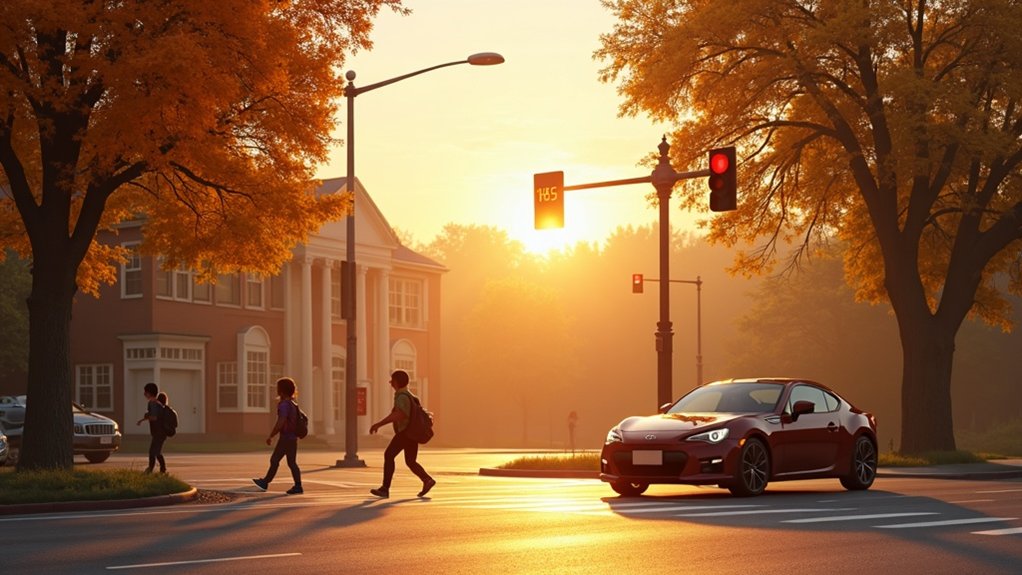
To time your departures and avoid school zones, aim to leave 10-15 minutes earlier during the first weeks of school. Schedule your trips before 7:00 AM or after 9:00 AM to dodge peak congestion. Additionally, try waiting at least 15 minutes after school ends for afternoon pickups. Use live navigation tools for real-time updates and explore alternative routes that bypass schools. With these tips, you’ll find smoother commutes during busy school times. There’s much more to contemplate!
Key Takeaways
- Depart 10-15 minutes earlier than usual to avoid peak school traffic congestion.
- Schedule departures before 7:00 AM or after 9:00 AM for smoother travel.
- Allow at least 15 minutes after school dismissal for afternoon pick-ups.
- Use live navigation tools for real-time traffic updates and alternative routes.
- Familiarize yourself with staggered school schedules to plan your trips effectively.
Understanding School Traffic Patterns
When you understand school traffic patterns, you’ll be better equipped to navigate the morning rush.
School-related trips account for about 10% of vehicle traffic during peak hours, peaking between 7:00 AM and 9:00 AM. This surge coincides with drop-off and pick-up times, creating congestion around school zones.
School trips contribute to 10% of peak traffic, causing congestion between 7:00 AM and 9:00 AM during drop-off and pick-up times.
Families adding school drop-offs to their commutes greatly increase vehicle volume, leading to delays. Staggered bell times can help ease curbside congestion, allowing for smoother traffic flow.
Being aware of these patterns is essential, especially during the initial weeks of the school year when morning congestion tightens and school speed zones become vital.
Optimal Departure Times
To navigate school zones efficiently, it’s essential to plan your departure times wisely. Here are some tips for ideal departure times:
- Depart 10-15 minutes earlier during the first weeks of school to avoid heavy traffic.
- Schedule your morning departures before 7:00 AM or after 9:00 AM to dodge congestion.
- For afternoon pick-ups, leave at least 15 minutes after school dismissal (around 2:30 PM).
- Use live navigation tools to monitor real-time traffic conditions and adjust your timing accordingly.
Alternative Routes to Consider
To avoid the hustle of school zones, consider using live navigation tools that offer real-time traffic updates for alternative routes.
Departing during off-peak hours can considerably reduce your chances of hitting congested areas.
Avoid Peak School Hours
Although school zones can be a major source of congestion, you can minimize delays by timing your departures wisely.
To avoid peak school hours, consider these strategies:
- Leave 10–15 minutes earlier or later than the typical rush (7:00 AM – 9:00 AM, 2:30 PM).
- Familiarize yourself with staggered school schedules to plan better.
- Be mindful of the speed limit in school zones for safety.
- Plan alternative routes that bypass school zones, especially during the first weeks of school when traffic peaks.
Use Real-Time Navigation
Using real-time navigation can greatly enhance your ability to navigate around congested school zones. By utilizing live navigation apps, you’ll receive updates on traffic and school zone locations. Consider alternative routes that bypass school zones, especially during drop-off and pick-up times. Adjust your departure time based on school schedules for smoother travel. Here’s a quick reference table:
| Time | Traffic Condition | Suggested Action |
|---|---|---|
| 7:00-9:00 AM | High congestion | Depart 10-15 minutes early |
| 2:30-4:00 PM | Heavy school traffic | Avoid school zones |
| Off-peak hours | Minimal delays | Stick to regular schedule |
| Live updates | Real-time adjustments | Change routes as needed |
| Staggered times | Varies by school | Check local schedules |
The Importance of Buffer Time
When you plan your morning departures, adding an extra 10–15 minutes can make a big difference.
Adjusting for traffic patterns, especially during the first weeks of school, helps you avoid congestion in school zones. This buffer time not only eases your commute but also keeps everyone safer on the road.
Planning Ahead Matters
Planning ahead is essential for maneuvering the hectic school drop-off times. To guarantee a smoother experience, consider these strategies:
- Add 10–15 minutes of buffer time to your morning departure.
- Acknowledge that school travel constitutes about 10% of morning peak trips (7:00–9:00 a.m.).
- Recognize staggered school bell times to optimize your route and departure.
- Use live navigation tools for real-time updates to avoid bottlenecks.
Adjust for Traffic Patterns
One simple way to tackle the chaos of morning school traffic is by adjusting your departure time with a strategic buffer. Adding 10–15 minutes can greatly ease congestion, especially between 7:00 AM and 9:00 AM when school drop-offs peak.
Since school trips account for about 10% of morning traffic, it’s essential to plan ahead. During the return to school season, this extra time becomes even more critical.
You can also stagger your departure or use live navigation tools to bypass bottlenecks in active school zones, ensuring you adhere to the speed limit in school zones and improve travel efficiency.
Safety Tips for School Zones
As you navigate through school zones, staying aware of safety tips can greatly reduce risks for children and drivers alike.
Follow these essential guidelines:
- Observe the speed limit in school zones, typically dropping to 25 mph or 30 km/h.
- Depart 10–15 minutes early during school weeks to avoid congestion.
- Monitor live navigation for real-time updates on traffic patterns.
- Be mindful of school bus stops, adjusting your schedule to prevent delays.
Tools and Resources for Route Planning
To navigate school zones effectively, leveraging the right tools and resources can make all the difference in your daily commute.
Utilize real-time navigation apps that provide live updates on school zone locations and traffic conditions, helping you choose ideal departure times and routes.
Planning to leave 10-15 minutes earlier can also ease congestion during peak hours, especially from 7:00-9:00 a.m.
Consider route planning tools that identify school zones, and review local school schedules to avoid busy drop-off and pick-up times.
Finally, tap into community traffic management resources for insights on school zone patterns and suggested alternate routes.
Community Involvement in Traffic Safety
While maneuvering through school zones can be challenging, community involvement plays an essential role in enhancing traffic safety.
By actively participating, you can help reduce risks during peak hours. Here are four ways your community can make a difference:
- Engage local organizations to create drop-off loops and direct traffic.
- Educate families on safe driving practices and speed limits.
- Collaborate with schools and governments to implement staggered bell times.
- Launch awareness campaigns promoting school zone regulations and pedestrian crossings.
Together, we can foster a culture of responsibility and safety for everyone in our school zones.