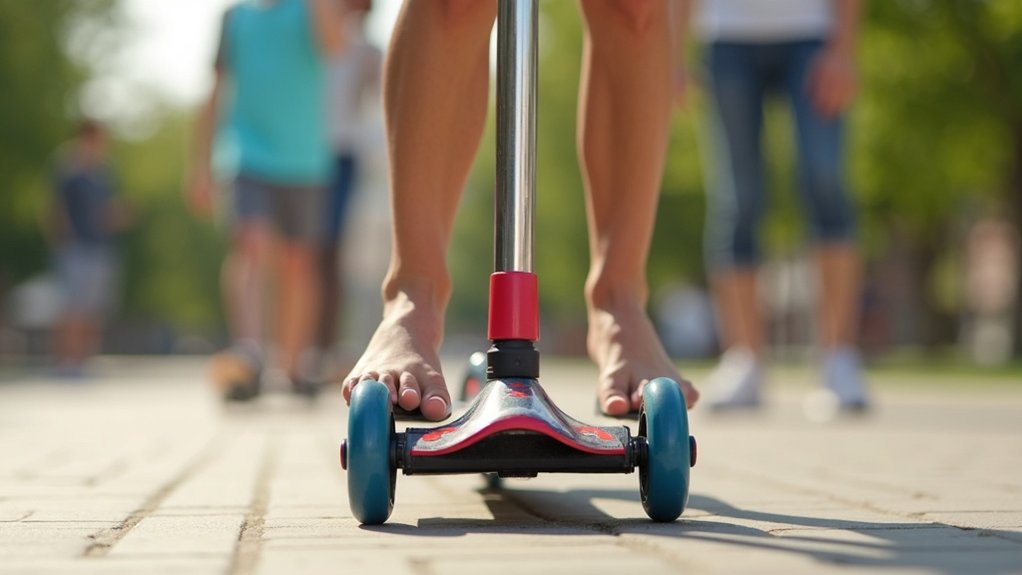
To teach scooter stance to beginners, start by helping them find their natural foot position. Encourage them to practice pushing off and determining if they’re regular or goofy. Stress the importance of keeping their back leg close to the rear wheel for better control and stability. They should maintain a 45-degree foot angle for safety and balance. Engaging both feet on the deck is essential. For more tips and techniques, keep exploring the various aspects of scooter riding.
Key Takeaways
- Start by identifying the rider’s natural foot position to determine if they are Regular or Goofy.
- Instruct beginners to keep their back leg close to the rear wheel for enhanced control and stability.
- Emphasize the importance of maintaining a 45-degree foot angle to prevent handlebar collisions and ensure comfort.
- Encourage the practice of keeping both feet engaged on the deck to improve balance and stability while riding.
- Teach beginners to avoid a perpendicular stance and remind them to keep their heels off the deck for better balance.
Identifying Natural Foot Position
How can you find your natural foot position on a scooter? Start by having someone gently push you from behind. Observe which foot you instinctively place forward; this will indicate if you ride Regular or Goofy.
Once you’ve identified your stance, stand with your back leg close to the rear wheel to improve control and stability. Always better to maintain a 45-degree angle with your feet instead of standing perpendicular to the deck, reducing the risk of bar collisions.
Remember to keep your heels off the deck while riding; it promotes better balance and overall riding control.
Importance of Back Leg Placement
While you mightn’t realize it at first, the placement of your back leg plays an essential role in your overall scooter riding experience.
Keeping your back leg close to the rear wheel enhances your control and stability, making it easier to maneuver and perform tricks like tail whips and grinds. Proper placement also helps distribute your weight evenly, which is vital for maintaining balance.
Plus, it enables quick adjustments when you encounter obstacles or changes in terrain, ultimately preventing falls. As a beginner, practice this positioning to develop muscle memory and boost your confidence on the scooter.
Proper Foot Angle for Safety
After mastering the placement of your back leg, the next key aspect to focus on is your foot angle on the scooter.
Position your feet at a 45-degree angle on the deck; this helps prevent bar collisions and enhances your comfort. Avoid standing perpendicular to the deck, as this can lead to instability.
Position your feet at a 45-degree angle for better comfort and stability while avoiding bar collisions.
Keep your heels off the deck to maintain balance and control while riding. Regularly adjust your foot angle to match your riding style and the tricks you’re performing.
A comfortable stance not only boosts stability but also improves your overall performance and safety on the scooter.
Engaging Both Feet on the Deck
To ride a scooter effectively, keeping both feet engaged on the deck is essential for maintaining balance and stability. Position your back foot close to the rear wheel for better control, and avoid standing with feet perpendicular to the deck. Instead, maintain a 45-degree angle to enhance comfort and prevent bar collisions. Keeping your heels off the deck allows for quick responses to direction changes. Regular practice of these techniques will boost your riding skills and confidence.
| Foot Position | Angle | Benefits |
|---|---|---|
| Back Foot | Close to wheel | Better control |
| Front Foot | 45 degrees | Prevents bar collisions |
| Heels | Off the deck | Quick directional changes |
| Both Feet Engaged | On the deck | Maintains balance |
| Regular Practice | Consistent | Builds confidence |
Adjusting Foot Position for Tricks
Mastering your foot position on the deck sets the foundation for executing tricks effectively.
For tail whips, keep both legs close to the rear wheel to guarantee stability. When you attempt 360s, shift your front leg forward to maintain balance and avoid falling backward.
For tail whips, position your legs near the rear wheel; for 360s, shift your front leg forward for balance.
Adjust your foot placement according to the grind you’re performing; proper front leg positioning is vital for feeble or board slides. Engaging your feet at a 45-degree angle helps prevent bar collisions and enhances your overall balance.
Regularly practicing these adjustments will lead to improved stability and trick execution over time.
Common Mistakes to Avoid
When you’re just starting out, it’s easy to fall into common foot positioning traps.
Standing perpendicular to the deck or adopting a ski-like stance can throw off your balance and control.
To ride confidently and execute tricks smoothly, focus on keeping your feet at a 45-degree angle and close to the rear wheel.
Incorrect Foot Positioning
Many beginners make the mistake of standing perpendicular to the scooter deck, which can create discomfort and instability while riding.
To improve your stance, focus on these key points:
- Position Feet at a 45-Degree Angle: This prevents collisions with the handlebars and enhances your control.
- Avoid a Ski Position: This can compromise your balance and limit maneuverability.
- Keep Heels Off the Deck: This is essential for maintaining proper balance and preventing falls during tricks and turns.
Being mindful of your foot placement can greatly improve your riding comfort and overall skill development.
Poor Stance Alignment
Foot placement isn’t just about angle; it’s also about alignment. Many beginners mistakenly stand perpendicular to the deck, which can cause discomfort and instability. Instead, aim for a 45-degree foot angle for better control.
Position your feet at a comfortable distance from the rear wheel to maintain balance while riding. Avoid the common “ski position,” as it limits maneuverability and increases fall risk.
Keep your heels off the deck to improve responsiveness; flat-footed stances hinder control. Be aware of your foot placement and adjust according to the trick you’re attempting to enhance riding comfort and prevent falls.