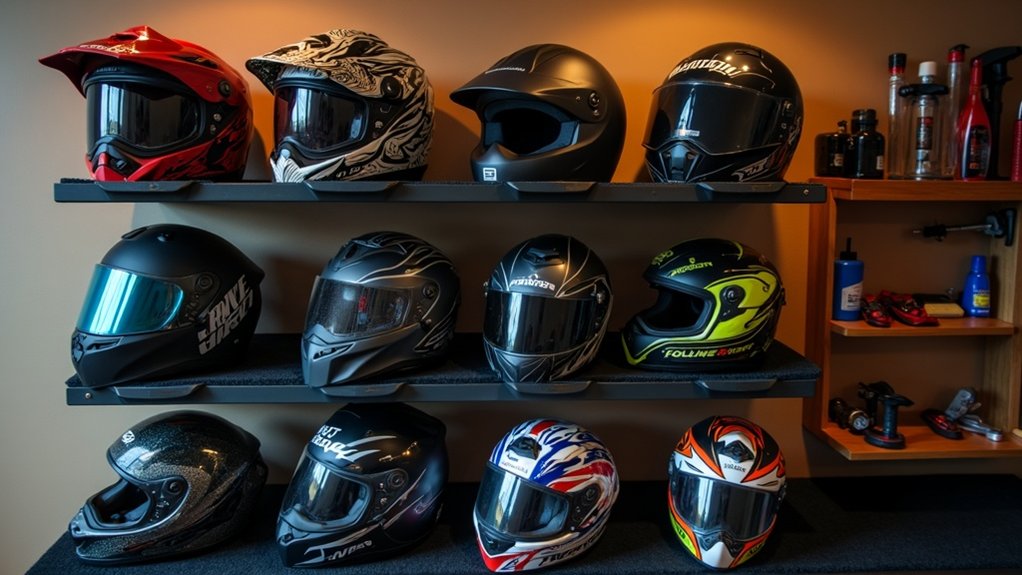
To maintain your helmets’ integrity, store them in a cool, dry place away from direct sunlight and harsh chemicals. Use a helmet bag to protect against dust and scratches, and avoid compressing them under heavy objects. Inspect your helmets regularly for signs of wear, including fraying straps or foam degradation. Keep your storage area clean and organized to prevent material degradation. There’s much more to learn about helmet care and storage solutions available.
Key Takeaways
- Store helmets in a cool, dry place away from direct sunlight and high temperatures to prevent structural damage.
- Use padded helmet bags or covers to protect against dust, scratches, and impacts during storage.
- Keep helmets on flat surfaces or dedicated stands to maintain their shape and avoid compression.
- Regularly inspect helmets for visible damage, checking straps, buckles, and foam liners for signs of wear.
- Maintain a clean storage environment free from harmful chemicals to prevent material degradation.
Ideal Storage Conditions for Helmets
When storing helmets, it’s crucial to take into account the environment to guarantee their longevity and safety.
Store your helmet in a cool, dry place, away from direct sunlight to prevent UV damage and heat-induced degradation. Avoid placing helmets in car trunks, where high temperatures can compromise structural integrity.
Store helmets in a cool, dry area, shielded from sunlight and extreme heat, to ensure their safety and longevity.
Use a helmet bag or padded cover to protect against dust and scratches. Confirm your helmet isn’t compressed or placed under heavy objects, as this can deform protective foam.
Additionally, keep helmets away from chemicals and fuels to prevent material degradation, confirming they remain effective for your safety.
Recommended Storage Solutions
When it comes to storing your helmet, choosing the right solution is essential for maintaining its integrity.
Helmet bags offer protection from dust and scratches, while helmet hooks can help you maximize space without causing strain.
For added security, consider investing in a helmet locker to safeguard against theft and damage.
Helmet Bags Benefits
Helmet bags offer critical advantages for storing and transporting your helmet, ensuring it stays in peak condition. They protect it from dust and scratches while safeguarding its structural integrity.
Key benefits include:
- Soft, padded materials cushion against impacts
- Drawstring or zipper closures keep the helmet secure
- Compact design simplifies storage in tight spaces
- Prevents contamination by encouraging pre-storage cleaning
- Reduces clutter by providing organized storage solutions
Helmet Hooks Usage
Storing your helmet properly is key to maintaining its safety and longevity, and helmet hooks provide an effective solution for this purpose.
By using helmet hooks, you can store helmets off the ground, preventing damage from surfaces while promoting organized storage in your garage or home. This method helps maintain integrity by shielding your helmet from dust and accidental impacts.
Additionally, helmet hooks prevent wear and tear on straps, which often occurs with improper storage. When choosing hooks, guarantee they’re compatible with your helmet’s design and weight to avoid any risk of falling or damage during use.
Secure Helmet Lockers
Investing in secure helmet lockers is essential for riders who want to safeguard their helmets and gear from theft and damage.
These lockers provide robust protection while helping to maintain the integrity of your helmets. Here are key benefits of secure helmet lockers:
- Constructed from durable materials like steel or aluminum
- Can be mounted to walls or floors for added security
- Include adjustable shelves or hooks for organizing gear
- Protect helmets from dust, moisture, and impacts
- Enhance overall security, ensuring your helmet is ready for use
Preventing Damage During Storage
To prevent damage during storage, you should place your helmet in a cool, dry area, away from extreme temperatures and direct sunlight.
Using a protective cover or dedicated bag will shield it from dust and scratches, preserving its integrity.
Additionally, make sure you avoid improper hanging techniques to maintain the helmet’s shape and strap strength.
Proper Placement Techniques
When you place helmets for storage, proper techniques are essential to maintaining their integrity and performance.
Follow these guidelines to guarantee your helmets are well-preserved:
- Store helmets on a flat surface or helmet stand to prevent deformation and maintain shape.
- Avoid hanging helmets by their straps to prevent strain and potential damage.
- Use a padded helmet bag or cover to protect against dust, scratches, and impacts.
- Keep helmets in a cool, dry place away from direct sunlight.
- Ensure the storage area is free from moisture to maintain their protective capabilities.
These practices will help prolong the life of your helmets.
Avoid Extreme Temperatures
Extreme temperatures can severely damage your helmet, so it’s crucial to store it properly to guarantee longevity and safety.
Always store your helmet in a cool, dry place; extreme heat can weaken the outer shell and degrade materials over time. Avoid keeping helmets in car trunks, where temperatures can soar and cause structural damage.
Additionally, direct sunlight exposure can degrade your helmet’s integrity, so be sure to keep it away from UV rays. Confirm your storage area is free from moisture and humidity, as these conditions can also compromise the helmet.
Consider using a padded helmet bag for extra protection.
Use Protective Covers
Using protective covers is essential for maintaining your helmet’s integrity during storage. These covers help guarantee your helmet stays in prime condition by shielding it from various environmental factors.
- Use padded helmet bags to guard against dust, scratches, and impacts.
- Opt for UV-resistant covers to protect against harmful sunlight.
- Choose breathable covers to prevent moisture buildup, which can cause mold.
- Store helmets in a snug, cushioned case to minimize movement.
- Avoid plastic wraps or non-breathable materials that trap moisture and heat.
Regular Inspection of Stored Helmets
To maintain the safety and integrity of your helmets, it’s essential to conduct regular inspections for any visible signs of damage.
Check the outer shell for cracks, dents, or deformations that could compromise performance.
Examine the straps and buckles for fraying or wear, as these elements are crucial for functionality.
Assess the foam liner for compression or degradation, which affects impact absorption.
It’s advisable to perform these inspections at least once a month, especially after prolonged storage.
Document your findings to track changes over time and identify when your helmet requires replacement due to wear and tear.
Importance of Cleanliness in Storage
While it’s easy to overlook the cleanliness of your storage area, maintaining a clean environment for your helmets is essential for their longevity and safety.
A cluttered space can lead to the accumulation of dust and debris, which may degrade materials over time. To guarantee your helmets remain in top condition, consider these practices:
- Regularly clean helmets before storage
- Use a padded helmet bag
- Avoid direct sunlight exposure
- Keep away from harmful chemicals
- Inspect storage areas frequently
Signs of Helmet Wear and Tear
As you store your helmets, it’s crucial to be vigilant about signs of wear and tear that can compromise their safety. Regularly check for visible signs of damage on the outer shell, like cracks or dents. Inspect the foam liner for compression, and examine straps for fraying. Look out for loose internal padding, indicating a poor fit. If you notice any of these issues, replace it immediately. Remember, even without visible damage, replace helmets after significant impacts to maintain helmet integrity.
| Check | Signs of Damage | Action Required |
|---|---|---|
| Outer Shell | Cracks, Chips, Dents | Replace it immediately |
| Foam Liner | Compression, Degradation | Inspect and replace if weak |
| Straps and Buckles | Fraying, Weakness | Replace for proper fit |
| Internal Padding | Loose or Damaged | Confirm snug fit, replace if needed |